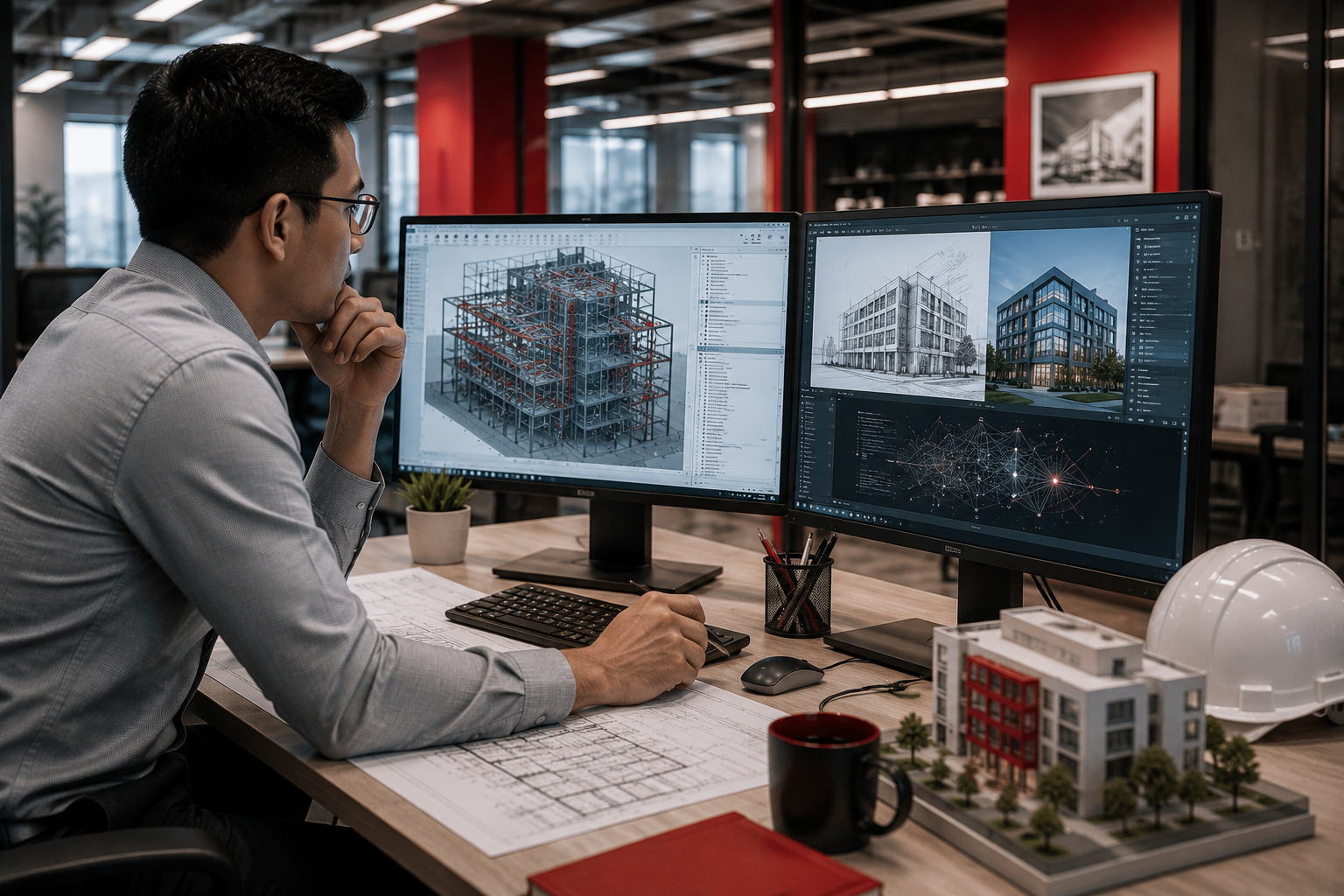
Rethinking Growth: Why Offshore Teams Are the Future of AEC Success

Joel Phillips • September 11, 2025

The Architecture, Engineering, and Construction (AEC) industry is at a crossroads. Rising project complexity, tightening deadlines, and an ever-present labor shortage have made traditional hiring models unsustainable. For decades, the solution to growth was simple: hire more people locally. But in 2025, that approach is no longer enough.


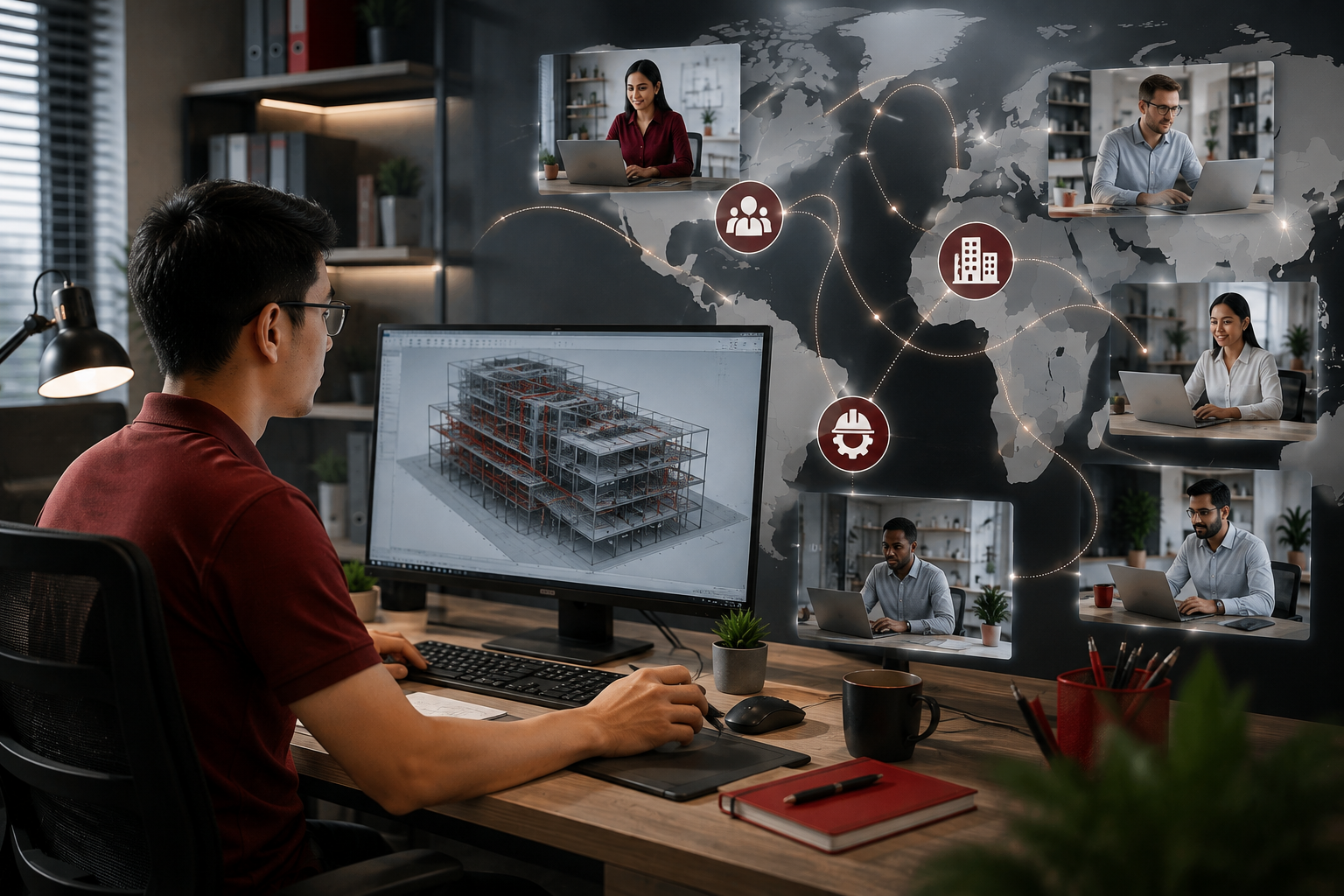
The firms that will thrive in the coming years aren’t the ones adding more desks in their offices—they’re the ones building flexible, global capacity engines. This means leveraging offshore talent that seamlessly integrates with your local operations, enabling faster delivery, specialized expertise, and sustainable profitability.


Why Traditional Hiring Models Are Broken


AEC leaders know the frustration of trying to hire locally. The issues are consistent across regions:


  • Skyrocketing costs – Local hires often cost 1.25–1.4x their base salary once you include benefits, recruitment, onboarding, and overhead.
  • Slow scalability – Staffing up or down in response to project demand is painfully slow and disruptive.
  • Skills shortages – Specialized expertise like façade detailing, advanced BIM coordination, or sustainability modeling can be scarce in your local market.
  • Time drains – Recruiting, training, and managing staff takes leadership away from what matters most: winning projects and serving clients.


The result? Overworked teams, missed opportunities, and projects at risk.


The 2025 Scaling Playbook: A Smarter Growth Strategy


Instead of pushing harder on an outdated model, forward-thinking firms are adopting a new playbook: strategic global integration. Here’s how it works.


1. Hybrid Global Teams


Keep your onshore teams focused on client relationships, strategy, and high-level design, while offshore teams handle execution-heavy tasks. This creates a “follow-the-sun” workflow, where progress continues around the clock—even after your local office closes.


2. On-Demand Expertise


Need to break into new sectors like healthcare, industrial facilities, or data centers? Offshore teams give you immediate access to specialized expertise without the delay and cost of hiring locally.


3. Built-In Agility


Instead of being locked into rigid staffing, you can scale up or down instantly. Whether you land a massive new contract or face an unexpected project slowdown, global teams provide the flexibility you need to protect margins and reduce burnout.


Real-World Example: Offshore Integration in Action


A mid-sized design firm in the UK recently struggled with document control and BIM production for a multi-million-pound project. Instead of rushing through expensive local hires, they partnered with an offshore team. Within weeks:


  • Their drawing package turnaround time improved by 35%.
  • RFIs dropped significantly due to standardized, error-free documentation.
  • Local staff shifted from repetitive drafting to higher-value design and client interaction.


This kind of transformation is exactly why AEC firms are rethinking the way they scale.


The ADDMORE Advantage


Many outsourcing providers exist, but few understand the unique demands of the AEC industry. ADDMORE Services bridges that gap with:


  • AEC-specialized teams – BIM modelers, CAD drafters, engineers, and documentation experts.
  • Seamless integration – Offshore professionals who adapt to your systems, standards, and workflows.
  • Proven results – Reduced RFIs, faster document delivery, and smoother coordination across the project lifecycle.


This isn’t just outsourcing—it’s building a scalable, global capacity engine for your firm’s long-term success.


Choosing the Right Offshore Partner


Before jumping in, ensure your partner is built for AEC excellence:

  • Deep industry expertise – Not just generic outsourcing.
  • Robust QA/QC processes – Accuracy and consistency must be guaranteed.
  • Secure systems – To safeguard client and project data.
  • Strong communication – English proficiency and reliable project management are critical.
  • Flexible agreements – Allowing you to scale teams based on project demand.


Key Takeaways

  • Local-only hiring is unsustainable in today’s AEC industry.
  • Global integration creates flexibility, specialized expertise, and 24-hour workflows.
  • Outsourcing is no longer about cost savings—it’s about resilience, scalability, and competitive advantage.
  • ADDMORE Services offers AEC-focused solutions, helping firms scale smarter without the pain of constant local recruitment.


The Future of AEC Is Global


2025 isn’t the year to keep hiring the same way—it’s the year to embrace a global mindset. The firms that build offshore integration into their growth strategy will not only deliver more efficiently but also unlock opportunities their competitors can’t match.


The real question is no longer if you should adopt this model—it’s how quickly you can move.


📩 Curious how offshore teams could fuel your growth? Visit ADDMORE Services to explore tailored outsourcing solutions built for AEC firms like yours.
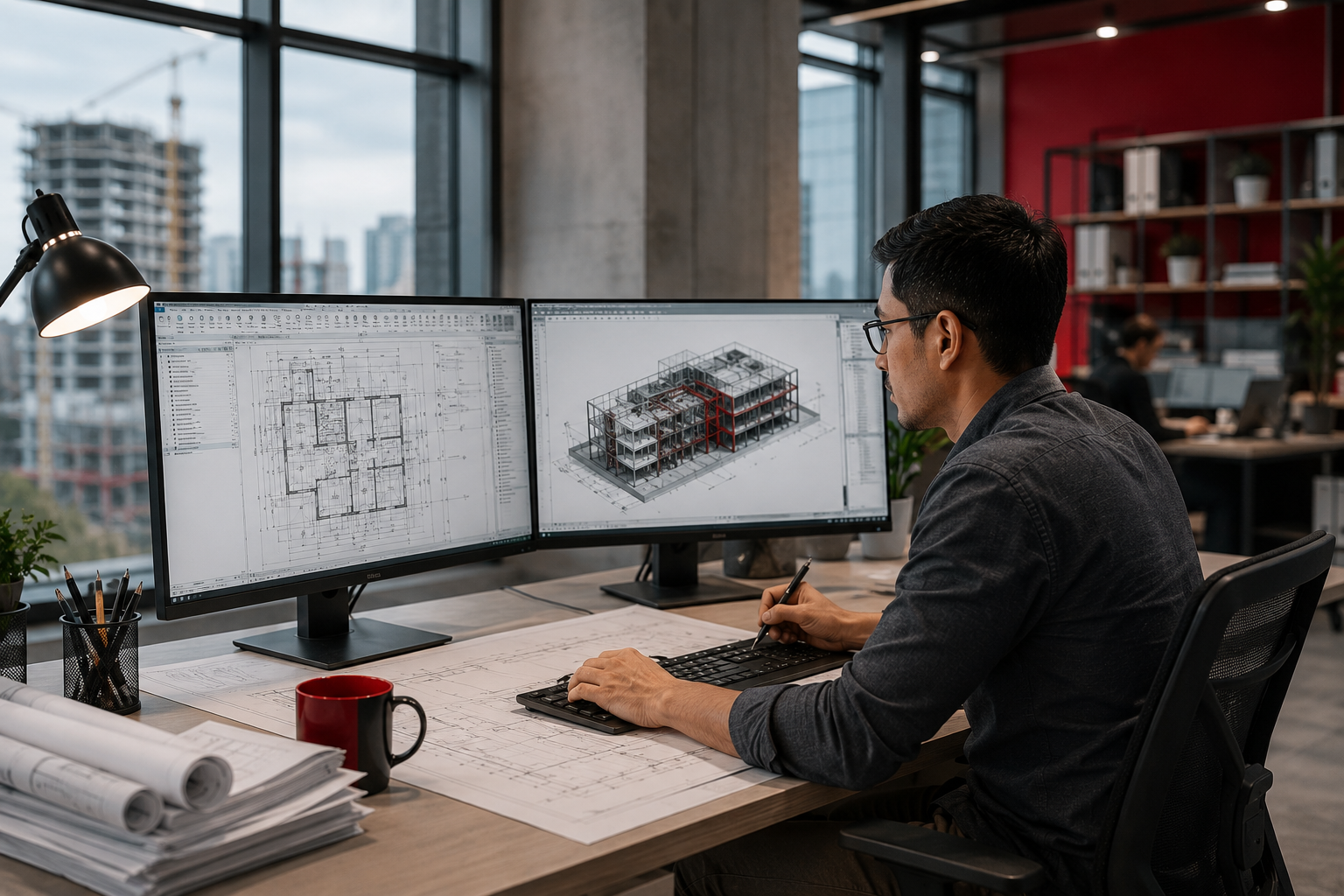
Structural engineer reviewing precast concrete shop drawings and BIM models for off-site constructio
June 18, 2026
Discover how structural detailing, shop drawings, precast detailing, and rebar detailing improve coordination, reduce risk, and drive success in modern off-site construction projects.
By Colin Addley June 11, 2026
The body content of your post goes here. To edit this text, click on it and delete this default text and start typing your own or paste your own from a different source.
June 2, 2026
There is a moment in nearly every construction project where uncertainty quietly enters the conversation. A client looks at a technical drawing and struggles to imagine the finished space. An investor questions whether the design vision can truly translate into commercial value. A planning board hesitates because the proposal still feels abstract. Contractors interpret details differently. Stakeholders approve concepts without fully seeing what they are committing to. This is where architectural renderings become far more than visual enhancements. Modern renderings have evolved into strategic communication tools that help project teams secure approvals, win bids, attract investors, and align stakeholders long before construction begins. They bridge the gap between technical intent and human understanding. More importantly, they reduce friction during decision-making. In an industry where confidence can determine whether a project moves forward or stalls, visual clarity has become a competitive advantage. Why Visualization Matters More Than Ever Construction projects have become increasingly complex. Owners expect faster timelines, investors demand clearer projections, and clients want greater involvement in the design process. Traditional 2D drawings remain essential, but they are often insufficient for communicating the emotional and functional experience of a space. Renderings solve this challenge by transforming technical information into something accessible and persuasive. Instead of asking stakeholders to interpret elevations, sections, and material schedules independently, renderings allow them to experience the vision before a single material is ordered or installed. This shift changes conversations significantly. Projects move from "What will this look like?" to "How do we optimize this further?" That difference can save time, prevent redesign cycles, and improve project outcomes. The Competitive Edge in Winning Bids Construction and development proposals are highly competitive. Firms are not only evaluated on pricing and capability but also on how effectively they communicate their vision. A detailed rendering can immediately separate one proposal from another. When clients review competing bids, visuals help them understand scope, quality, atmosphere, and usability. A technically strong proposal may still lose momentum if decision-makers cannot emotionally connect with the concept. Renderings create that connection. They communicate professionalism, preparedness, and confidence. They demonstrate that the project team has thought through design intent, spatial relationships, finishes, lighting, and user experience. For developers and contractors pursuing high-value opportunities, visualization often becomes a silent differentiator. Improving Stakeholder Alignment Misalignment is one of the most expensive risks in construction. Architects, engineers, consultants, contractors, owners, and end users may all interpret drawings differently. Even minor misunderstandings can result in delays, RFIs, rework, or budget increases. Visualization minimizes ambiguity. Photorealistic renderings and coordinated BIM-supported models provide a shared visual reference for everyone involved in the project lifecycle. Stakeholders gain a clearer understanding of scale, circulation, finishes, and design intent. This improves communication across disciplines and supports more productive collaboration during pre-construction. Teams that establish alignment early are typically better positioned to maintain schedule integrity and budget control later in the project. Supporting Faster Approvals Planning boards, municipalities, investors, and regulatory bodies are frequently tasked with reviewing large amounts of technical documentation within limited timeframes. Technical drawings alone may not fully communicate the project’s impact or design quality. Renderings help reviewers quickly understand: Site integration Building massing Public-facing aesthetics Material intent Environmental context User experience This can significantly improve presentation effectiveness during approvals and stakeholder reviews. For hospitality, commercial, mixed-use, and residential developments, visualization often becomes one of the strongest tools for gaining early project buy-in. Investor Confidence Begins with Clarity Investors evaluate more than design quality. They evaluate risk. The clearer a project appears during the pre-construction phase, the easier it becomes for investors to understand the opportunity and feel confident about execution. Renderings support investor presentations by helping communicate: Brand identity Market positioning Spatial experience Commercial appeal Customer experience potential Operational functionality A compelling rendering can transform an abstract concept into something tangible and commercially believable. This is particularly important in hospitality and experiential projects where atmosphere and user perception directly influence revenue potential. The Relationship Between BIM and Visualization  The strongest visualization workflows are not isolated from technical production. They are integrated into the broader project delivery process. That is where BIM and coordinated modeling become especially valuable. When visualization is supported by BIM workflows, project teams gain greater consistency between design intent and constructability. Models can support clash detection, coordination reviews, shop drawing development, and construction sequencing while also generating highly accurate visual outputs. This integrated approach improves both presentation quality and project coordination. At ADDMORE Services, visualization is approached as part of a larger technical ecosystem rather than a standalone creative exercise. The company supports global AEC firms through architectural drafting, BIM, rendering services, quantity takeoffs, project management support, MEP coordination, and construction documentation. Their offshore outsourcing model allows firms to scale technical production efficiently while maintaining quality control and operational flexibility. Rather than simply producing attractive imagery, the focus is placed on creating visuals that support real project delivery objectives. Visualization as a Communication Tool One of the most overlooked benefits of renderings is their ability to improve communication with non-technical audiences. Not every stakeholder has experience reading architectural documentation. Clients, investors, community representatives, and end users often respond more effectively to visuals than technical drawings. Renderings simplify complex discussions without oversimplifying the project itself. This creates more productive conversations around: Design intent User experience Material selections Branding opportunities Operational flow Future development potential The result is stronger engagement and better-informed decision-making. Reducing Costly Changes Later Late-stage revisions are expensive. When stakeholders cannot fully visualize the final outcome early in the process, concerns often emerge after construction documentation is completed or after construction has already begun. Renderings reduce this risk by helping teams identify concerns sooner. Clients can review layouts, finishes, lighting conditions, circulation, and aesthetics earlier in the process. Design refinements happen before they become costly field modifications. This proactive approach contributes to smoother project execution and stronger client satisfaction. The Future of Architectural Presentation The role of visualization continues to evolve rapidly. Interactive walkthroughs, immersive experiences, real-time rendering, and AI-assisted visualization technologies are reshaping how projects are communicated and evaluated. Yet the core objective remains unchanged. People need confidence before they commit resources, approvals, or investment. Renderings help provide that confidence. As competition increases across the AEC industry, firms that communicate clearly and visually will continue to gain an advantage in winning projects and building stronger client relationships. Final Thoughts Architectural renderings are no longer optional presentation extras. They are strategic assets that influence approvals, strengthen collaboration, improve stakeholder confidence, and support better project outcomes. The ability to communicate a project clearly before construction begins has become one of the most valuable advantages in modern project delivery. For firms navigating complex timelines, demanding stakeholders, and increasingly competitive markets, visualization is not simply about making projects look impressive. It is about helping projects move forward with clarity and confidence. If your team is looking for reliable support in architectural drafting, BIM coordination, rendering services, construction documentation, or project-specific offshore outsourcing, ADDMORE Services provides scalable technical solutions tailored to the evolving needs of the AEC industry. Contact us for a free consultation and discover how the right technical partner can help strengthen your project delivery workflow while maintaining quality, coordination, and efficiency.