
Our Blog
Learn about the benefits of our services and how each can improve the growth and productivity of your business.
Learn how architecture, engineering, and construction firms hire remote professionals, choose nearshore or offshore talent, and keep control of the work.

Outsourcing, EOR, PEO, and staffing overlap and confuse AEC firms. Here is what each term actually means for your business.

See how ADDMORE turns 3Dmodels into photorealistic renderings and virtual fly-throughs that speed up approvals and client buy-in.

Explore how e-migration is changing AEC outsourcing by connecting firms with global AEC talent and new approaches to professional talent and project delivery.

An ADDMORE Services Perspective Walk onto any job site and the credit tends to flow in predictable directions. The architect gets the vision. The general contractor gets the schedule. The owner gets the ribbon cutting photo. Rarely does anyone stop to thank the person who sat at a desk, headphones on, translating someone else's sketch into a document precise enough to build a building from. That person is the Draftsman. At ADDMORE Services, we think it is time they got their due. Precision That Protects the Project Drafting is not illustrating lines on a screen. It is translating measurements into buildable instructions, the kind that fabricators, contractors, and installers will follow to the millimeter. A single misaligned dimension can trigger costly rework, material loss, and schedule setbacks that ripple through an entire project. The Draftsman becomes, quietly, the guardian of accuracy. This is exactly the discipline ADDMORE brings to Architectural Drawings, Building Information Modeling, and Rendering Services. Our teams handle architectural computer aided drafting, construction documentation, and three dimensional modeling with the understanding that every line has consequences downstream. Delivering Under Intense Pressure While the rest of a project team moves at project pace, draftsmen move at deadline pace. They are often the last line before release, the final check ensuring details are correct so the crews on site can stay productive. When drawings stop, everything stops. Procurement pauses. Fabrication waits. Installation stalls. That pressure is why ADDMORE built its offshore talent model around dedicated professionals, not overflow labor. Whether it is Elite Talent handling advanced design support or Core Talent maintaining daily documentation consistency, the goal is the same. The drawings never become the bottleneck. Turning Design Intent Into Constructible Reality Architects and designers create the vision. Draftsmen make it constructible. They interpret sketches, models, specifications, and code requirements to produce the documents that fabricators, contractors, and installers actually depend on. Without that translation layer, even the best design intent falls apart on site. This is why the services offered by ADDMORE extend across the full technical chain, from Quantity Takeoffs and Cost Management to Mechanical, Electrical, and Plumbing Services along with Structural Services, including shop drawings, rebar detailing, and structural two dimensional and three dimensional modeling. Every discipline exists to carry design intent forward without losing anything in the handoff. Deep Knowledge, Constant Discipline Codes. Tolerances. Connection details. Manufacturer standards. Draftsmen carry an enormous technical library in their heads, and every sheet they produce is a blend of industry standards, coordination, and practical buildability. This is not a job someone can fake their way through. This is the caliber of expertise ADDMORE draws from its global talent hubs across the Philippines, Latin America, South Africa, India, and Sri Lanka, professionals who bring specialized skill sets in Building Information Modeling (BIM), Virtual Design and Construction (VDC), and structural detailing along with quantity surveying to clients across the United States, Australia, the UK, the Republic of Ireland, the UAE, and the Kingdom of Saudi Arabia. A Critical Role, A Quiet Contribution Errors in drafting are immediately visible. Excellence, on the other hand, is often overlooked entirely. Yet the output produced by the Draftsman defines the flow of procurement, fabrication, and installation on every project. They keep the project moving, even when no one sees the effort behind the scenes. At ADDMORE, that is the philosophy behind everything we do. Growth should never be limited by a lack of control, and the difference between a good project and a successful one comes down to coordination, oversight, and capability at every single stage. The Draftsman may work quietly. Their impact never does. ADDMORE Services LLC provides professional and technical offshore outsourcing for the architectural, engineering, and construction industries. The company is headquartered in Las Vegas, Nevada, with talent hubs spanning the Philippines, Latin America, South Africa, India, and Sri Lanka. Learn more at www.addmoreservices.com . To book a consultation, reach out at hello@addmoreservices.com .

Artificial intelligence has arrived in the built environment without much of an announcement. It is in the modelling software, in the document management platform, in the take-off tool, and in the email client. Most architecture and interior design practices are already using it several times a day, whether anyone has written a policy about it or not. So, the interesting question is no longer whether to use AI. It is what happens to the work once you do. The part of the story that gets left out Read almost anything written about AI and outsourcing this year and you will find the same quiet admission underneath the enthusiasm: none of it runs on its own. Somebody must prepare the information the system learns from. Somebody must look at what comes out the other end and decide whether it is right. The technology is genuinely impressive. It is also unaccountable on its own. That matters more in our sector than in most. A chatbot that answers a customer badly is an irritation. A model that produces a clash-free-looking coordination report on a badly set up federated model, or a take-off that quietly omits a whole material line, is a cost that lands on site months later, when it is expensive to fix and difficult to argue about. AI is very good at producing work that looks finished. Judging whether it is finished is a different skill, and it is not a technical one. It comes from having drawn the detail before, having priced the package before, having been on the receiving end of the RFI when it went wrong. What this looks like on a real project A Revit technician who understands how a model is meant to be structured can use automation to strip hours out of repetitive family creation, sheet setup and annotation, and spend the recovered time on the parts that need thought. A technician who does not understand the model will use the same tools to produce a great deal of tidy-looking rubbish, very quickly. An estimator with fifteen years behind them can run an automated material take-off, scan the output and know within a minute that the ceiling quantities are wrong because the tool has read a plenum as a room. The software will not flag that. Nothing in the output will look unusual. The estimator knows because they have seen a plenum before. The same holds for shop drawings, submittal review, document registers and coordination. In each case, the tool moves faster than a person could. In each case, someone must own the answer. What to actually look for If AI raises the value of judgement rather than lowering it, then the way firms buy resource ought to change with it. A few things are worth asking of anyone providing you with people: Can they scale up and down at the pace your workload genuinely moves, rather than at the pace of a twelve-month commitment? Do you know what you are paying and what you are getting for it, without unpicking a rate card? Do the people they provide work inside your systems, your file structure and your standards, or alongside them? And when something is wrong, is there a named person who is accountable for it? None of those questions mention AI. That is rather the point. The tools will keep changing. What protects the project is the quality of the person using them and the clarity of who answers for the output. Where ADDMORE sits We are not an AI company in the way that phrase is usually meant. We did not build a model and then go looking for somewhere to point it. We started from the work of documenting buildings, pricing packages and keeping projects moving, and everything we have built since has come out of that. What we provide is people, and the technology those people need to do the work properly. That means qualified back office professionals: 3D modellers, Revit and AutoCAD technicians, US estimators and document controllers, working as an extension of your own office, on your systems and to your standards. It also means business technology support: data engineers, analysts, BI specialists and AI engineers who build and maintain the automated parts of the workflow, the take-off routines, the document pipelines, the reporting behind the reporting. Done well, you never have to think about any of it. Done badly, it is the reason a number was wrong three months ago and nobody noticed. We also build software of our own, including PromoreIQ, our AI platform. We would rather tell you what a tool can and cannot do having had to make one work ourselves. Our people use AI in their daily work, and we expect them to. What we are providing, across all of it, is the experience that sits behind the output: the person who knows what the drawing is for, what the client will ask next, and what a plausible-looking result should have said instead. That is also why we have not rushed to relabel what we do. The work has not changed as much as the vocabulary around it has. Buildings still have to be documented properly. Packages still have to be priced accurately. Somebody still has to be answerable when they are not. The short version AI has made the first draft of almost everything affordable. It has not made the judgement inexpensive, and in the built environment, the judgement is where the risk lives. The firms that get the most out of these tools over the next few years will not be the ones with the largest technology budget. They will be the ones with enough experienced people to tell good output from bad, fast enough for it to matter. If you are working out how to add that capacity without adding overhead, we would be glad to talk it through.
The Hidden Advantage of Offshore Outsourcing: Why Broader Talent Pools Lead to Better Results When businesses talk about offshore outsourcing, the conversation often starts with two familiar topics: cost savings and time zones. Both are important. But they are not what ultimately determine whether an offshore engagement delivers meaningful value. The bigger question is much more fundamental: Are you accessing the right talent in the first place? A broader talent pool, a fair approach to evaluating capability, and a genuine understanding of local professional markets can have a significant impact on the quality of offshore work. This is especially relevant for industries where technical knowledge, consistency, communication, and attention to detail directly affect project outcomes. For companies exploring offshore outsourcing, the opportunity is not simply to reduce operating costs. It is to access capabilities that can strengthen the way work gets done. Offshore Outsourcing Is About More Than Cost Cost efficiency is one of the most obvious advantages of offshore outsourcing. However, focusing exclusively on cost can lead businesses toward the wrong question. Instead of asking: "How much can we save?" It can be more valuable to ask: "What additional capability can we access?" A lower-cost resource does not automatically create a better business outcome. If the work requires excessive supervision, frequent corrections, or repeated revisions, the initial savings can quickly be offset by lost time and reduced productivity. The strongest offshore models focus on value rather than price alone. That means identifying professionals with the right technical capabilities, evaluating them against the actual requirements of the work, and creating an operating environment where those capabilities can be used effectively. A Broader Talent Pool Creates Better Opportunities One of the major advantages of offshore outsourcing is geographic access to talent. Clients that work with trusted professional and technical AEC support services who have access in regions such as the Philippines, LATAM, and other global talent hubs gain access to a wider pool of professionals with diverse educational backgrounds, varied project experience, strong technical capabilities, and broader perspectives. Organizations that achieve stronger results are not simply moving fast or chasing the lowest cost. They succeed because they tap into a broader talent landscape and use more rigorous, meaningful methods to assess capability. This is particularly important when the work requires specialized knowledge. For example, an AEC company looking for additional support with drafting, BIM production, quantity takeoffs, documentation, or other technical functions may benefit from looking beyond its immediate geographic market. The objective is not to find more people. It is to fin d more of the right capabilities. Why the Quality of Evaluation Matters Expanding the talent pool is only part of the equation. How professionals are evaluated matters just as much. Traditional hiring and sourcing processes can sometimes place too much emphasis on familiar credentials, recognizable companies, conventional career paths, or whether a candidate appears to fit a predetermined profile. These indicators can be useful, but they do not always demonstrate how well someone can actually perform the work. A more effective approach is to focus on demonstrable capability. Depending on the function, that could include evaluating: Technical knowledge Relevant industry experience Problem-solving ability Attention to detail Communication skills Ability to follow established processes Software proficiency Practical application of knowledge Ability to work independently Consistency and quality of output For technical industries, this distinction is particularly important. A professional who can demonstrate the ability to produce accurate work may ultimately provide more value than someone whose profile simply looks impressive on paper. Inclusive Evaluation Can Improve Offshore Outcomes Inclusive evaluation can meaningfully strengthen offshore outcomes. While inclusive hiring is often framed as a cultural initiative, it also carries a practical business advantage. When companies expand their talent search and assess candidates based on demonstrated capability, they open the door to a wider pool of qualified professionals, including individuals whose strengths might otherwise be overlooked. This matters even more in offshore outsourcing, where geographic reach already exposes organizations to diverse professional markets. The opportunity is to make that access count by avoiding narrow assumptions about what a strong candidate should look like. A broader talent map, paired with fair, capability‑focused evaluation, creates a stronger and more reliable foundation for offshore delivery. Local Market Understanding Makes a Difference Offshore outsourcing is not simply a matter of selecting a country and searching for available professionals. Every market has its own professional environment, educational systems, compensation expectations, talent concentrations, and working practices. Understanding those differences matters. The value of working with organizations that understand the local market rather than relying exclusively on databases or generic sourcing methods is not to be overlooked. For businesses, this can mean better alignment between the capabilities they need and their trusted intelligent resourcing anwith knowledge and access to pre-vetted professionals available in a particular location. It can also help create more realistic expectations around communication, workflows, professional development, and the type of work that can be effectively delivered offshore. The AEC Industry Has a Particularly Strong Opportunity For the architecture, engineering, and construction industry, offshore outsourcing can extend far beyond basic administrative support. AEC businesses frequently deal with fluctuating workloads, demanding project schedules, specialized documentation requirements, and resource-intensive production work. Access to a broader pool of technical professionals can provide additional capacity in areas such as: Architectural drafting BIM and Revit production Construction documentation Shop drawings Quantity takeoffs Material schedules Cost management support Rendering and visualization MEP and structural documentation Project administration The value comes from connecting these capabilities with the right workflows and quality standards. This is why the quality of the offshore professional matters just as much as the cost structure. Offshore Capability Should Complement Your Existing Operations A successful offshore model should not feel disconnected from the business it supports. The objective is to create an effective extension of existing workflows. That requires clear processes, defined deliverables, appropriate quality control, effective communication, and a shared understanding of project expectations. For an AEC organization, this might mean having offshore professionals support production documentation while project leadership, design decisions, client relationships, and critical approvals remain within the primary business. The result is not simply outsourced labor. It is additional professional capacity integrated into the way the business already operates. How ADDMORE Approaches Offshore Outsourcing At ADDMORE Services LLC, our focus is on helping AEC organizations access professional offshore capabilities Solutions that can support their technical and operational requirements. Rather than positioning offshore outsourcing purely as a cost-cutting exercise, ADDMORE approaches it as an opportunity to add specialized capability where it can create measurable value. Our offshore professionals support areas including architectural documentation, BIM and Revit production, engineering drawings, quantity takeoffs, cost management, rendering, Sales and Operations and other AEC-related services The objective is straightforward: Give AEC businesses access to capable professionals who can contribute to their existing workflows while helping them manage capacity, productivity, and project demands more effectively. This approach also reflects an important principle from the broader offshore outsourcing conversation: the quality of the result depends heavily on the quality of the people performing the work and the process used to identify and evaluate those capabilities. Rethinking the Offshore Outsourcing Conversation The offshore outsourcing conversation does not need to stop at: "How much can we save?" A more strategic conversation asks: What capabilities do we need? Where can we access those capabilities? How broad is the available talent pool? How are professionals being evaluated? Are we measuring actual ability or simply reviewing credentials? Does the offshore operation understand our industry? Can the work integrate effectively with our existing processes? Will the additional capacity improve our ability to deliver? These questions lead to a different understanding of offshore outsourcing. It becomes less about finding the cheapest option and more about expanding access to capability. The Real Advantage Is Access The hidden advantage of offshore outsourcing is not simply geographic distance or lower operating costs. It is access . Access to a broader professional market. Access to specialized skills. Access to additional production capacity. Access to different perspectives and experiences. And, when the process is designed properly, access to professionals who can contribute meaningful value to the work being delivered. For companies willing to look beyond the traditional boundaries of recruitment and resourcing, a broader talent pool can become a genuine competitive advantage. Looking to Expand Your AEC Capabilities? If your AEC business is dealing with increasing workloads, tight project deadlines, or gaps in technical production capacity, offshore outsourcing may provide a practical way to expand your capabilities without unnecessarily increasing your internal overhead. ADDMORE Services offers professional offshore outsourcing solutions designed specifically for the AEC industry. Contact us for a free consultation to discuss your current requirements and explore where offshore professional support could add value to your operations. Visit ADDMORE Services to learn more about our AEC outsourcing solutions.
Discover how early BIM coordination and clash detection help AEC teams reduce rework, protect budgets, prevent delays, and improve construction outcomes.
Your project deadline is closing in. Your in-house Revit team is stretched across three projects at once. You post a job listing for a Revit Architect, and six weeks later you are still sifting through resumes, running interviews, and hoping the person you hire actually fits your workflow. Sound familiar? This is the reality for many architecture, engineering, construction, and development firms today. Talent is hard to find, harder to retain, and even when you do fill the seat, there is no guarantee the new hire will mesh with how your practice works. The result is missed deadlines, inconsistent quality, and a revolving door of contractors who never quite become part of the team. There is a better way to think about this problem. The Outsourcing Trap When firms hear “Revit support,” the first instinct is often to outsource: bring in a freelancer or a contractor to produce a set of drawings, then part ways. It solves the immediate crunch, but it rarely solves the underlying problem. Outsourced talent tends to work in isolation. They do not know your standards, your templates, or your client expectations. Every new engagement means retraining from scratch. Every project means renegotiating scope. It is a short-term fix wearing the costume of a long-term solution. As Colin Addley, President and Managing Member of ADDMORE Services, puts it: “Do not just outsource a Revit Architect. Build an embedded Revit team that integrates seamlessly with your practice, collaborates in your workflows, and scales as your projects grow.” That distinction matters. A one-off engagement treats talent as a transaction. A long-term, embedded engagement treats talent as a partnership. The Professional Offshore Talent, Unit or Division Model The model behind that partnership is called Professional Offshore Talent, Unit or Division (POT, POU or POD). These are aligned, embedded professionals who work as an extension of your in-house team for a long-term engagement of one year or more. They are engaged through an Employer of Record (EOR), which keeps the arrangement legally compliant. To be clear, this is not staff augmentation. Staff augmentation is a short-term resourcing model, generally lasting no more than six months, used to fill a temporary skill gap. This article is about the long-term model, built for firms that want continuity, not a stopgap. What This Model Looks Like in Practice A Professional Offshore Talent, Unit or Division is not a stack of freelance invoices. It is a group of skilled Revit professionals who work inside your systems, your communication channels, and your project timelines as if they sat down the hall from you. A few things set this model apart: They learn your standards once, not every time. Instead of re-explaining your Building Information Modeling (BIM) protocols and drawing conventions to a new contractor on every project, your unit retains that knowledge and applies it consistently across your entire pipeline. They collaborate in real time. They show up in your project meetings, respond in your preferred tools, and adapt to your review cycles. There is no lag between what your firm needs and what gets delivered. They grow with you. Because the engagement lasts one year or more, the team builds continuity and deepens its understanding of your practice over time. As your workload grows, your unit or division can grow with it, so busy season does not have to mean a hiring scramble. They become an extension of your culture. Professionals are matched to your business style and personality, and they are upskilled every month in artificial intelligence (AI). Over time, they stop feeling like outside help. They understand your clients, your project types, and your quality bar because they have been immersed in your practice, not parachuted into it for a single deliverable. Why This Matters More Now Than Ever The architecture, engineering, construction and development industry is facing a well-documented talent shortage, and firms of every size are feeling the squeeze. Waiting months to fill a Revit Architect role is not just inconvenient. It is a competitive disadvantage. Firms that figure out how to access skilled, reliable Revit talent without the delays of traditional hiring are the ones winning more work and delivering it on time. The firms that treat their offshore professionals as a true extension of the team, rather than a stopgap, are the ones building repeatable, scalable delivery models. That is the shift happening across the industry right now, and it is worth paying attention to. Building Your Own Professional Offshore Talent, Unit or Division If this model sounds like the missing piece for your practice, you are not alone. It is exactly what ADDMORE Services was built around: skilled, United States (US) market-ready Revit and BIM professionals who integrate into your workflows, are managed for performance, continuity, and retention, and grow alongside your project pipeline, rather than one-off contractors who disappear once the deliverable ships. If your firm is tired of the outsourcing cycle and ready to explore what a long-term Professional Offshore Talent, Unit or Division could look like for your projects, it might be worth a conversation with ADDMORE Services to see how the model fits your practice.
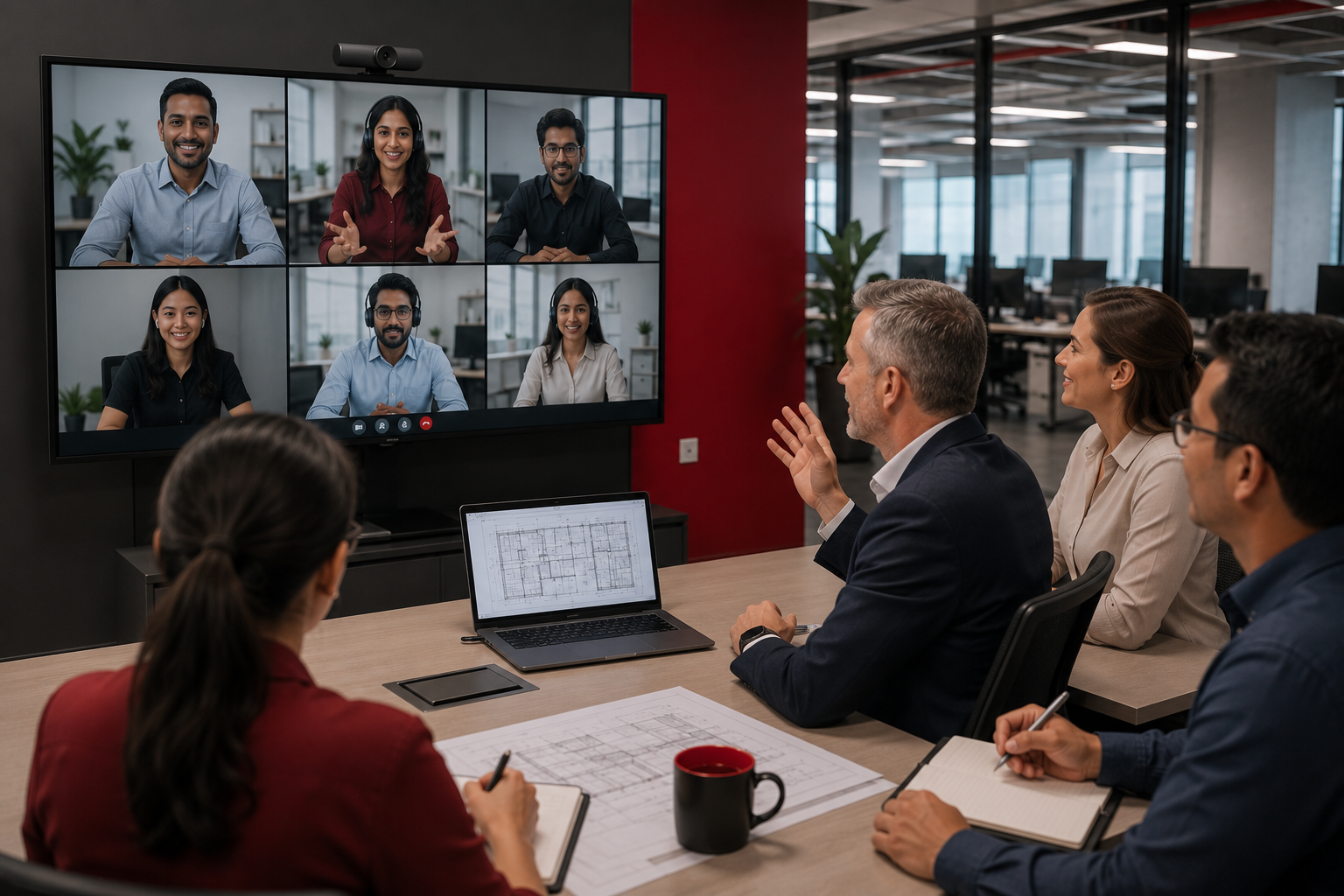
Building Global Teams That Stay: Why Culture, Not Geography, Determines Offshore Success Modern business has made it possible to collaborate with talented professionals from almost anywhere in the world. For architecture, engineering, and construction firms, this has opened the door to scalable teams, specialized expertise, and around-the-clock productivity. Yet despite these opportunities, many organizations still hesitate to embrace offshore outsourcing because of one persistent concern. "How do you maintain company culture when part of your team is located halfway across the world?" It is a reasonable question. However, it may not be the right one. Culture has never been confined to a physical office. It is created through leadership, shared expectations, meaningful communication, and a common purpose. Organizations that succeed with global teams understand that culture is something intentionally designed, nurtured, and reinforced every day. Businesses that struggle with offshore outsourcing often do not fail because of geography. They fail because they approach offshore professionals as temporary resources instead of valuable members of the organization. That distinction changes everything. Culture Travels Better Than Many Leaders Think Technology has removed many of the barriers that once separated international teams. Video conferencing, cloud collaboration, Building Information Modeling (BIM), project management platforms, and real-time communication tools allow professionals to work together regardless of location. What technology cannot replace is thoughtful leadership. Many unsuccessful outsourcing relationships begin with a purely financial objective. Companies hire offshore talent to reduce costs, provide limited onboarding, establish minimal communication, and expect immediate results. When productivity suffers or turnover increases, they conclude that offshore staffing does not work. The reality is much different. Successful global organizations recognize that every employee deserves clarity, support, and a genuine connection to the organization's mission. People perform at their highest level when they understand not only what they are expected to do, but also why their work matters. That principle applies equally to employees sitting in headquarters and professionals working thousands of miles away. Offshore Professionals Should Never Feel Like Outsiders One of the most overlooked factors in offshore success is belonging. Employees who feel disconnected from the larger organization naturally become less engaged over time. Small misunderstandings accumulate, communication becomes increasingly transactional, and collaboration begins to deteriorate. Strong organizations intentionally prevent this from happening. Instead of treating onboarding as an administrative exercise, leading companies view it as the beginning of a long-term relationship. Effective onboarding introduces new professionals to company values, communication expectations, workflows, quality standards, and team dynamics before they begin contributing to live projects. This early investment creates confidence for both the employee and the client. When professionals feel welcomed, respected, and trusted from the very beginning, they are significantly more likely to remain engaged and committed for the long term. That sense of belonging becomes especially valuable for global teams where face-to-face interactions are less frequent. Three Principles That Build Strong Global Teams Organizations that consistently achieve high retention across international teams often share several common characteristics. 1. Prioritize Connection Before Productivity Many businesses focus exclusively on technical onboarding. While software access, documentation, and compliance are important, they only represent part of the equation. Successful organizations also introduce new team members to the company's culture, communication style, decision-making process, and long-term vision. Employees should understand how their role contributes to project success, who they can rely on for support, and what excellence looks like within the organization. Professional belonging begins long before the first completed task. 2. Build Communication Systems That Prevent Misalignment Cultural misunderstandings rarely appear as major conflicts. More often, they develop gradually through unclear expectations, different communication styles, inconsistent feedback, or assumptions that were never discussed. Clear communication frameworks eliminate much of this uncertainty. Regular check-ins, documented workflows, standardized quality reviews, collaborative project management tools, and open feedback channels create consistency regardless of where team members are located. This structure allows problems to be identified early rather than after they begin affecting project delivery. For AEC firms managing complex design documentation, shop drawings, BIM coordination, estimating, or multidisciplinary collaboration, communication systems become even more important because every project depends upon accuracy and coordination. 3. Build Systems Instead of Depending on Individuals One of the strongest indicators of organizational maturity is whether company culture can survive leadership changes. If collaboration only works because one manager constantly reminds everyone of expectations, the organization has created dependence rather than culture. Sustainable businesses embed their values directly into their processes. Quality standards, documentation procedures, project workflows, onboarding programs, performance reviews, and leadership expectations should consistently reinforce the behaviors that define the company. Culture becomes scalable when it exists inside systems instead of personalities. Why Culture Is Especially Important for AEC Firms Few industries depend on teamwork as heavily as architecture, engineering, and construction. Every project involves multiple stakeholders, disciplines, approvals, and deliverables that must come together with precision. Architects, engineers, BIM specialists, estimators, quantity surveyors, project managers, contractors, and consultants all contribute to a shared outcome. When communication breaks down, mistakes become expensive. A misunderstood design intent can result in rework. An overlooked coordination issue can delay construction. Poor documentation can trigger costly change orders. Technical expertise is certainly important, but expertise alone cannot overcome the challenges created by disconnected teams. This is why organizational culture has a direct impact on project performance. Teams that trust one another communicate more openly. Professionals who understand shared standards are more likely to identify potential issues before they become costly problems. People who feel respected are more willing to ask questions, share ideas, and collaborate across disciplines. Whether a project team is located in one office or distributed across multiple countries, these qualities remain essential. Building Global Teams That Deliver Consistent Quality High-performing offshore teams do not happen by accident. They are built through intentional leadership and disciplined processes. Successful organizations establish clear expectations from the beginning. Every professional understands the company's quality standards, communication protocols, project objectives, and client expectations. Regular feedback, collaborative planning, and continuous learning reinforce those standards throughout every stage of a project. Consistency also creates confidence. When project managers know exactly how documentation will be prepared, reviewed, and delivered, they spend less time managing uncertainty and more time driving projects forward. This becomes particularly valuable for firms handling shop drawings, BIM coordination, construction documentation, quantity takeoffs, cost management, and multidisciplinary design work, where accuracy and consistency directly influence project outcomes. Common Mistakes That Undermine Global Teams Many organizations unintentionally create barriers that prevent offshore professionals from reaching their full potential. Some of the most common mistakes include: Treating offshore professionals as external vendors instead of integrated team members. Limiting communication to task assignments rather than meaningful collaboration. Failing to provide structured onboarding and ongoing professional development. Measuring success solely through hourly costs instead of long-term value. Creating inconsistent quality standards across different offices or teams. Assuming culture will naturally develop without deliberate leadership. Each of these challenges is preventable. Organizations that invest in people, establish clear systems, and foster genuine collaboration consistently experience higher employee retention, stronger project outcomes, and better client relationships. A Strategic Approach to Offshore AEC Resourcing For firms operating in today's competitive construction environment, offshore outsourcing should be viewed as more than a staffing solution. It should become an extension of the business itself. That philosophy is central to how ADDMORE Services LLC partners with AEC firms around the world. Rather than simply supplying additional resources, ADDMORE provides experienced architects, BIM specialists, engineers, estimators, quantity surveyors, CAD professionals, project managers, and technical experts who integrate seamlessly into existing project teams. Supported by established quality assurance processes, collaborative workflows, and a culture built around excellence, integrity, innovation, customer-first service, and Ownership Pride, every engagement is designed to strengthen project delivery rather than simply reduce workload. With headquarters in Las Vegas and global talent hubs across the Philippines, Latin America, South Africa, India, and Sri Lanka, ADDMORE helps firms expand their capabilities while maintaining the quality, consistency, and responsiveness their clients expect. The objective is simple: build partnerships where offshore professionals become trusted contributors to long-term business success rather than temporary resources. Leadership Shapes Culture Every Day Culture is not created during annual meetings or company retreats. It is reflected in everyday decisions. Leaders shape culture through the way they communicate expectations, recognize achievements, respond to challenges, and support professional growth. Every interaction either strengthens or weakens the environment people experience at work. This becomes even more significant when leading geographically distributed teams. Intentional leadership creates clarity. Clear systems create consistency. Consistency builds trust. Trust creates engagement, and engaged professionals produce better work. When these elements work together, location becomes far less important than shared commitment. Looking Beyond Cost Savings Businesses often begin exploring offshore outsourcing because they want greater flexibility or improved cost efficiency. Those are legitimate business objectives. However, the organizations that experience the greatest long-term success quickly realize that the true value extends far beyond operational savings. A stable global workforce preserves institutional knowledge. Long-term team members become increasingly familiar with client standards, project requirements, and internal processes. Collaboration becomes smoother, productivity improves, and quality becomes more predictable with every completed project. Retention, consistency, and trust ultimately create a stronger return on investment than cost savings alone. That is why culture deserves the same level of strategic attention as technology, workflows, and operational planning. Final Thoughts Global teams are no longer the future of business. They are already shaping how projects are designed, coordinated, and delivered across the architecture, engineering, and construction sector. Organizations that continue to view offshore professionals as distant resources may struggle to realize the full benefits of international collaboration. Those that intentionally build inclusive cultures, establish consistent systems, and invest in their people create resilient teams capable of delivering exceptional results regardless of geography. Culture does not depend on a shared office. It depends on shared purpose. It depends on shared standards. Most importantly, it depends on leadership that recognizes every professional as an integral part of the team's success. When those foundations are in place, distance becomes a logistical detail rather than an organizational challenge. Ready to Build a Stronger Global Team? Whether you need dedicated BIM specialists, architects, CAD professionals, estimators, quantity surveyors, project managers, or multidisciplinary technical support, ADDMORE Services LLC can help you build an offshore team that feels like a natural extension of your business. Our intelligent resourcing approach is designed to deliver more than additional capacity. We help AEC firms develop collaborative, high-performing teams that prioritize quality, accountability, and long-term success. Contact ADDMORE Services LLC today for a free consultation and discover how the right offshore professionals, supported by proven systems and shared values, can help your next project move forward with confidence.

An Integrated Approach to Hospitality That Delivers Beyond Opening Day With the current hospitality trend, successful restaurants and bars are no longer defined purely by concept or design. Long term performance depends on how well every stage of a project is aligned, from the first idea through to daily operations. The Restaurant and Bar Collective was created to address this exact challenge. The Restaurant and Bar Collective is a curated network of hospitality specialists, concepts, and delivery partners brought together under one integrated model. Its purpose is clear: to remove the fragmentation that typically exists between concept development, design, construction, and operational performance. Instead of disconnected services, the collective provides a cohesive and coordinated approach that ensures every decision contributes to a venue’s long-term success. A Model Built Around Performance Traditional hospitality projects often struggle because key disciplines operate in isolation. A concept may look compelling on paper but fail in execution. A beautifully designed space may not function efficiently during peak service. Construction may not fully reflect the original design intent. These disconnects lead to costly redesigns, operational inefficiencies, and underperforming venues. The Restaurant and Bar Collective eliminates these issues by integrating the core components that determine success. The collective provides: Concept development support, including positioning, guest experience strategy, and brand direction Architectural and interior design that aligns with operational efficiency and real-world service requirements Bar and kitchen workflow planning to optimize speed, service flow, and staff performance Technical documentation and design coordination to ensure accurate construction delivery Procurement coordination covering FF&E, finishes, and specialist supplier alignment Project delivery support from initial design through to completion and handover Operational readiness input including spatial flow, staffing logic, and service sequencing This is not a single service offering. It is a connected system that links every stage of a hospitality project into one continuous and accountable process. The Advantage of the Collective The strength of the Restaurant and Bar Collective lies in alignment. Every contributor operates within a shared framework, ensuring that design intent, operational logic, and delivery execution support each other rather than compete. This integrated structure creates measurable advantages: A fully aligned journey from concept to opening Reduced redesign, variation, and on-site disruption Smarter layouts that support revenue generation and guest experience Improved cost control through early coordination and informed procurement decisions Faster and more predictable project delivery timelines Venues designed to perform operationally, not just visually The result is straightforward. Restaurants and bars that function efficiently, deliver consistently, and sustain performance long after opening day. Introducing the Members of the Collective The Restaurant and Bar Collective is built on a carefully selected group of industry professionals and specialist partners. Each member contributes deep expertise in a specific area of hospitality, from concept strategy and design to technical execution and operational delivery. Among the current members of the collective are highly respected industry figures who bring decades of hands-on experience across food and beverage, construction, and consulting. Lu Schildmeyer , Principal and Owner of Lu S Design Associates, is a recognized specialist in food and beverage design and consulting. With more than 38 years of experience, Lu has designed hundreds of restaurants, bars, and foodservice facilities across the United States and Canada. Lu brings deep expertise in foodservice millwork design, stainless steel systems, project management, and regulatory compliance, ensuring that hospitality environments are both practical and fully aligned with operational requirements. Craig Pendleton , President and Owner of National Foodservice Consulting, brings more than 50 years of industry experience spanning design, operations, and project management. Craig has played a key role in the successful delivery of over 100 hospitality projects, including casinos and large-scale restaurant environments. Craig’s approach is grounded in ensuring that operational performance and profitability are considered from the very beginning of every project. Irma Dore , Director of Business Development at Bayley Construction, contributes a strong commercial and delivery focused perspective to the collective. With a background in architecture, construction management, and owner representation, Irma plays a key role in aligning stakeholders and ensuring that projects move efficiently from concept through to completion. Through Bayley Construction, the collective benefits from proven expertise in delivering high quality hospitality environments with a strong emphasis on collaboration and execution. What makes the collective unique is not only the quality of its members, but the way they collaborate. Every participant understands the importance of coordination and shared responsibility. This ensures that decisions made at one stage are informed by the realities of the next. Through this network, clients gain access to a unified team that works toward a common goal, delivering hospitality environments that meet both creative ambition and operational demands. Welcoming Brenden Wright The continued growth of the Restaurant and Bar Collective reflects its commitment to innovation and performance led thinking. The addition of Brenden Wright marks an important step forward in this evolution. Brenden Wright, founder of SpatialSim and Visual Conquest, brings nearly two decades of experience across the foodservice equipment, design, and technology sectors. The professional background includes hands on collaboration with consultants, operators, dealers, and manufacturers, providing a comprehensive understanding of how hospitality spaces function beyond design intent. Through Visual Conquest, Brenden began developing immersive 3D and virtual reality applications that allow teams to experience hospitality environments before they are built. This work has since expanded into SpatialSim, an operational simulation platform designed specifically for foodservice and hospitality projects. SpatialSim enables project teams to test workflow, staffing, congestion, throughput, and performance within interactive digital environments. This allows potential issues to be identified and resolved during the planning phase, reducing risk and improving decision making. The addition of this capability strengthens the Restaurant and Bar Collective in a critical way. It introduces a powerful toolset that connects design vision with operational reality, ensuring that spaces are not only well-designed but fully optimized for performance before construction even begins. Brenden Wright’s focus on practical, solution-driven applications aligns directly with the mission of the collective. The ability to simulate real world conditions supports better planning, stronger coordination, and more predictable outcomes. Raising the Standard for Hospitality Delivery The Restaurant and Bar Collective represents a shift in how hospitality projects are conceived and delivered. It moves away from fragmented processes and toward a fully integrated model that prioritizes performance at every stage. By bringing together expertise in concept development, design, technical execution, and operational strategy, the collective ensures that every decision contributes to a venue’s long-term success. The addition of forward-thinking partners such as Brenden Wright further reinforces this commitment. In hospitality, success is not defined by launch alone. Success is defined by what continues to perform, adapt, and thrive after opening. That is the standard the Restaurant and Bar Collective is built to deliver.

Balancing Cost, Capability, and Long-Term Partnership As US-based companies continue to navigate talent shortages, rising operational costs, and increasing project complexity, nearshoring has become more than just a trend. It is a strategic necessity. Among the most compelling regions for talent expansion is Latin America. From architecture and engineering to marketing and technical services, Latin America offers an increasingly sophisticated workforce capable of supporting U.S. operations at scale. Beyond cost savings, the real value lies in building long-term, high-performance teams that function as true extensions of your business. Why Latin America? The Nearshore Advantage Latin America stands out as a nearshore destination for several key reasons: Time Zone Alignment : With overlapping working hours across most U.S. regions, collaboration happens in real time with no overnight delays or communication gaps. Cultural Compatibility : Shared business values, familiarity with Western work environments, and strong English proficiency in key markets such as Colombia, Mexico, Brazil, and Argentina. Proximity : Easier travel, faster onboarding visits, and stronger integration opportunities compared to offshore models. For firms that rely on tight coordination, such as AEC companies, design consultancies, and technical service providers, this alignment significantly enhances productivity and team cohesion. Cost Efficiency Without Compromising Quality Cost advantage remains a primary driver, but the focus has shifted from finding the lowest cost to maximizing value per hire. Latin American professionals typically offer: 30 to 60 percent cost savings compared to US-based talent, depending on role and experience Competitive salary expectations relative to local economies Lower recruitment and retention friction when supported by structured offshore or nearshore models The key is ensuring that cost savings do not come at the expense of quality. Many LATAM professionals are trained in globally recognized standards and have experience working for international firms on complex projects. When structured correctly, companies can achieve enterprise level output at a significantly optimized cost base. Capability: A Deepening Talent Pool Latin America’s talent ecosystem has matured rapidly over the past decade. Today, companies can access: Highly skilled architects, engineers, BIM specialists, and designers Software developers and digital specialists Marketing, operations, and administrative support professionals In particular, countries such as: Mexico offer strength in engineering and manufacturing related roles Colombia is a growing hub for design, technology, and creative services Brazil provides a large and diverse talent pool with strong technical depth Argentina is known for design thinking and technical creativity This diversity allows US firms to build multi-functional teams rather than filling isolated roles. From Outsourcing to Partnership One of the most significant shifts in how companies approach LATAM talent is moving from transactional outsourcing to strategic partnership models. Instead of hiring freelancers or short-term vendors, forward thinking businesses are: Building dedicated offshore or nearshore teams Embedding professionals into daily workflows Aligning them with internal key performance indicators, systems, and company culture This is where models such as ADDMORE’s Professional Offshore Division (POD) become especially powerful. These models enable firms to create stable, scalable team structures that feel fully integrated rather than external. Building a High Performance LATAM Team Success does not come from hiring alone. It comes from how the team is built and managed. Key principles include: 1. Starting with the Right Talent Mix A strong team is layered: Senior or Elite talent to lead and ensure quality Experienced Core talent for production and delivery Smart Assist roles to support efficiency and scalability This structure ensures both capability and cost balance. 2. Investing in Onboarding and Alignment Treat your LATAM team as part of your core organization: Provide clear standard operating procedures and workflows Share project context and client expectations Integrate them into communication platforms such as Teams or Slack 3. Prioritizing Communication Systems Even with time zone alignment, structured communication remains critical: Daily or weekly check ins Clear reporting frameworks Defined escalation paths 4. Building a Culture of Inclusion Retention and performance improve when offshore and nearshore teams feel valued: Celebrate milestones and achievements Include team members in company updates Foster collaboration rather than hierarchy The Long-Term Value: Scale, Stability, and Growth When implemented effectively, a LATAM talent strategy delivers more than cost savings: Scalability : Expand the team quickly based on project demand Continuity : Build institutional knowledge within the team Competitive Advantage : Deliver faster, more cost-effective services to clients For AEC firms and project driven organizations, this can determine whether they turn down opportunities or pursue growth with confidence. Final Thoughts Latin America is no longer just an alternative sourcing option. It is a strategic growth lever for U.S. companies seeking to build resilient and high performing teams. By focusing on cost efficiency, capability, and long-term partnership, businesses can unlock the full potential of nearshore talent and transform their workforce into a truly global and integrated operation.
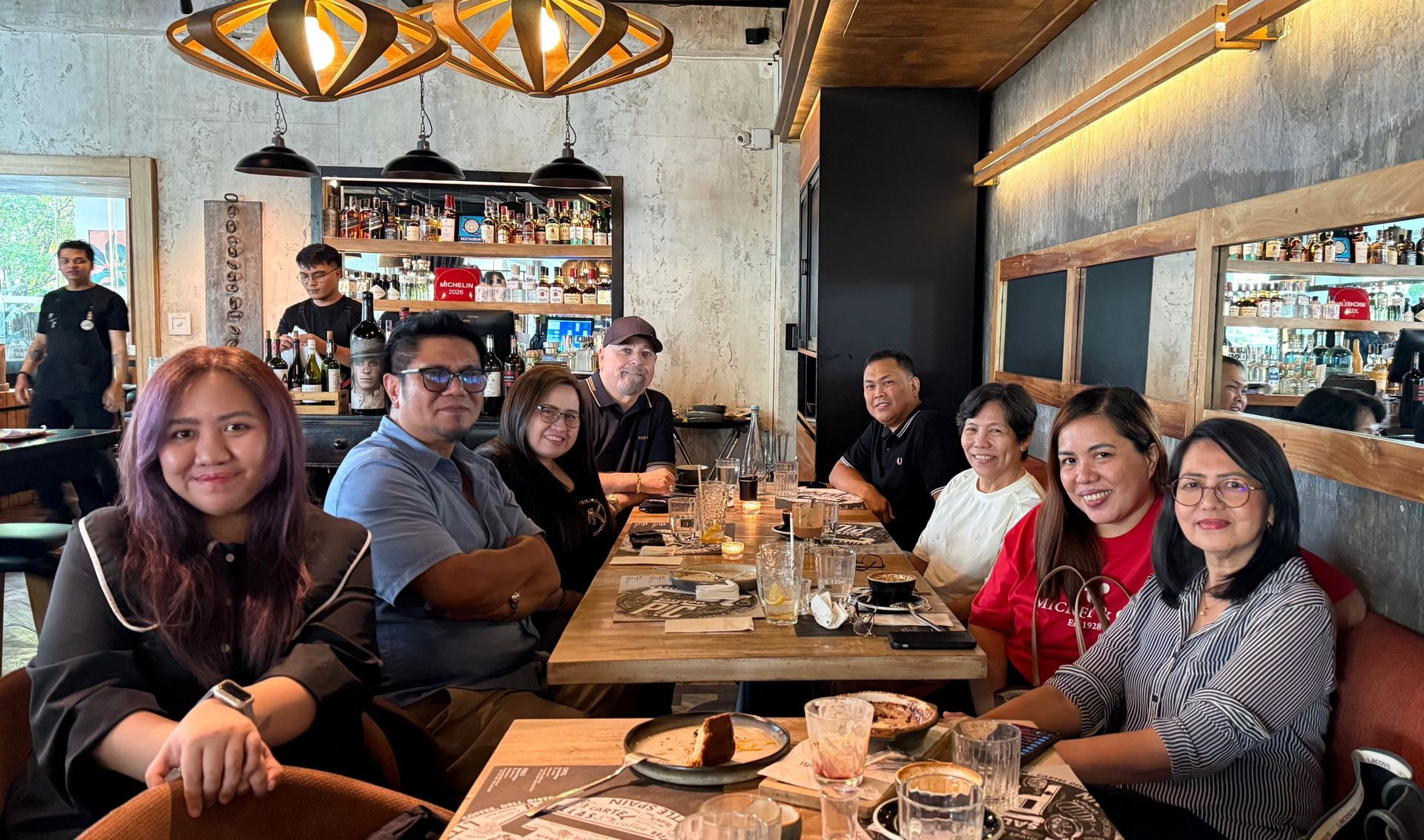
From Strategy to Connection: Colin’s Visit to the Manila Team At ADDMORE Services, our strength lies not only in our expertise but in the people behind it. Recently, our CEO, Colin Addley, spent valuable time in Manila connecting with members of our Philippine team and reinforcing the relationships that power our global delivery model. A Day of Connection and Collaboration – May 29 On May 29, Colin kicked off his Manila visit with a relaxed lunch alongside several team members. It was an opportunity to step away from screens and schedules and connect on a more personal level while sharing stories, insights, and experiences within ADDMORE. Following lunch, the day shifted into a more strategic focus with a meeting involving core team members. Discussions centered on ISO standards and the importance of aligning internal systems and processes with internationally recognized benchmarks. This reflects ADDMORE’s continued commitment to quality, consistency, and operational excellence across all regions. Driving Growth Through Strategy – June 2 On June 2, Colin met with members of the Sales and Marketing team for a dedicated session focused on strengthening growth strategies. The discussion explored ways to further develop ADDMORE’s positioning, refine messaging, and communicate the value of Professional Offshore Talent Solutions and broader service offerings more effectively. These in person sessions provided clarity, alignment, and renewed momentum, ensuring that marketing and sales efforts continue to reflect the evolving needs of clients across the AEC industry. Strengthening Operational Foundations – June 3 Colin’s visit concluded on June 3 with a meeting with our Office Manager. This conversation focused on operational efficiency, team support systems, and ensuring that the Manila office continues to operate as a high performing hub within the ADDMORE global network. From day-to-day workflows to long term planning, this meeting highlighted the importance of strong local leadership in supporting global delivery. People First, Always Colin’s time in Manila is a clear reflection of ADDMORE’s commitment to staying connected both digitally and personally. As a company built on global collaboration, face to face engagement remains an important part of strengthening trust, aligning goals, and building high performing teams. With team members across the Philippines, South Africa, and Latin America, visits like these reinforce what makes ADDMORE unique. It is a truly connected global workforce delivering exceptional results.

Learn how rigorous quality control transforms shop drawings into construction-ready deliverables. Discover the QA/QC processes that reduce rework, improve coordination, and support successful AEC project delivery.
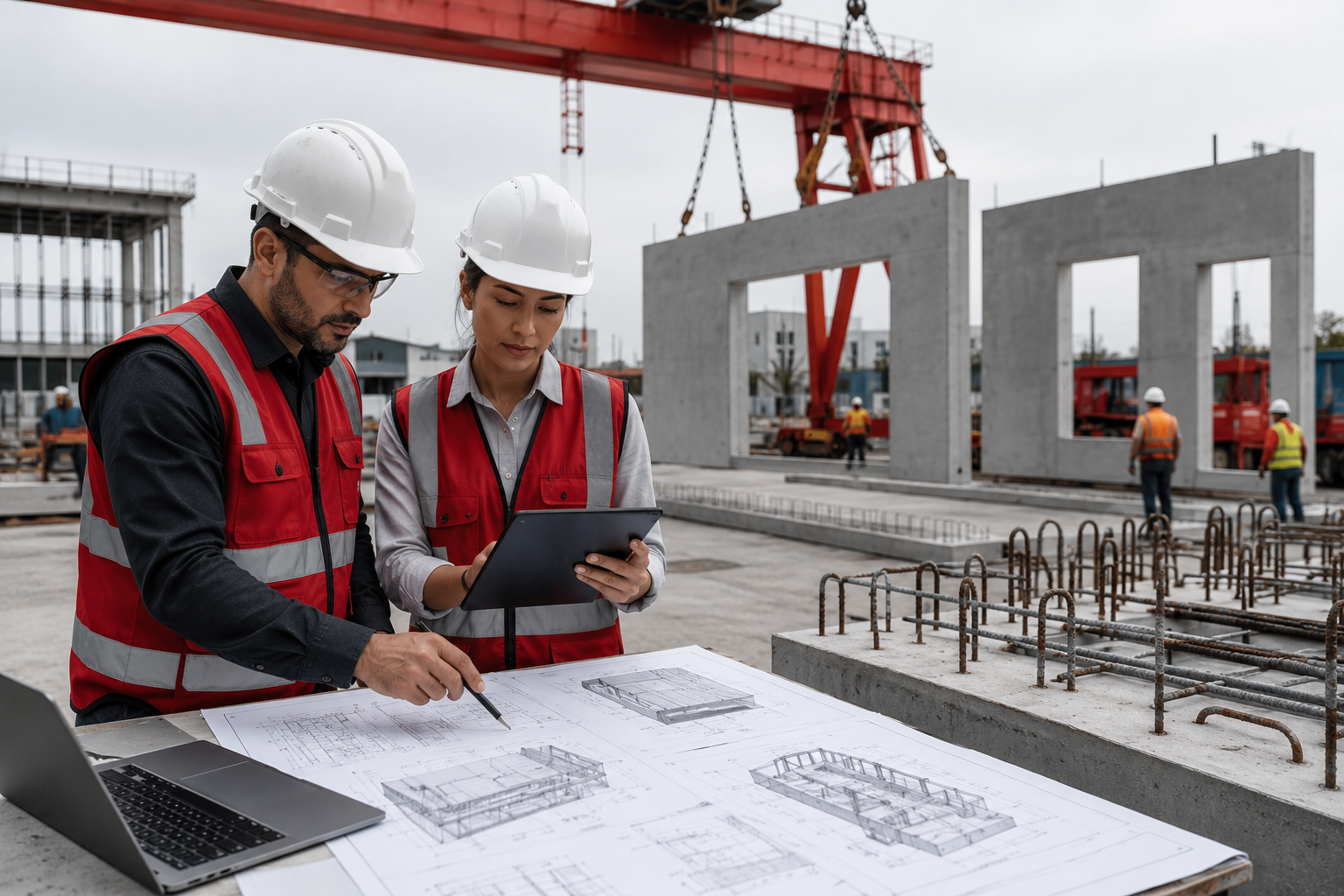
Discover how structural detailing, shop drawings, precast detailing, and rebar detailing improve coordination, reduce risk, and drive success in modern off-site construction projects.