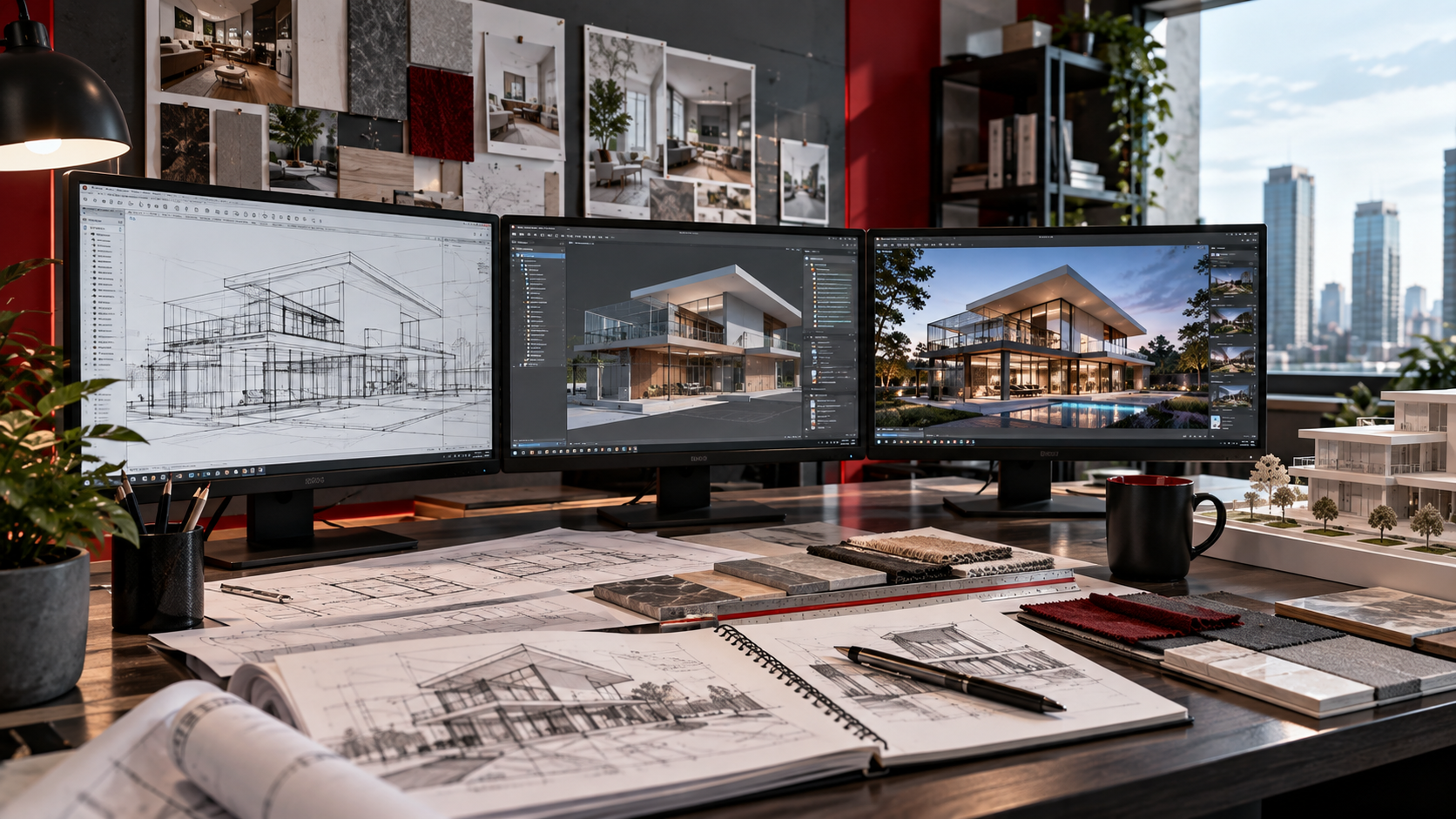
From Models to Intelligence: How Leading AEC Firms Truly Leverage BIM
When BIM Stops Being a Buzzword
If you’ve spent any time in the AEC industry over the past decade, you’ve heard the promise of BIM more times than you can count. Better coordination. Fewer clashes. Smarter decisions. Lower risk.
And yet, many firms quietly admit that despite using BIM tools, they’re still managing problems reactively, dealing with late-stage coordination issues, or treating models as little more than sophisticated drawings.
The difference between using BIM and leveraging BIM is no longer subtle—it’s strategic.
Today’s most competitive AEC firms are not just modeling buildings. They are managing information, orchestrating data, and using BIM as the backbone of decision-making from early design through long-term operations. This article explores what that shift looks like in practice—and how technology-enabled teams are redefining project delivery.
BIM Beyond 3D: The Intelligence Inside the Model
A common misconception is that BIM’s primary value lies in visualization. While 3D modeling is important, it is only the surface layer of what BIM can deliver.
At its core, BIM is a data-rich environment—a single, coordinated source of truth where geometry, quantities, specifications, and asset information coexist. When structured properly, the model becomes a live database that supports collaboration, forecasting, and long-term planning.
High-performing AEC firms focus on how this data is created, validated, and used. That’s where real transformation begins.
Pillar 1: Proactive Clash Detection That Prevents Problems
Clash detection is often described as BIM’s “killer feature,” but running automated checks alone is not enough.
Advanced BIM workflows shift coordination from reaction to prevention. Instead of overwhelming teams with thousands of low-priority clashes, disciplined coordination processes focus on:
- Rule-based clash matrices aligned to constructability priorities
- Early identification of high-impact MEP, structural, and architectural conflicts
- Actionable, clearly documented resolutions—not just reports
By resolving coordination issues virtually, teams reduce RFIs, avoid costly site rework, and protect construction schedules. BIM coordination becomes a planning tool, not a clean-up exercise.
Pillar 2: Model-Based Quantity Take-Offs and Cost Intelligence
In an industry where margins are tight, precision in quantities and cost forecasting is non-negotiable.
Model-based quantity take-offs replace manual measurement with data-driven accuracy. When models are built with consistent parameters and appropriate Levels of Development (LOD), they enable:
- Reliable material schedules and component counts
- Faster iterations during design changes
- Stronger alignment between design intent and cost planning
This approach supports true 5D BIM integration—connecting geometry to cost—so estimators and project managers can make informed decisions earlier and with greater confidence.
Pillar 3: BIM as a Foundation for Lifecycle and Asset Management
The most forward-thinking firms recognize that a building’s value doesn’t stop at handover.
Well-structured BIM deliverables lay the groundwork for operations, maintenance, and future renovations. By embedding asset data, warranties, maintenance schedules, and manufacturer information—often aligned with COBie or FM standards—the model evolves into a usable digital twin.
Owners benefit from better space management, proactive maintenance planning, and long-term visibility into asset performance. For project teams, this elevates BIM from a delivery requirement to a lasting value proposition.
The Offshore Advantage: Scaling Expertise Without Losing Control
Executing BIM at this level requires more than software licenses—it requires focus, specialization, and consistency.
Many technology-enabled firms extend their capabilities through dedicated offshore technical teams that function as a seamless extension of their in-house staff. When structured correctly, this model offers several advantages:
- Continuous training on leading BIM and CAD platforms
- Standardized, process-driven workflows aligned with global standards
- Deep specialization in modeling, detailing, and coordination tasks
This approach allows onshore teams to concentrate on design leadership, client engagement, and strategic decision-making—while technical execution is handled by skilled, process-oriented specialists.
Where ADDMORE Services Fits In—Naturally
This is where firms like ADDMORE Services quietly add value.
Rather than positioning BIM as a one-size-fits-all solution, ADDMORE operates as a technology and delivery partner, supporting AEC firms with dedicated offshore teams that specialize in BIM modeling, coordination, drafting, and data-driven deliverables.
The emphasis is not on selling software or forcing new workflows, but on integrating seamlessly with existing standards—enhancing consistency, scalability, and output quality while reducing operational strain.
For many firms, this partnership becomes less about outsourcing and more about extending internal capability with confidence.
Positioning Your Firm for the Future
The AEC industry is moving decisively toward information-led delivery. Firms that continue to treat BIM as a visualization tool risk falling behind those who use it as a strategic engine.
By embracing data-rich modeling, proactive coordination, and lifecycle-focused deliverables, AEC firms can:
- Improve predictability across projects
- Strengthen their competitive positioning in bids and proposals
- Deliver long-term value to owners, not just completed drawings
The firms that thrive will be those that stop managing drawings—and start orchestrating information.
Final Thought
Advanced BIM does not require radical reinvention. It requires the right mindset, the right processes, and the right partners.
When technology, people, and workflows align, BIM becomes more than a requirement—it becomes a competitive advantage.