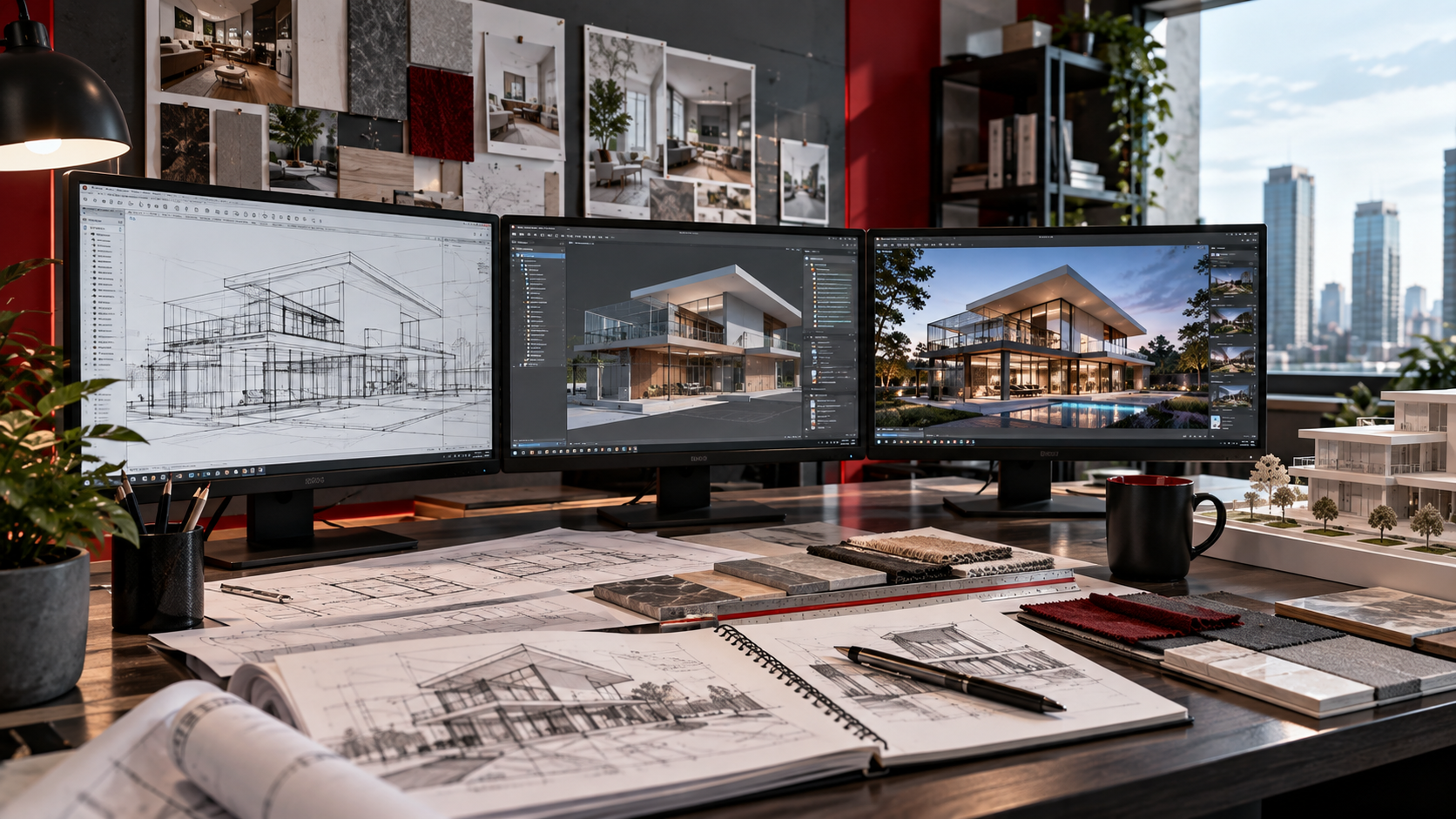
The Future of AEC Talent Management: Smarter Teams, Stronger Outcomes

November 24, 2025

The Architecture, Engineering, and Construction (AEC) industry is experiencing a period of unprecedented transformation. Digital platforms, advanced modelling, data-rich environments, and increasingly sophisticated buildings are redefining how firms operate and deliver. At the same time, project owners expect greater precision, faster timelines, and higher levels of coordination across disciplines.


In this shifting environment, traditional staffing approaches—whether purely in-house or reliant on basic outsourcing—can no longer keep up. Firms need access to specialized skills, adaptable capacity, and integrated support structures that allow them to operate with agility and confidence. As a result, the future of talent management is prioritizing smarter, scalable, and hybrid team models built around Intelligent Resourcing.


This expanded guide explores why Intelligent Resourcing is emerging as the dominant workforce strategy for 2026 and beyond, how it solves the challenges AEC firms face today, and what leaders must consider when designing the next evolution of their team structure.


Why Legacy Outsourcing Models Fall Short in the Modern AEC Environment


Before firms can embrace Intelligent Resourcing, it’s important to understand why older outsourcing models no longer align with the realities of modern project execution.


Historically, outsourcing was designed for simple delegation—sending drafting, modelling, or documentation tasks to low-cost vendors to reduce overhead. While this achieved short-term financial benefits, the approach lacked strategic integration. Many firms encountered repeated issues: inconsistent quality, limited oversight, communication delays, slow turnaround times, or providers that could not scale with project requirements.


But the most significant issue is that AEC work has fundamentally changed. Buildings are more complex, documentation is more detailed, and digital models are used throughout an entire project lifecycle. Firms now operate in ecosystems where precision, collaboration, and speed are essential. Traditional outsourcing simply wasn’t built for that.


This is why the shift toward Intelligent Resourcing is not just logical—it is necessary.


Understanding Intelligent Resourcing: The Modern Workforce Advantage


Intelligent Resourcing moves away from treating external support as a task-based vendor and instead positions global talent as part of a seamless, structured, and fully coordinated team. It represents a disciplined approach to workforce design, ensuring that firms can match the right skills to the right tasks at the right time.


1. Workforce Integration at Every Level


Rather than operating in isolation, external teams join your existing workflows. They follow your BIM standards, documentation guidelines, coordination protocols, communication rhythms, and project management structure—becoming an extension of your in-house staff.


2. Purpose-Built Talent Architecture


A core advantage of Intelligent Resourcing is access to a carefully layered talent pool. Instead of relying on a single outsourced drafter or modeler, firms gain multi-tiered teams:


senior-level specialists to guide technical accuracy,


dependable mid-career professionals for production and consistency,


junior resources for volume support and time-intensive tasks.


This structure mirrors the natural hierarchy of an internal AEC team—making coordination clean and predictable.


3. Advanced QC/QA Mechanisms Embedded in Delivery


Quality control is no longer an afterthought. Intelligent Resourcing partners invest heavily in structured review processes, coordination checks, naming conventions, file audits, and multi-stage validation that ensure every deliverable meets required standards before it reaches your desk.


4. Built for Flexibility and Continuous Scaling


Instead of dealing with staffing volatility, firms can scale in real time. Whether responding to a new project award, an accelerated deadline, or a sudden internal gap, Intelligent Resourcing supports rapid mobilization without compromising standards.


5. A Global Talent Framework Designed for AEC Requirements


The demand for BIM talent, architectural technicians, interior detailers, and skilled modelers continues to outpace local supply in many regions. Intelligent Resourcing establishes access to trained, experienced, globally distributed AEC professionals—allowing firms to maintain delivery quality even during talent shortages.


Why Intelligent Resourcing Is Becoming an AEC Imperative in 2026


The need for strategic workforce models is amplified by several key industry pressures. Below is a closer, expanded look at the challenges that Intelligent Resourcing directly addresses.


1. Increasing Workload Surges and Unpredictable Market Cycles


AEC firms often experience significant fluctuations in workload due to project delays, market conditions, funding cycles, or seasonal shifts. Internal teams are pressed to absorb sudden surges, resulting in long hours, rushed documentation, and burnout.


Intelligent Resourcing provides a scalable safety net. Instead of over-hiring or overworking teams, leaders can maintain a balanced workforce with the ability to ramp up or down as project demand changes. This creates long-term stability and significantly reduces operational stress.


2. The Growing Need for Specialized AEC Skill Sets


Today's projects require more than general drafting capabilities. From complex BIM coordination to multidisciplinary modelling, healthcare detailing, and parametric workflows, AEC roles have grown more diverse and technical. Hiring locally for each specialty is costly and often impractical.


Intelligent Resourcing gives firms immediate access to specialists across architecture, engineering, interiors, and 3D visualization—without the delays associated with lengthy recruitment cycles or talent shortages in local markets.


3. Protecting Internal Expertise for High-Value Activities


When talented professionals spend the majority of their day on drafting or repetitive documentation, firms lose strategic value. High-level team members should be focused on client relations, technical leadership, design refinement, QA management, and complex problem-solving—not buried in production workloads.


Intelligent Resourcing redistributes responsibilities so that internal leaders can operate at their highest potential.


4. Talent Scarcity Is Now a Global Challenge


AEC firms across the US, UK, Australia, and the Middle East consistently cite hiring challenges. Competition for skilled architects, engineers, and BIM specialists is increasing, and salary expectations continue to rise. Intelligent Resourcing counteracts those limitations by expanding your recruitment horizon to global talent pools without compromising quality.


The Role of ADDMORE Services in Supporting Intelligent Resourcing


A shift to Intelligent Resourcing requires dependable systems, rigorous quality management, and specialized AEC knowledge—areas where ADDMORE Services has built strong capability.


ADDMORE offers integrated drafting, BIM, modelling, and documentation support tailored to the needs of global firms. Their ADDMORE Collective, a hybrid model combining onshore freelancers with coordinated offshore teams, enables firms to achieve consistent output, maintain flexibility, and strengthen delivery capacity—while keeping the experience seamless for internal staff.


ADDMORE does not simply add headcount—they improve operational flow, provide structure, and offer talent that fits naturally into your existing framework. It is a quiet but strategic enhancement to your team.


Implementing Intelligent Resourcing: A Practical Roadmap for AEC Firms


Transitioning to a smarter, more resilient workforce model doesn’t need to be overwhelming. Most firms start small and expand gradually as they see the benefits.


1. Map Your Operational Workflow in Detail


Identify bottlenecks, repetitive tasks, skill gaps, and time-consuming documentation responsibilities. Understanding your internal pressure points reveals where resourcing will have the greatest impact.


2. Define Success Metrics Beyond Cost


Leaders should evaluate how Intelligent Resourcing improves speed, reduces coordination bottlenecks, enhances quality, and elevates team wellbeing—not just hourly savings.


3. Choose a Partner With Proven AEC Expertise


Your partner should demonstrate experience across AEC disciplines, standardized QC practices, project management capability, and seamless integration with your toolset.


4. Pilot Before Full Implementation


Start with one project or one package—BIM, CDs, interior detailing, as-builts, or modelling. This controlled environment establishes communication rhythms and workflow consistency before long-term scaling.


Smarter Teams Deliver Stronger Outcomes


The AEC firms that will lead in 2026 are those that adopt flexible, scalable, and intelligently designed workforce models that allow them to deliver high-quality output without sacrificing internal stability. Intelligent Resourcing gives firms the capacity and agility to perform at their best, backed by teams that can adapt quickly, collaborate seamlessly, and meet rising client expectations.


As the industry continues to evolve, your ability to stay competitive will depend not on how many people you employ—but on how intelligently you build, integrate, and manage your global talent ecosystem.


June 2, 2026
There is a moment in nearly every construction project where uncertainty quietly enters the conversation. A client looks at a technical drawing and struggles to imagine the finished space. An investor questions whether the design vision can truly translate into commercial value. A planning board hesitates because the proposal still feels abstract. Contractors interpret details differently. Stakeholders approve concepts without fully seeing what they are committing to. This is where architectural renderings become far more than visual enhancements. Modern renderings have evolved into strategic communication tools that help project teams secure approvals, win bids, attract investors, and align stakeholders long before construction begins. They bridge the gap between technical intent and human understanding. More importantly, they reduce friction during decision-making. In an industry where confidence can determine whether a project moves forward or stalls, visual clarity has become a competitive advantage. Why Visualization Matters More Than Ever Construction projects have become increasingly complex. Owners expect faster timelines, investors demand clearer projections, and clients want greater involvement in the design process. Traditional 2D drawings remain essential, but they are often insufficient for communicating the emotional and functional experience of a space. Renderings solve this challenge by transforming technical information into something accessible and persuasive. Instead of asking stakeholders to interpret elevations, sections, and material schedules independently, renderings allow them to experience the vision before a single material is ordered or installed. This shift changes conversations significantly. Projects move from "What will this look like?" to "How do we optimize this further?" That difference can save time, prevent redesign cycles, and improve project outcomes. The Competitive Edge in Winning Bids Construction and development proposals are highly competitive. Firms are not only evaluated on pricing and capability but also on how effectively they communicate their vision. A detailed rendering can immediately separate one proposal from another. When clients review competing bids, visuals help them understand scope, quality, atmosphere, and usability. A technically strong proposal may still lose momentum if decision-makers cannot emotionally connect with the concept. Renderings create that connection. They communicate professionalism, preparedness, and confidence. They demonstrate that the project team has thought through design intent, spatial relationships, finishes, lighting, and user experience. For developers and contractors pursuing high-value opportunities, visualization often becomes a silent differentiator. Improving Stakeholder Alignment Misalignment is one of the most expensive risks in construction. Architects, engineers, consultants, contractors, owners, and end users may all interpret drawings differently. Even minor misunderstandings can result in delays, RFIs, rework, or budget increases. Visualization minimizes ambiguity. Photorealistic renderings and coordinated BIM-supported models provide a shared visual reference for everyone involved in the project lifecycle. Stakeholders gain a clearer understanding of scale, circulation, finishes, and design intent. This improves communication across disciplines and supports more productive collaboration during pre-construction. Teams that establish alignment early are typically better positioned to maintain schedule integrity and budget control later in the project. Supporting Faster Approvals Planning boards, municipalities, investors, and regulatory bodies are frequently tasked with reviewing large amounts of technical documentation within limited timeframes. Technical drawings alone may not fully communicate the project’s impact or design quality. Renderings help reviewers quickly understand: Site integration Building massing Public-facing aesthetics Material intent Environmental context User experience This can significantly improve presentation effectiveness during approvals and stakeholder reviews. For hospitality, commercial, mixed-use, and residential developments, visualization often becomes one of the strongest tools for gaining early project buy-in. Investor Confidence Begins with Clarity Investors evaluate more than design quality. They evaluate risk. The clearer a project appears during the pre-construction phase, the easier it becomes for investors to understand the opportunity and feel confident about execution. Renderings support investor presentations by helping communicate: Brand identity Market positioning Spatial experience Commercial appeal Customer experience potential Operational functionality A compelling rendering can transform an abstract concept into something tangible and commercially believable. This is particularly important in hospitality and experiential projects where atmosphere and user perception directly influence revenue potential. The Relationship Between BIM and Visualization  The strongest visualization workflows are not isolated from technical production. They are integrated into the broader project delivery process. That is where BIM and coordinated modeling become especially valuable. When visualization is supported by BIM workflows, project teams gain greater consistency between design intent and constructability. Models can support clash detection, coordination reviews, shop drawing development, and construction sequencing while also generating highly accurate visual outputs. This integrated approach improves both presentation quality and project coordination. At ADDMORE Services, visualization is approached as part of a larger technical ecosystem rather than a standalone creative exercise. The company supports global AEC firms through architectural drafting, BIM, rendering services, quantity takeoffs, project management support, MEP coordination, and construction documentation. Their offshore outsourcing model allows firms to scale technical production efficiently while maintaining quality control and operational flexibility. Rather than simply producing attractive imagery, the focus is placed on creating visuals that support real project delivery objectives. Visualization as a Communication Tool One of the most overlooked benefits of renderings is their ability to improve communication with non-technical audiences. Not every stakeholder has experience reading architectural documentation. Clients, investors, community representatives, and end users often respond more effectively to visuals than technical drawings. Renderings simplify complex discussions without oversimplifying the project itself. This creates more productive conversations around: Design intent User experience Material selections Branding opportunities Operational flow Future development potential The result is stronger engagement and better-informed decision-making. Reducing Costly Changes Later Late-stage revisions are expensive. When stakeholders cannot fully visualize the final outcome early in the process, concerns often emerge after construction documentation is completed or after construction has already begun. Renderings reduce this risk by helping teams identify concerns sooner. Clients can review layouts, finishes, lighting conditions, circulation, and aesthetics earlier in the process. Design refinements happen before they become costly field modifications. This proactive approach contributes to smoother project execution and stronger client satisfaction. The Future of Architectural Presentation The role of visualization continues to evolve rapidly. Interactive walkthroughs, immersive experiences, real-time rendering, and AI-assisted visualization technologies are reshaping how projects are communicated and evaluated. Yet the core objective remains unchanged. People need confidence before they commit resources, approvals, or investment. Renderings help provide that confidence. As competition increases across the AEC industry, firms that communicate clearly and visually will continue to gain an advantage in winning projects and building stronger client relationships. Final Thoughts Architectural renderings are no longer optional presentation extras. They are strategic assets that influence approvals, strengthen collaboration, improve stakeholder confidence, and support better project outcomes. The ability to communicate a project clearly before construction begins has become one of the most valuable advantages in modern project delivery. For firms navigating complex timelines, demanding stakeholders, and increasingly competitive markets, visualization is not simply about making projects look impressive. It is about helping projects move forward with clarity and confidence. If your team is looking for reliable support in architectural drafting, BIM coordination, rendering services, construction documentation, or project-specific offshore outsourcing, ADDMORE Services provides scalable technical solutions tailored to the evolving needs of the AEC industry. Contact us for a free consultation and discover how the right technical partner can help strengthen your project delivery workflow while maintaining quality, coordination, and efficiency.
May 25, 2026
Discover why accurate as-built drawings are essential for facility management, renovations, maintenance efficiency, and long-term operational success.
Intelligent resourcing and offshore technical support for scalable AEC project delivery
May 19, 2026
Discover how intelligent resourcing helps AEC firms scale project delivery, improve efficiency, and access global technical talent.