
The Importance of Millwork Drawings in Construction Projects: A Detailed Guide
Joel Phillips • October 24, 2024
Understanding the Unique Role of Millwork Drawings in Construction

What Are Millwork Drawings?
Millwork vs. General Construction Drawings
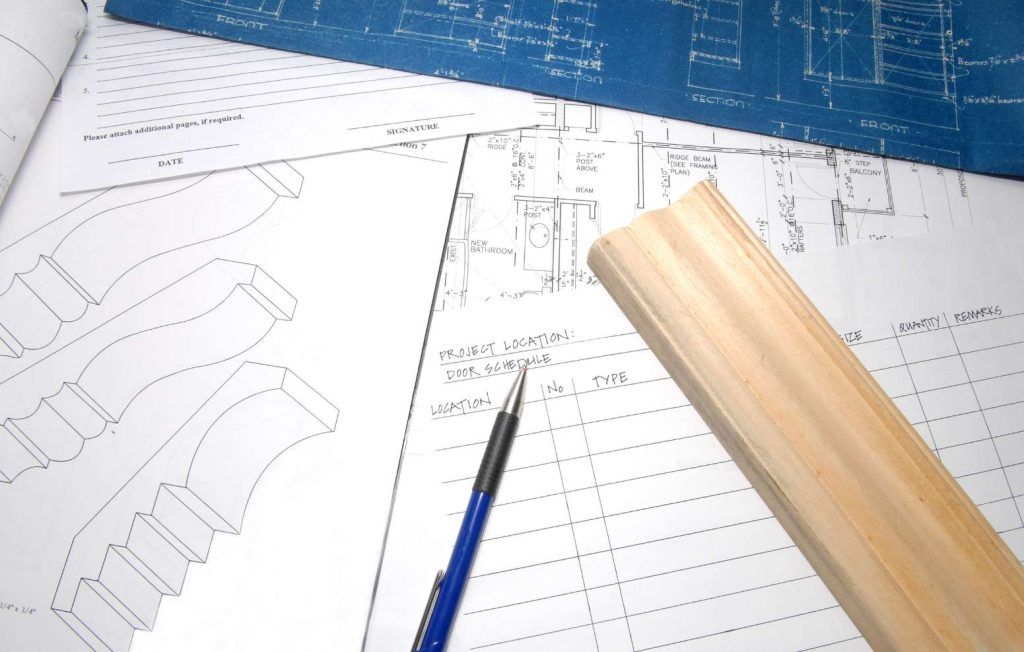
Key Elements of Millwork Drawings
- _x000D_
- Detailed Dimensions: _x000D_ One of the hallmarks of millwork drawings is their precise dimensions. These drawings provide exact measurements, often down to fractions of an inch, to ensure that every piece of millwork fits perfectly within the designated space. _x000D_
- Materials and Finishes: _x000D_ Millwork is not just about aesthetics; it’s also about materiality. Millwork drawings include detailed notes on the materials to be used, whether it's specific wood types like oak or maple or composite materials for more contemporary designs. They also include finish instructions—ffor example, stain color, lacquer type, or paint finish. _x000D_
- Hardware Specifications: _x000D_ From door handles to drawer slides, millwork drawings specify every piece of hardware that will be part of the installation. This attention to detail ensures consistency in design and functionality across all parts of the project. _x000D_
- Customization Details: _x000D_ Many elements of millwork are custom-made, which means millwork drawings will often show unique features like carvings, inlays, or special moulding profiles. These custom features are what make millwork distinct from mass-produced items and require the extra level of documentation provided by millwork drawings. _x000D_
The Importance of Accuracy in Millwork Drawings

Conclusion: The Role of Millwork in Bringing Designs to Life

Workload spike? You may not need a new hire. Learn when Project Specific Outsourcing (PSO) delivers takeoffs, shop drawings, and models faster than hiring.

Bid season overloads estimators. Learn how to split takeoff work by task, trade, and surge capacity so your team can bid more and measure less.
Workloads in architecture, engineering, construction, and development firms rarely move in a straight line. A large bid lands, a project hits its documentation peak, or a key person goes on leave. Other times the gap is permanent: the team has simply outgrown the people it has. The same is true beyond design and delivery. Growing firms also need business technology specialists to run their CRM, business systems, AI tools, and day-to-day technology support. Sometimes that need is a short push, such as a system rollout. Sometimes it is ongoing. These are two different needs, and they call for two different answers. That is why Professional Talent Outsourcing comes in two models, each with its own method of engagement. What Professional Talent Outsourcing is Professional Talent Outsourcing adds professional capacity to your team on a monthly rate, from AEC professionals to business technology specialists. ADDMORE draws on a network of pre-qualified nearshore independent professionals in Latin America, who work in or close to your time zone, with further choice offshore in South Africa and the Philippines. Wherever they are based, they work on your systems, to your standards, as part of your team. This is managed augmentation, not transactional staffing. ADDMORE matches each professional to your business style and culture, then stays involved for performance and continuity. Why two models? The difference is not only how long you need someone. It is how the professional is engaged and who carries the compliance risk. Three to six months: ADDMORE engages the professional as Contractor of Record. Six months or more: the risk of employer and employee misclassification increases, so ADDMORE engages a trusted third-party Employer of Record to employ the professional. In both models, you hold one services agreement with ADDMORE, and ADDMORE takes on the classification risk. That removes the responsibility from you. Model 1: Staff Augmentation Staff Augmentation is flexible support for a defined term, generally three to six months. It suits: a project peak or a tender with a hard deadline a backlog of drawings, models, or documentation a system rollout or migration cover while a team member is on leave testing a new role before committing to it long-term ADDMORE is the contracting party holding the agreement and handles payments and compliance on your behalf, acting as the Contractor of Record. The cost of this is built into your rate. Model 2: Embedded Talent Embedded Talent is for six months or more, and it is the model we recommend. The professional becomes a long-term member of your team, integrated into your workflows, your software and your way of working. Because the relationship is built to last, ADDMORE manages it for the long run. Embedded professionals are encouraged to upskill in AI every month and are managed for performance, continuity, and retention. The engagement runs through a trusted third-party Employer of Record, engaged by ADDMORE. This gives the professional proper employment and keeps you clear of misclassification risk. Because it includes the Employer of Record, the Embedded Talent rate is slightly higher than Staff Augmentation. One all-inclusive rate Whichever model you choose, the rate in your ADDMORE proposal is all-inclusive. The method of engagement, Contractor of Record or Employer of Record, is built into the price. There are no separate, hidden, or additional fees. Side by side