Why Early BIM Coordination Is the Smartest Investment You Can Make Before Construction Begins
Construction projects are complex by nature. Architects, engineers, contractors, and specialist trades must work in sync, often under tight schedules and budgets. Yet many costly project delays are not caused by unforeseen conditions. They result from coordination issues that could have been identified long before construction began.
A duct routed through a structural beam, a pipe clashing with a column, or limited maintenance access for critical equipment may seem like small oversights in a digital model. On site, however, they can trigger delays, rework, change orders, and unnecessary costs.
This is where Building Information Modeling (BIM) coordination delivers its greatest value. More than creating a detailed 3D model, BIM enables project teams to detect conflicts early, make informed decisions, and reduce risk before work reaches the jobsite.
The Real Cost of Unresolved Clashes
Every building combines multiple disciplines into one physical space. Architectural, structural, mechanical, electrical, and plumbing systems are often designed independently before coming together during construction.
While each discipline may produce technically accurate drawings, conflicts frequently emerge where those systems intersect. A beam may occupy the same space as ductwork, electrical containment may compete with HVAC services, or service routes may become impossible to install within ceiling voids.
Resolving these issues during construction is expensive. It can involve demolition, redesign, material replacement, additional labor, and schedule disruption.
Identifying the same conflict within a coordinated BIM model, on the other hand, requires only technical review and design adjustments. Solving problems digitally is almost always faster, less disruptive, and significantly more cost-effective than correcting them in the field.
BIM Coordination Is About Risk Management
Although BIM is widely recognized for visualization, its greatest strength lies in proactive risk management.
A coordinated BIM workflow allows project teams to evaluate how architectural, structural, and MEP systems interact before construction begins. Typical coordination reviews identify issues such as:
- Mechanical systems intersecting structural elements
- Plumbing routes conflicting with walls or foundations
- Electrical containment competing for limited ceiling space
- Misaligned shafts and risers between floors
- Inadequate maintenance clearances around equipment
- Service layouts that are technically possible but impractical to install
Software can identify geometric clashes, but successful coordination depends on experienced professionals who can determine which issues require action, prioritize solutions, and communicate them effectively across disciplines.
Protecting the Construction Schedule
Construction schedules rely on carefully planned sequences. Structural work must be completed before services are installed, while ceilings and finishes depend on coordinated work above them.
When a coordination issue is discovered during installation, multiple trades may be forced to stop while revised designs are produced and approved. One unresolved clash can create a ripple effect that impacts several downstream activities.
Early BIM coordination shifts these discussions into preconstruction, where solutions are far less disruptive. Teams can evaluate options, agree on revisions, and update coordinated models before labor and materials are committed.
While no project is free from uncertainty, preventing predictable coordination problems helps create a more reliable construction schedule.
Reducing Rework and Change Orders
Not every change order can be avoided. Owner requests, unforeseen site conditions, and regulatory requirements will always influence projects.
Poor coordination, however, should not be a recurring cause.
When clashes remain unresolved until construction, contractors often face additional labor, material waste, equipment downtime, and extended site overhead. These situations may also lead to disputes over responsibility and consume valuable project management time.
A structured BIM coordination process minimizes these risks by providing greater visibility, documented decision-making, and coordinated updates before installation begins.
Better Decisions Through Better Visualization
Traditional 2D drawings remain essential, but interpreting multiple plans, elevations, and sections can become increasingly difficult in technically dense areas.
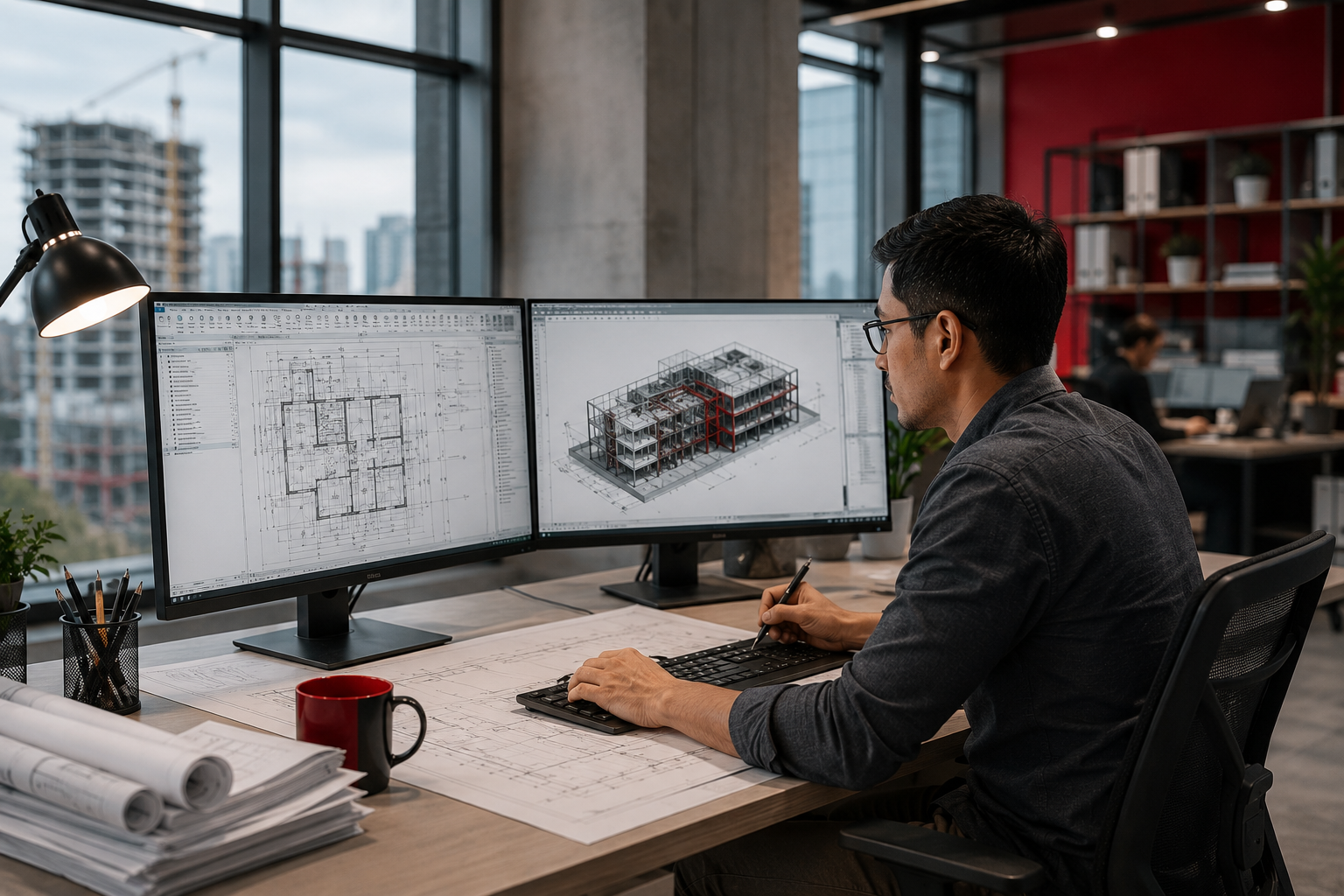
A coordinated 3D BIM model provides a clearer understanding of complex spaces, allowing teams to evaluate ceiling voids, plant rooms, service corridors, risers, and structural interfaces before construction reaches them.
This improved visibility enables project teams to answer practical questions early:
- Is there enough space to install this system?
- Will equipment remain accessible for maintenance?
- Can service routes be installed efficiently?
- Are structural penetrations properly coordinated?
These decisions improve construction quality while reducing uncertainty throughout the project lifecycle.
Why Experienced BIM Teams Matter
Technology alone does not deliver successful coordination.
Effective BIM requires professionals who understand construction sequencing, documentation standards, multidisciplinary coordination, and real-world installation challenges. Their technical knowledge transforms software-generated clash reports into practical, buildable solutions.
For many architecture, engineering, construction, and specialist subcontracting firms, maintaining this level of expertise in-house can be challenging, especially during periods of high demand.
That is where strategic offshore support can provide significant value.
At ADDMORE Services LLC, we provide offshore BIM modeling, clash detection, Revit production, MEP coordination, and technical documentation services that integrate seamlessly into established AEC workflows. Rather than functioning as an external drafting resource, our technical professionals become an extension of your project team, helping increase capacity while maintaining quality and consistency.
Build the Solution Before You Build the Problem
The most expensive construction problems are often the ones that could have been prevented.
Early BIM coordination gives project teams the opportunity to identify conflicts before they become costly field issues, protecting schedules, controlling budgets, and improving project predictability.
By investing in coordinated digital workflows, construction teams gain more than an accurate model. They gain confidence that critical decisions have been reviewed before they affect labor, materials, and project delivery.
Ready to Strengthen Your BIM Coordination Process?
Whether you need additional BIM production capacity, multidisciplinary coordination support, Revit modeling, or comprehensive clash detection, ADDMORE Services LLC can help your team deliver projects with greater efficiency and confidence.
Contact us today for a free consultation to discover how our offshore AEC technical professionals can help you reduce coordination risks, improve project workflows, and keep your next project moving forward with certainty.