_x000D_
_x000D_
Looking for a high-value piece of underbar equipment? Are you aware of the growing trend away from soda guns? Many people need a unique piece of bar equipment, and Krowne’s new low-profile bar cooler will solve many evolving problems bar owners are facing! Learn all about coolers, which ones to use and why you need Krowne’s new low-profile cooler. Later in this article, I’ll tell you my favorite low-profile cooler._x000D_
_x000D_
My name is Rick Uzubell and I’m a professional bar designer. I’ve been in this professional practice since 2006 and have worked for some incredible clients. Please allow me to be your consultant today._x000D_
_x000D_
_x000D_
_x000D_
_x000D_
_x000D_
_x000D_
_x000D_
_x000D_
_x000D_
_x000D_
KROWNE ANNOUNCES NEW LINE OF BAR COOLERS
_x000D_
Krowne recently introduced a new addition to its line of bar coolers – the low profile coolers. Available in six standard lengths, Krowne responded to a growing need of coolers that fit under the front bar. Krowne is an ambitious third-generation, family-owned company, with new products being regularly introduced. Complemented by outstanding bar equipment products and an all-in staff, Krowne has taken the top spotlight in the industry. I love all their products, vision and customer service, which is why I’m always so excited to report all of Krowne’s developments._x000D_
_x000D_
_x000D_
_x000D_
_x000D_
_x000D_
_x000D_
_x000D_ KROWNE'S NEW LOW-PROFILE COOLER
_x000D_
_x000D_
_x000D_
_x000D_
_x000D_
_x000D_
_x000D_
_x000D_
_x000D_
_x000D_
WHAT IS A LOW-PROFILE BAR COOLER?
_x000D_
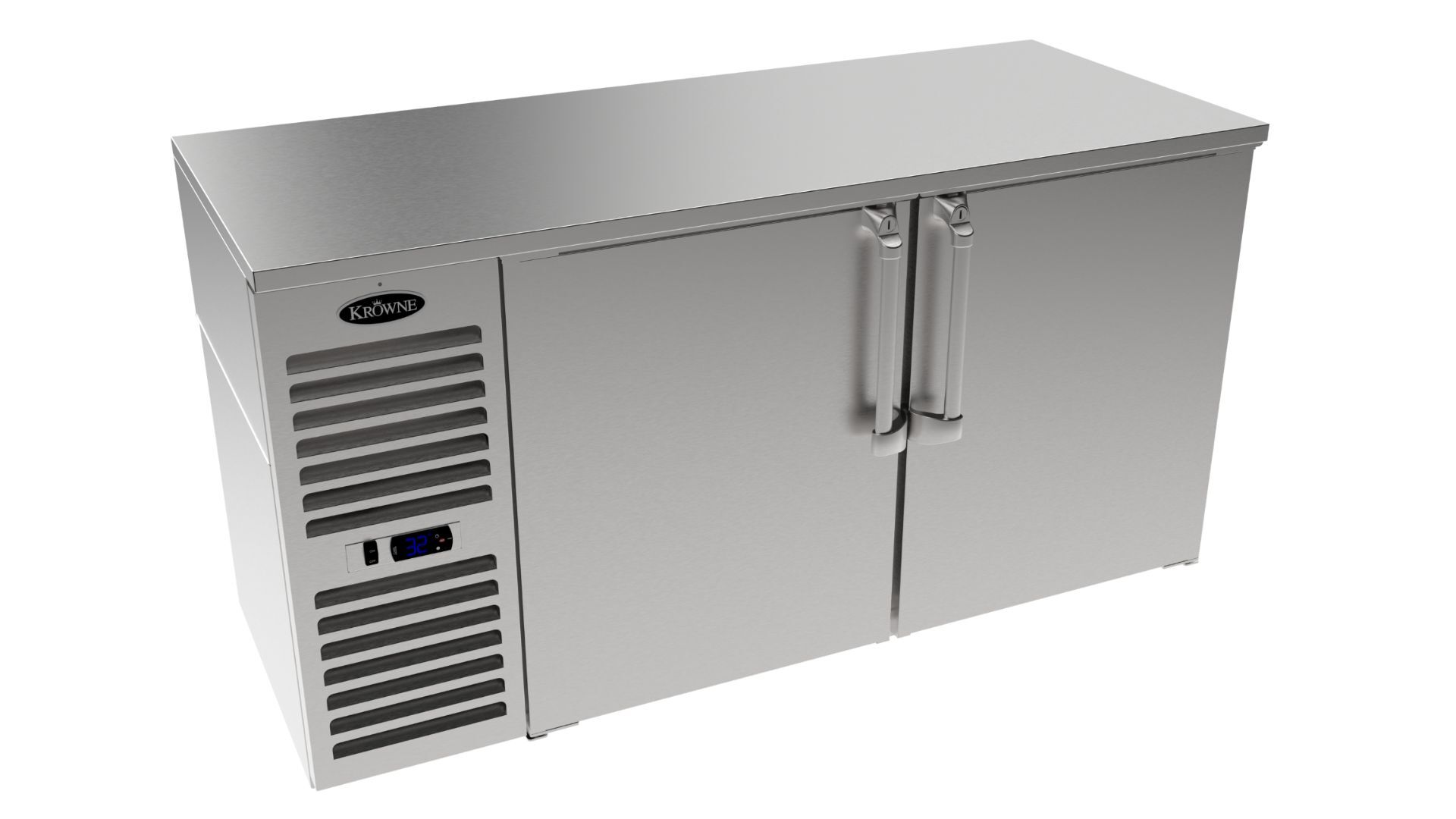
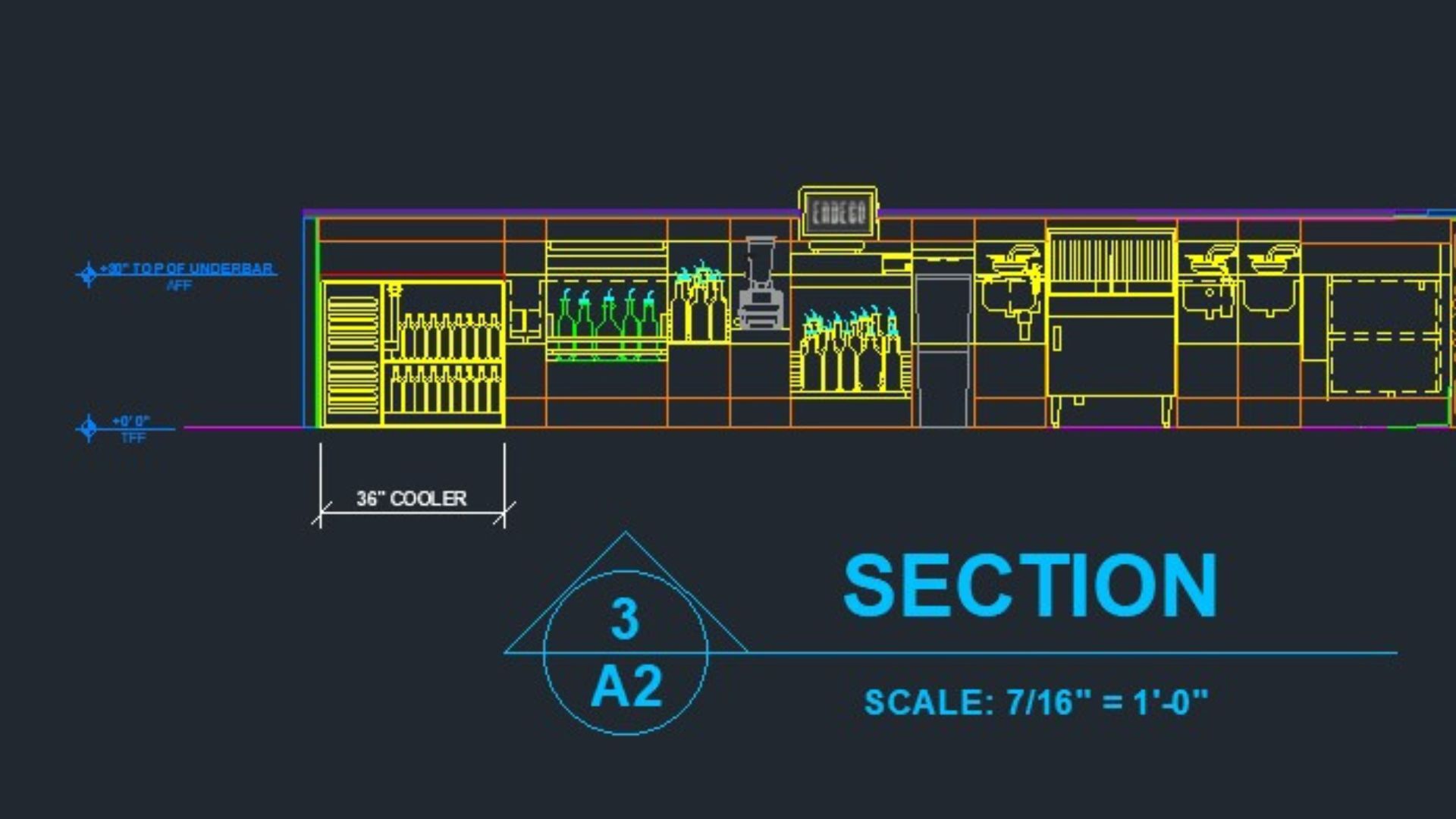
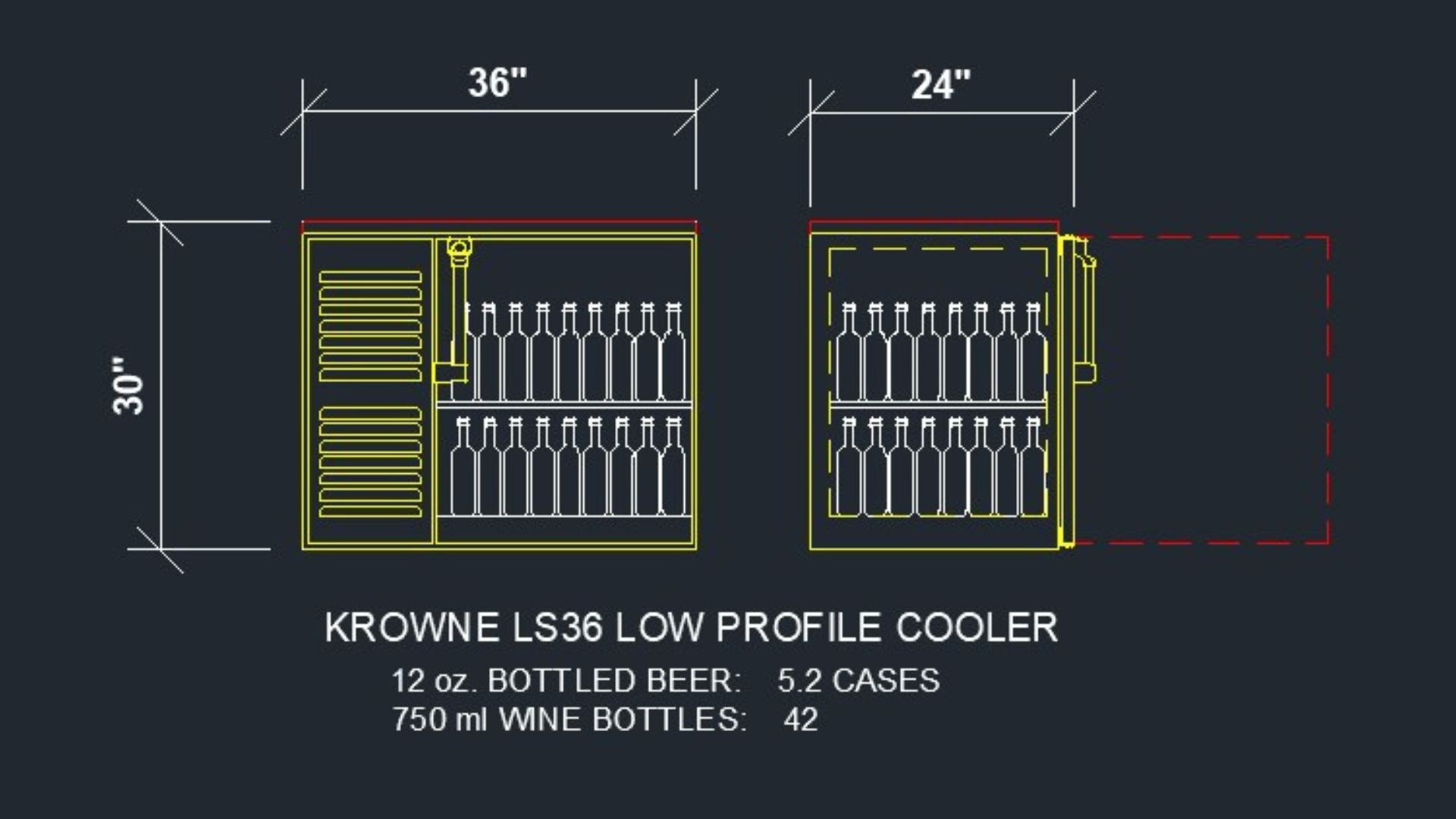
Bar coolers solve all sorts of problems for bar owners, and they come in many shapes and sizes. As the name implies, back bar coolers are normally installed along the back bar wall. These coolers are typically between 35″ – 37″H, which is ideal for back bars. Figure 1 (below, left) depicts the Krowne BS84 back bar cooler, which is 37″H. Next, in Figure 2 (below, right) we have the new Krowne LS36 low profile cooler, which is 30″H. The low profile unit features two shelves, but the purpose is different._x000D_
_x000D_
_x000D_
_x000D_
_x000D_
_x000D_
_x000D_
_x000D_
_x000D_
_x000D_
_x000D_
_x000D_
FIGURE 1. KROWNE BACK BAR COOLER
_x000D_
_x000D_
_x000D_
_x000D_
FIGURE 2. KROWNE LOW-PROFILE COOLER
_x000D_
_x000D_
_x000D_
_x000D_
_x000D_
_x000D_
_x000D_
_x000D_
_x000D_
_x000D_
_x000D_
_x000D_
_x000D_
_x000D_
_x000D_
WHY WE NEED MANY CHOICES FOR BAR COOLERS
_x000D_
If you’re working on your first bar design, you need to know a bit about the choices you have for bar coolers. For this discussion, there are two branches of coolers – back bar coolers and front bar coolers._x000D_
COOLER CHOICES FOR BACK BARS
_x000D_
_x000D_
Reach-in coolers – the staple cooler of back bars, which are available with sliding doors or hinged doors
_x000D_
Pass-thru coolers – used for island back bars
_x000D_
High-profile coolers – aka visual merchandisers
_x000D_
_x000D_
WHICH COOLERS ARE NORMALLY USED FOR FRONT BARS?
_x000D_
_x000D_
Slide-top coolers – most commonly used where style isn’t important
_x000D_
Reach-in coolers
_x000D_
_x000D_
In many instances, I’ve used standard reach-in coolers in front bars because I didn’t have any alternatives at the time. Whenever I design a bar for an upscale venue, using the standard height cooler under the front bar doesn’t feel like a good application, because I think they’re too tall for good ergonomics. I normally specify Krowne bar equipment, and I often wished they had a low-profile cooler…_x000D_
WHEN IS IT BEST TO USE A STANDARD BACK BAR COOLER UNDER THE FRONT BAR?
_x000D_
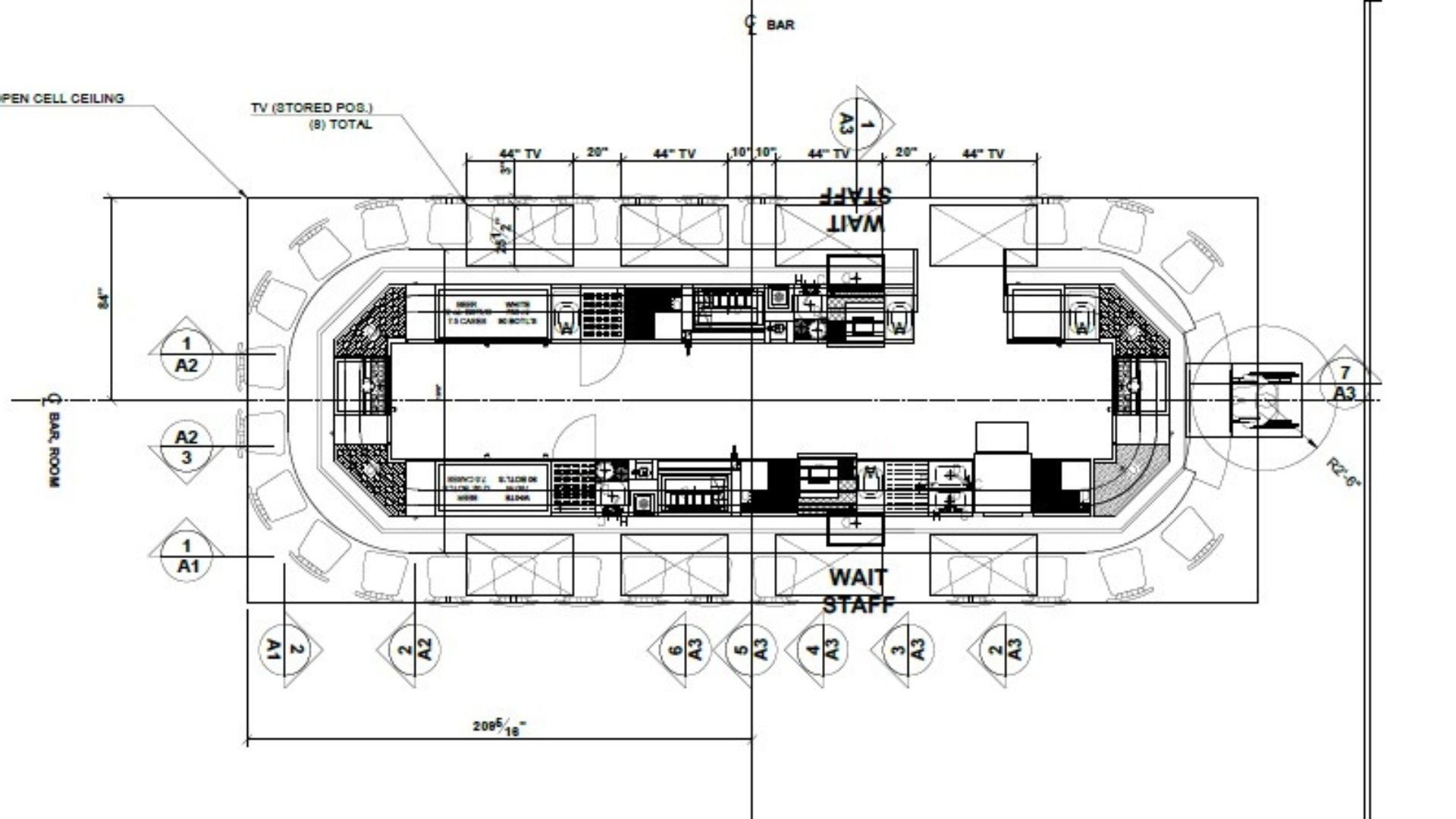
Sometimes there’s no perfect world in bar design – even for professionals such as myself. There is one exception to when I specify a standard back bar cooler for the front bar, and that’s when I’m designing narrow island bars. As you’ll notice in the bar layout shown in Figure 3, below, I’m showing two standard back bar coolers. If I didn’t use these, our storage capacity would be compromised with low-profile coolers._x000D_
_x000D_
_x000D_
_x000D_
_x000D_
_x000D_
_x000D_ FIGURE 3. ARCHITECTURAL PLAN OF NARROW ISLAND BAR_x000D_
_x000D_
_x000D_
_x000D_
_x000D_
_x000D_
HOW DO LOW PROFILE BAR COOLERS COMPARE TO STANDARD COOLERS?
_x000D_
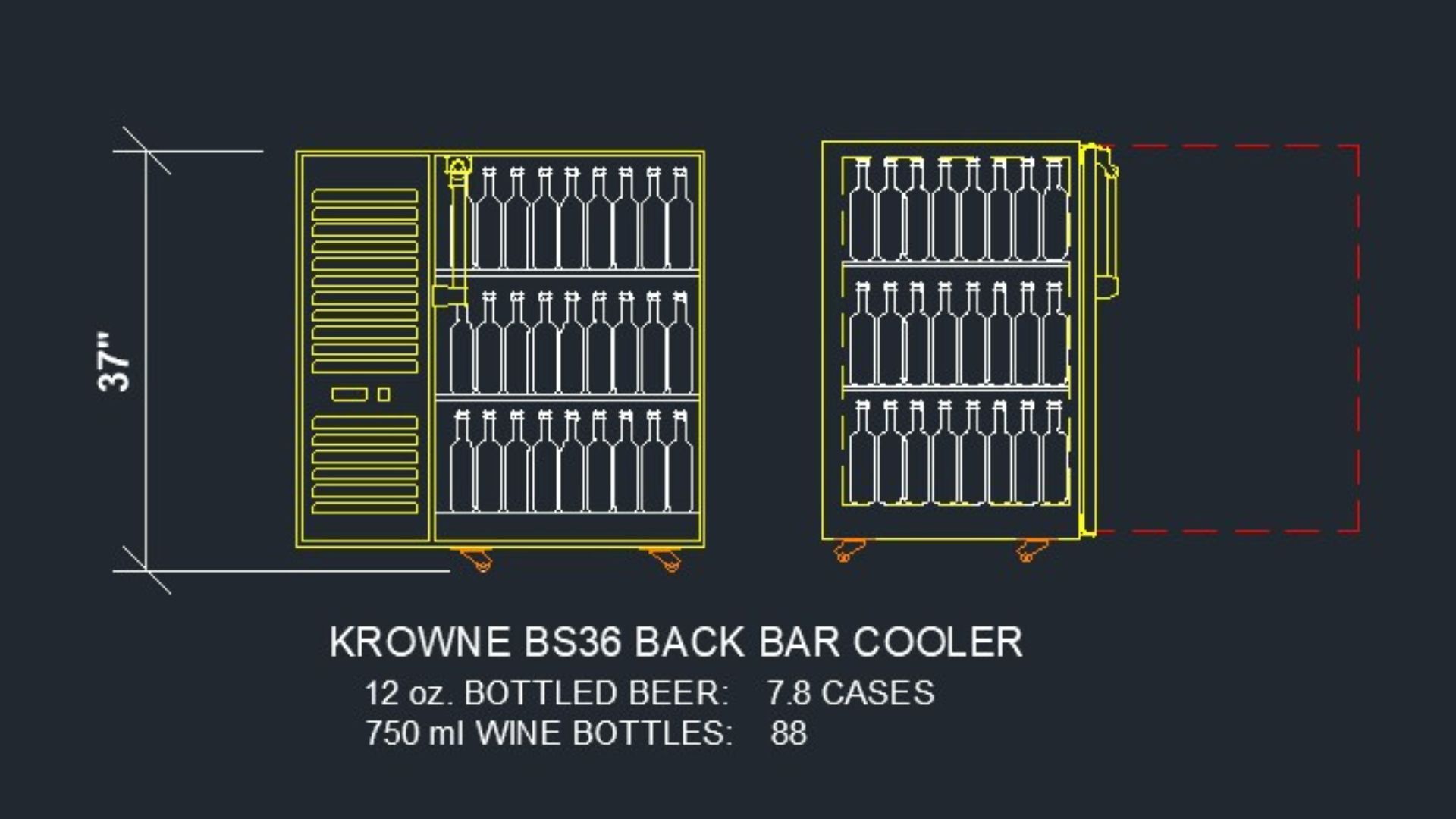
As I mentioned earlier, I use standard back bar coolers under the front bar occasionally. However, for traditional bars with back bars, I prefer to use the low profile units. Why? Because my first goal is always to maintain ergonomics, and that requires that all underbar components to be at the same height. I prefer Krowne’s line of bar equipment, and that means the working surface of all underbar stainless is at 30″ (above the finished floor). Getting back to the question at hand, a standard 36″W back bar unit holds about 50% more 12 oz. bottles than its low profile counterpart and approximately double the amount of wine bottles, as shown in Figure 4 and Figure 5, below._x000D_
THE EMERGENCE OF ELIXIRS CHANGES BAR COOLER STORAGE REQUIREMENTS
_x000D_
As I wrote in a recent blog post, many bar owners are moving away from soda guns
. This group includes many fine dining restaurants as well as start-ups. That’s because many bar owners are trending to elixirs for making non-alcoholic cocktails (aka “Mocktails”)
. What’s the fallout from this, you ask? Because many cocktails are also being made with canned soda, bar owners now need a place to store all of these ingredients. For those with existing bars, these ingredients are stored in back bar coolers, but I’m making the effort to provide that storage under the front bar. When you employ the Krowne LS36 (illustrated in Figure 5, below), you’ll have all that extra storage in the bar station. This eliminates additional, unnecessary bartender movement._x000D_
_x000D_
_x000D_
_x000D_
_x000D_
_x000D_
_x000D_
_x000D_
_x000D_
_x000D_
_x000D_
_x000D_
_x000D_
FIGURE 4. KROWNE BS36 BACK BAR COOLER WITH STATED CAPACITY
_x000D_
_x000D_
_x000D_
_x000D_
FIGURE 5. KROWNE LOW PROFILE COOLER WITH STATED CAPACITY
_x000D_
_x000D_
_x000D_
_x000D_
_x000D_
_x000D_
_x000D_
_x000D_
_x000D_
_x000D_
_x000D_
_x000D_
_x000D_
_x000D_
_x000D_
_x000D_ BAR DESIGN TIP
_x000D_
_x000D_ Whenever I specify the Krowne low-profile cooler, I prefer the stainless steel door (LS36-SSS). I believe the glass-and-stainless door isn’t necessary, because this isn’t a merchandising cooler – customers will never see the contents.
_x000D_
_x000D_
_x000D_
_x000D_
_x000D_
_x000D_
_x000D_
_x000D_
_x000D_
_x000D_
_x000D_
_x000D_
MY FAVORITE LOW-PROFILE BAR COOLER
_x000D_
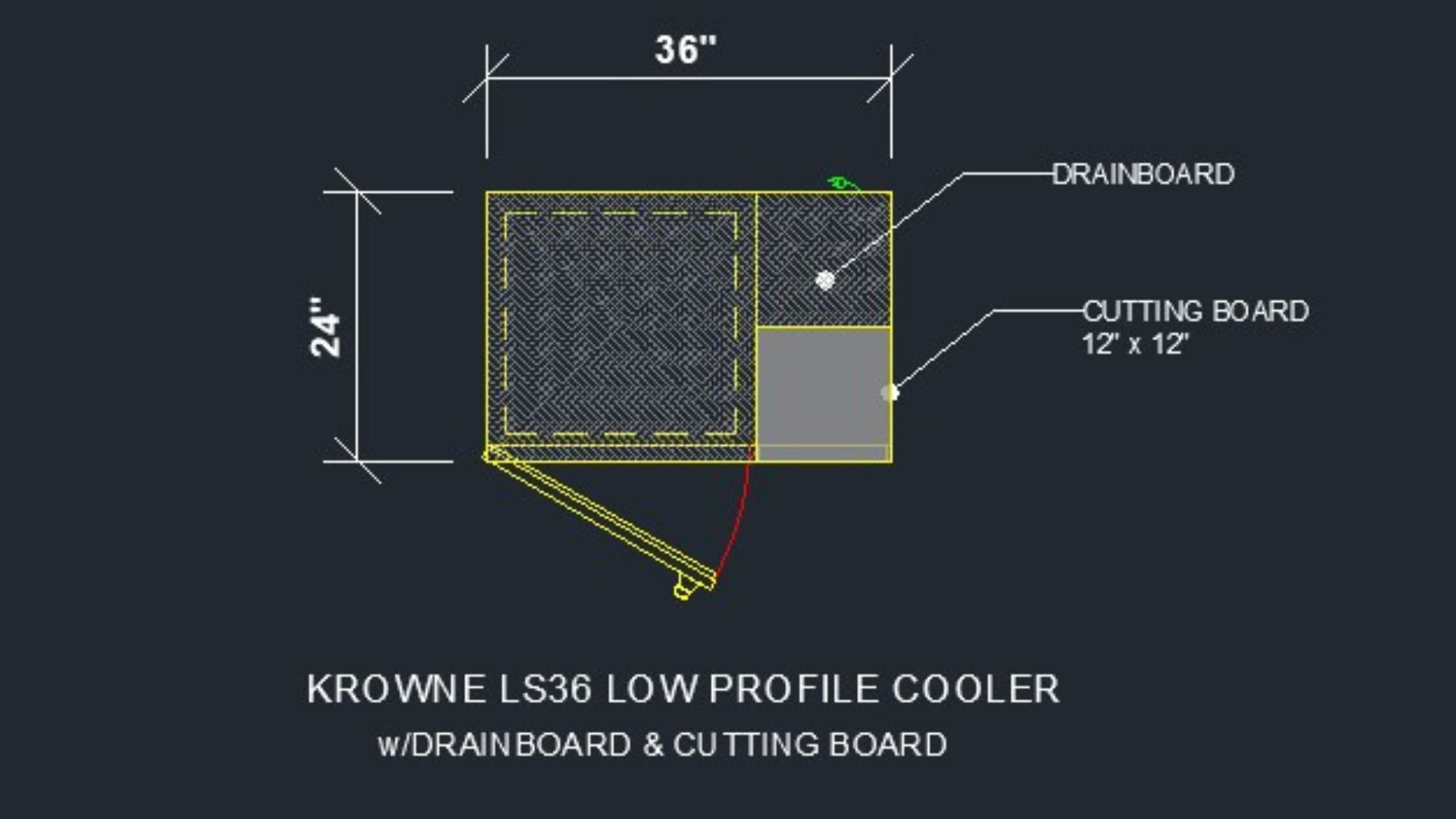
My favorite low-profile bar cooler is the Krowne LS36, with optional drainboard top and cutting board, as shown in Figure 6, below, left. By specifying Krowne coolers
, you’re assured of matching the high quality and finish of the beautiful Krowne underbar equipment. Here’s what I normally specify whenever ordering this unit:_x000D_
_x000D_
Stainless steel sides, door and handle.
_x000D_
Drainboard with cutting board.
_x000D_
No legs or casters.
_x000D_
_x000D_
The Krowne drainboards are second to none, my friend! The reason I never specify legs or casters is because the top of the drainboard will align itself with the rest of the underbar equipment when sitting directly atop the floor, i.e., which precludes the use of casters or legs._x000D_
WHAT ARE THE AVAILABLE SIZES OF KROWNE’S LOW-PROFILE COOLER?
_x000D_
Krowne’s low-profile bar coolers are available in six lengths:_x000D_
_x000D_
36″
_x000D_
52″
_x000D_
60″
_x000D_
72″
_x000D_
84″
_x000D_
108″
_x000D_
_x000D_
These are the available heights:_x000D_
_x000D_
29″ (without drainboard top, casters or legs).
_x000D_
30″ (with drainboard top, but no casters or legs).
_x000D_
Add 2″ for the ultra-low profile casters.
_x000D_
In lieu of the above, add 4″ or 6″ for legs.
_x000D_
_x000D_
As I mentioned earlier, I normally specify the 30″ height profile (with drainboard and cutting board), so I maintain bartender ergonomics – with all underbar equipment at the same height._x000D_
_x000D_ DOWNLOADABLE
_x000D_
_x000D_ KROWNE LOW-PROFILE BAR COOLERS_x000D_
_x000D_
WHAT OTHER OPTIONS ARE AVAILABLE IF YOU NEED A SHORTER BAR COOLER?
_x000D_
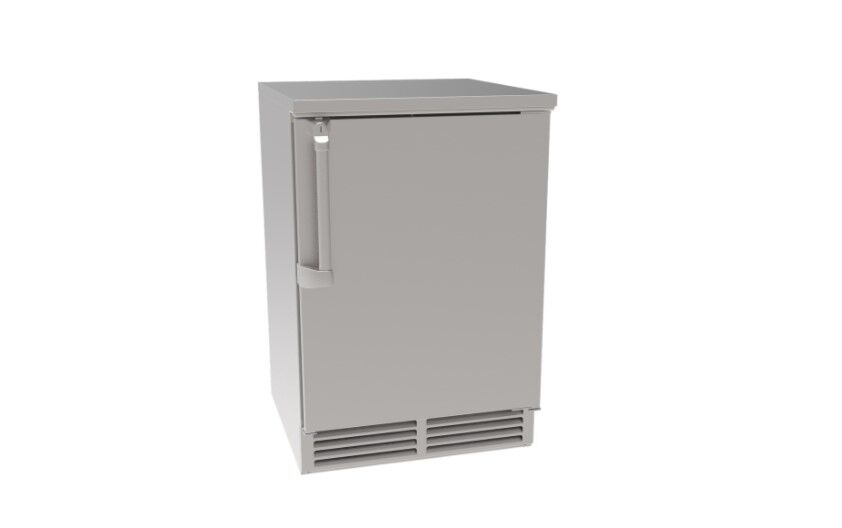
Whenever I need a bar cooler shorter than 36″, I always specify the Krowne BS24-SSS. This is a 24″ self-contained back bar cooler with stainless sides, door and top, as shown in Figure 8, below. Always remember that back bar coolers are at least 6″ taller than their low-profile counterparts._x000D_
_x000D_ DOWNLOADABLE
_x000D_
_x000D_ KROWNE 24″ COOLER_x000D_
_x000D_
_x000D_
_x000D_
_x000D_
_x000D_
_x000D_
_x000D_
_x000D_
_x000D_
_x000D_
_x000D_
FIGURE 6. PLAN VIEW OF KROWNE LS36 COOLER WITH OPTIONAL DRAINBOARD AND CUTTING BOARD
_x000D_
_x000D_
_x000D_
_x000D_
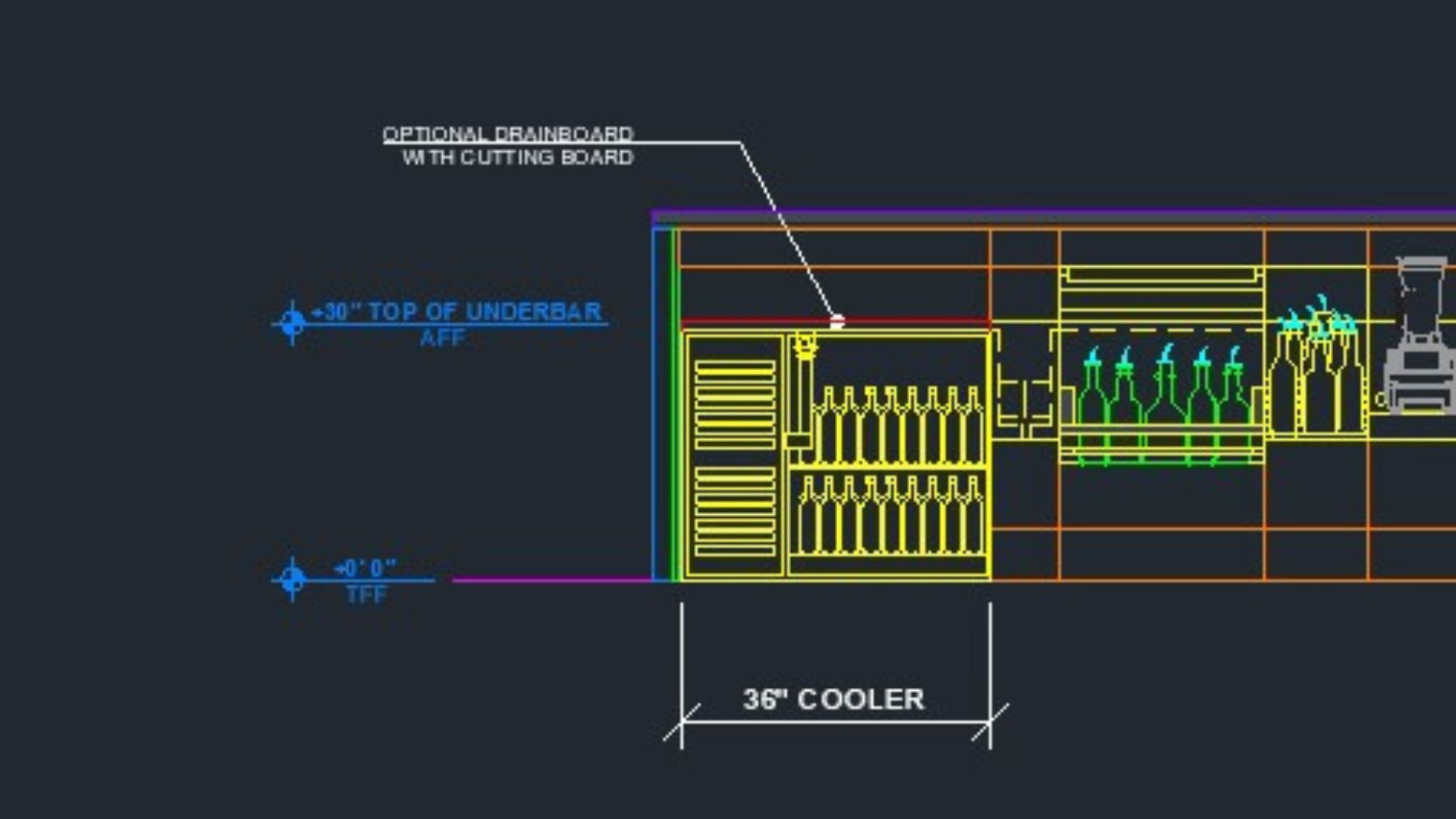
FIGURE 7. ELEVATION VIEW OF KROWNE LS36
_x000D_
_x000D_
_x000D_
_x000D_
_x000D_
_x000D_
_x000D_
_x000D_
_x000D_
_x000D_
_x000D_
_x000D_
_x000D_
_x000D_
_x000D_
_x000D_ FIGURE 8. PHOTO OF KROWNE BS24-SSS COOLER
_x000D_
_x000D_
_x000D_
_x000D_
_x000D_
_x000D_
_x000D_
_x000D_
_x000D_
_x000D_
_x000D_
_x000D_
_x000D_
_x000D_
_x000D_
_x000D_
_x000D_
_x000D_
_x000D_
_x000D_
_x000D_
My Takeaway On the Krowne Low-Profile Bar Coolers
_x000D_
The Krowne low-profile bar coolers offer bar owners a great option to maintain bartender ergonomics, by placing the cooler under the front bar. This cooler assures the “Zero-Step” ergonomic operation by eliminating the need for bartenders to step and turn out of their work zones. The Krowne low-profile cooler keeps mixers, condiments and beer at their side. I highly recommend the Krowne low-profile bar coolers for all bars._x000D_
_x000D_
Learn how architecture, engineering, and construction firms hire remote professionals, choose nearshore or offshore talent, and keep control of the work.

 _x000D_
 _x000D_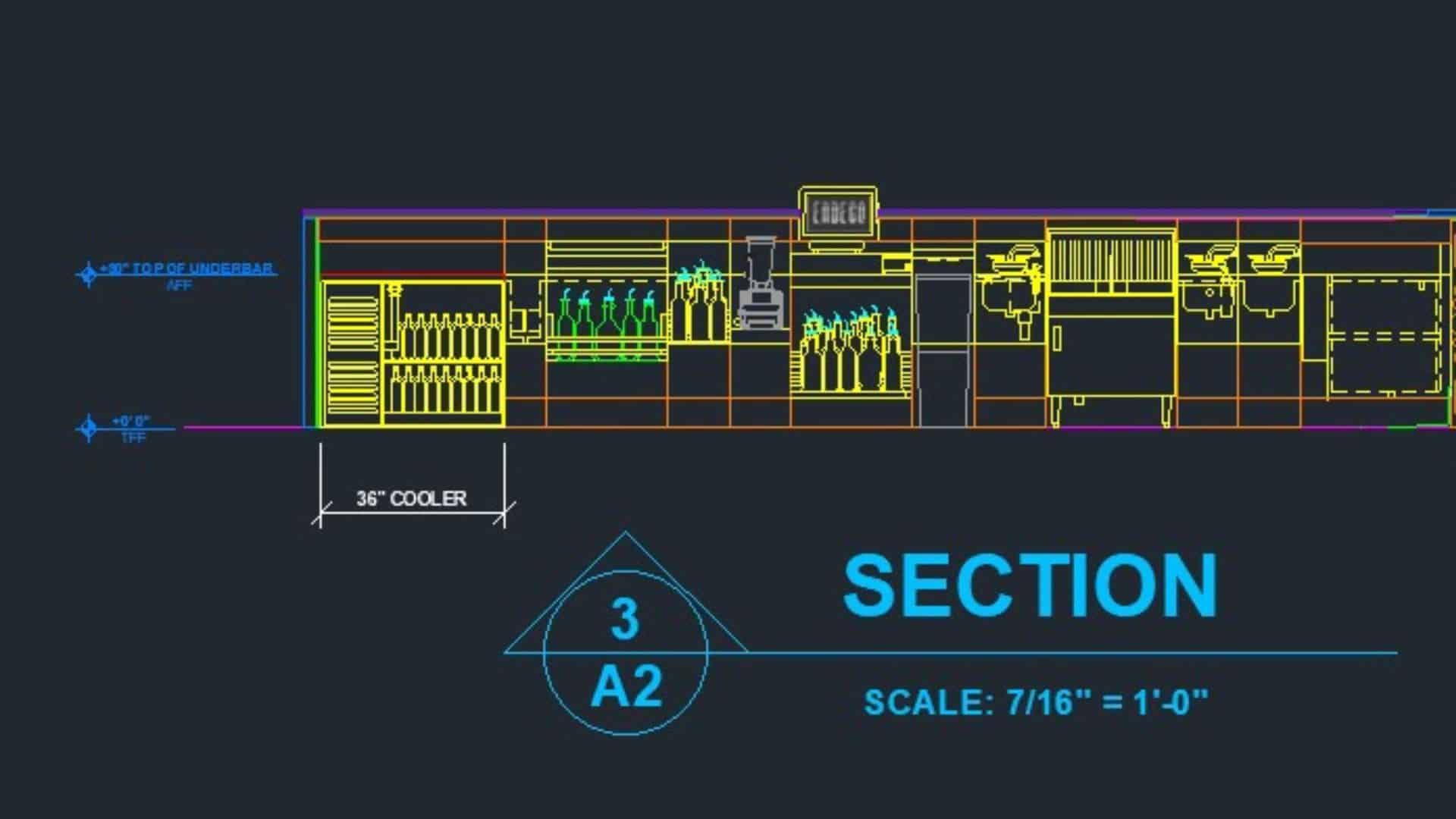
 _x000D_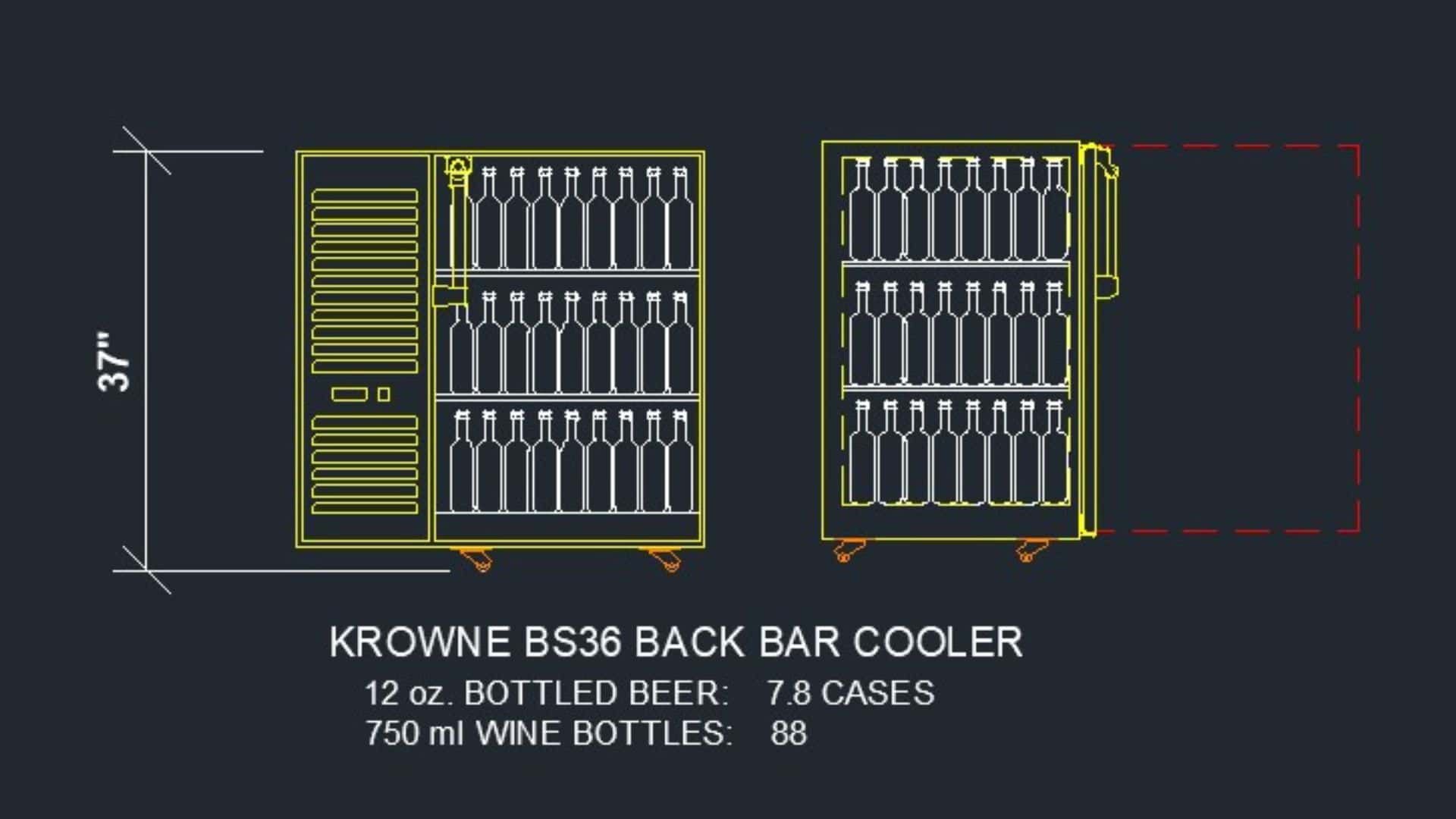
 _x000D_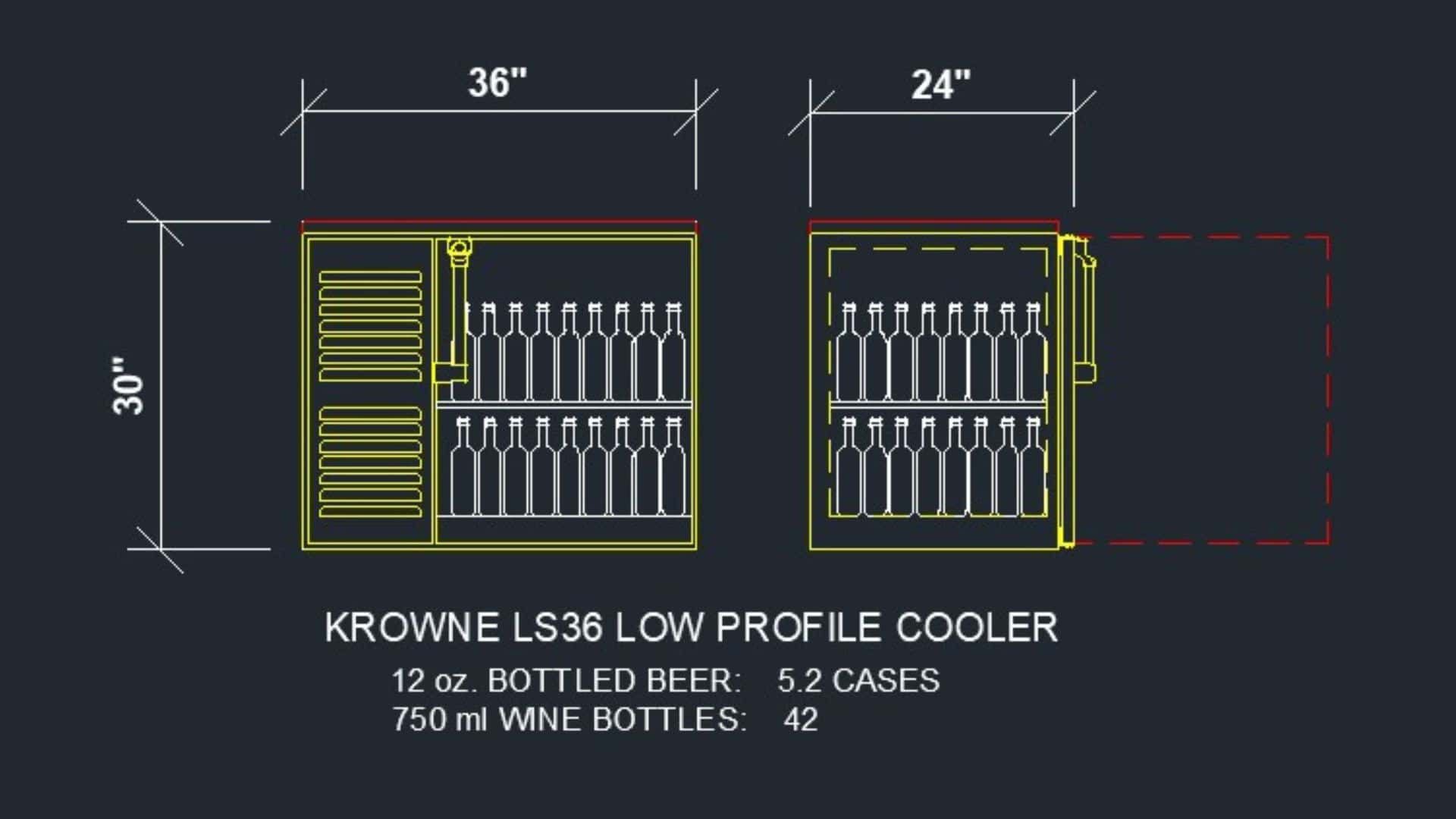
 _x000D_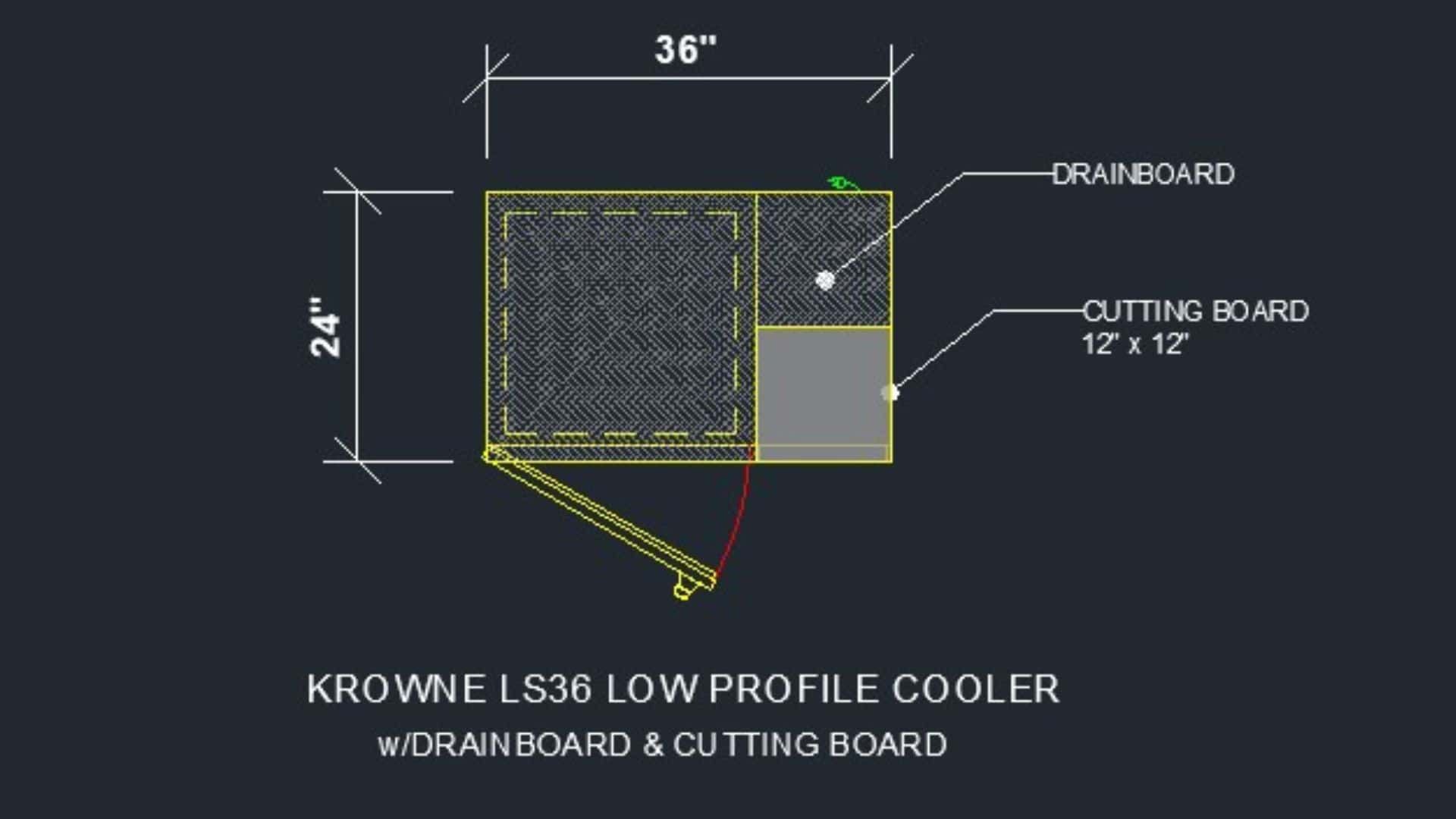
 _x000D_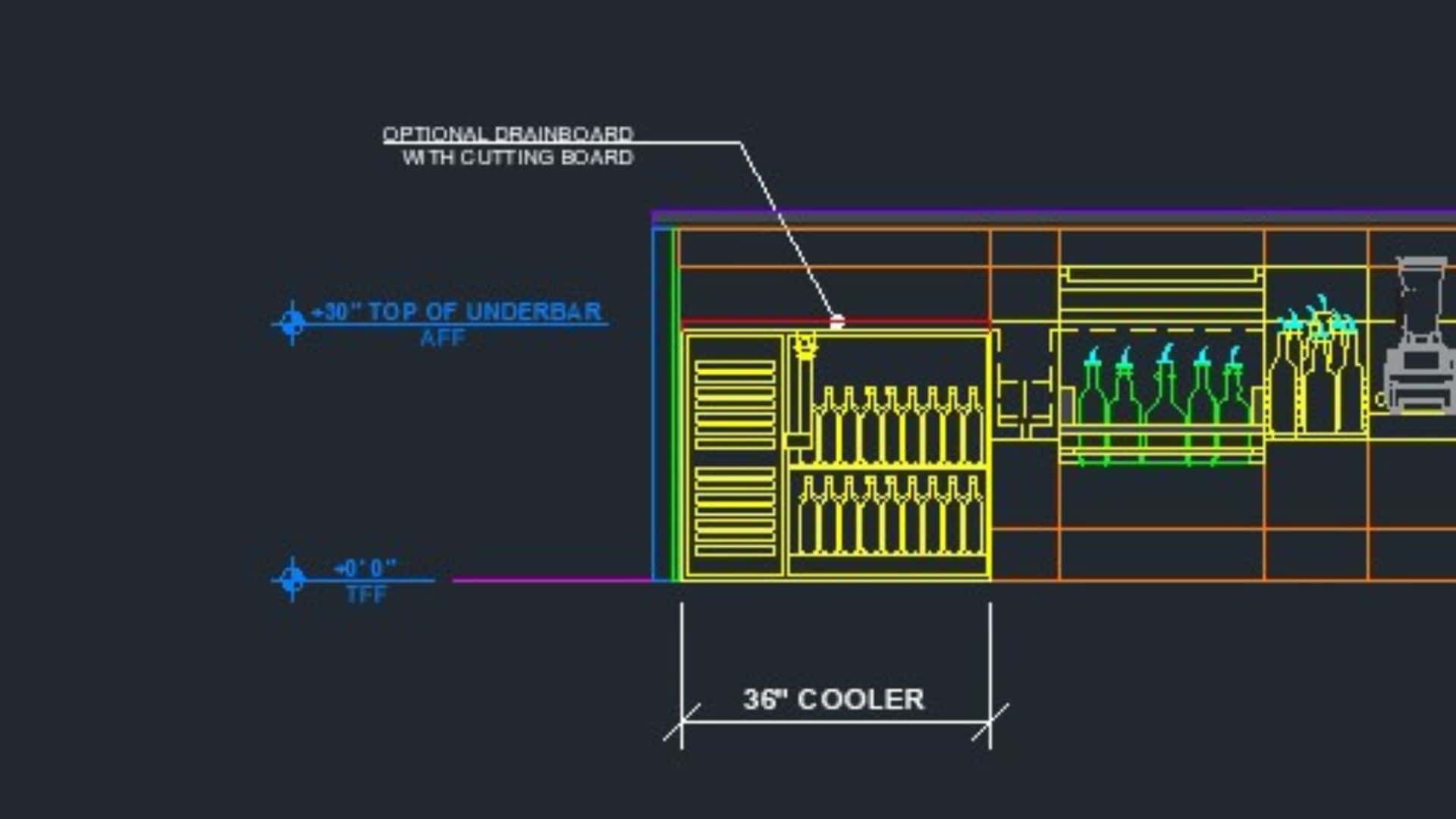
 _x000D_