Best Cocktail Station: Taffer Command Station by Krowne

Joel Phillips • January 1, 2000
Taffer
Jon Taffer
_x000D_
_x000D_

The Definitive Cocktail Station – a Collaboration of Industry Giants

_x000D_ The end-result of meticulous research and development, the Taffer Command Station was innovated through a joint effort of Jon Taffer and industry-leader Krowne. The mission was to establish the standard of excellence – as the ultimate solution in bar efficiency. The idea was conceptualized in 2020, as a solution to exceed the immense output requirements of each Taffer’s Tavern location. Infused with Taffer’s incomparable experience of bar efficiency and profitability and Krowne’s zero-step design philosophy and world-class engineering, the Taffer Command Station is the pinnacle of bar design. Krowne’s cutting-edge technology was utilized to blend augmented reality and their groundbreaking BarFlex3D bar configurator. This enabled the team to stress-test hundreds of cocktail station permutations before deriving the final design._x000D_ _x000D_
_x000D_
_x000D_
_x000D_
_x000D_
_x000D_

The bar station, through all new innovative design, empowers the bartender to be in command of service, in command of quality and in command of efficiency. The Taffer Command Station is going to disrupt bar design!

_x000D_ _x000D_
_x000D_
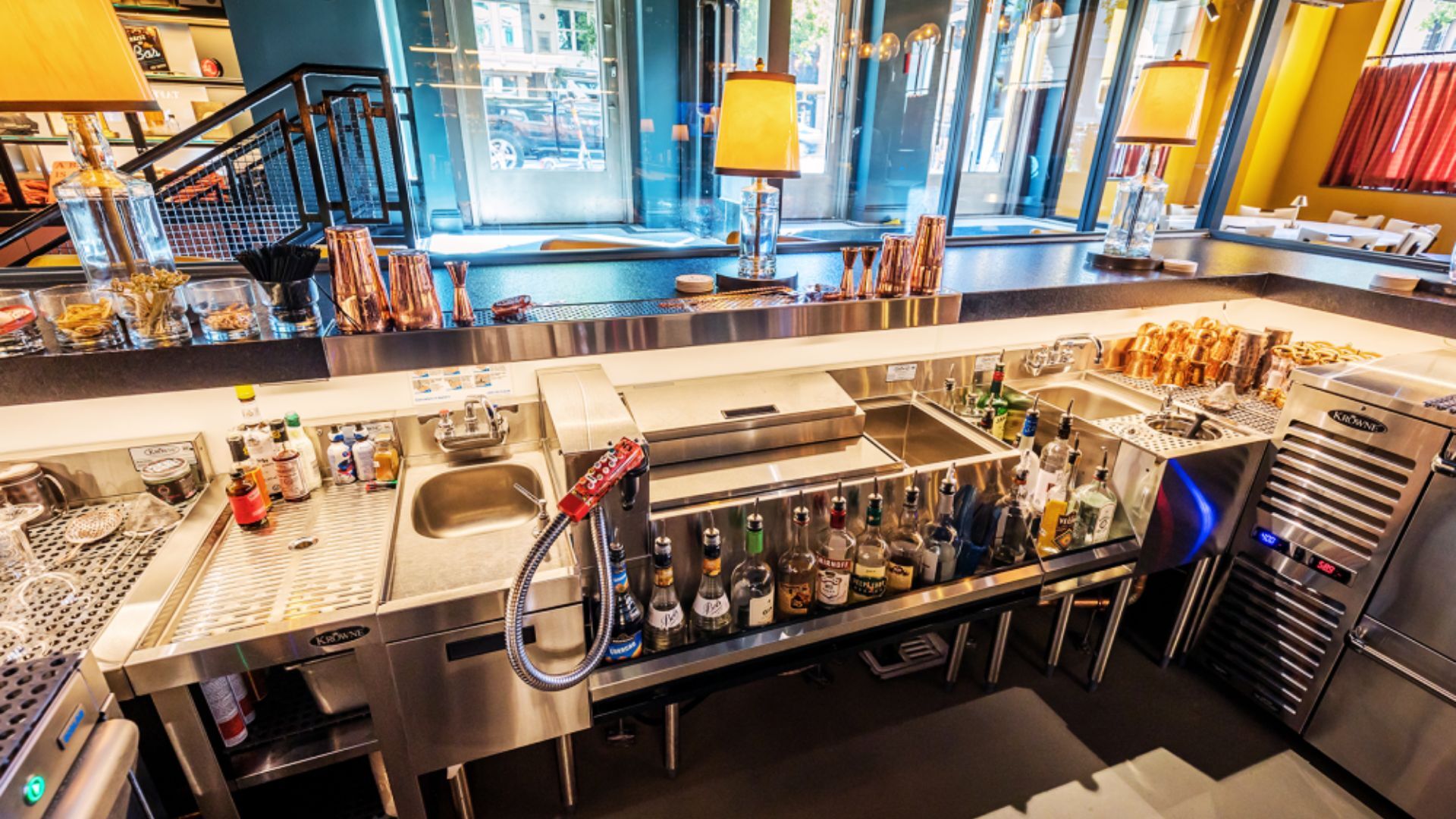
PHOTO OF TAFFER COMMAND STATION WITH SODA GUNFIGURE 4. PHOTO OF TAFFER COMMAND STATION WITH SODA GUN
_x000D_
_x000D_
_x000D_
_x000D_

WHAT IS A COCKTAIL STATION?

_x000D_ The areas inside commercial bars where bartenders prepare drinks are referred to as bartender stations or cocktail stations. The related equipment, known as “underbar stainless steel”, commonly includes ice bins, speed rails, liquor displays, sinks, etc. Bar equipment is selected from manufacturer’s websites and sold through a network of factory reps and distributors. Bar equipment specification sheets are overwhelming to many, which leads inexperienced people to overlook critical components and proper placement. There’s a lot to know. To simplify the buying process, several bar equipment manufacturers developed pre-packaged cocktail stations. This approach makes it easier for novices or DIY’ers to layout their own bar equipment plans. The Taffer Command Station was developed to be the best cocktail station!_x000D_

The Taffer Command Station – the Pinnacle of Bar Design

_x000D_ Recognizing the limitations of existing  pre-packaged stations, Jon Taffer and Krowne joined forces to develop the ultimate cocktail station. Through Taffer’s expert insight and Krowne’s world-class engineering, the Taffer Command Station was born. Not to disappoint, this cocktail station offers near-limitless configurations with Krowne’s cutting-edge equipment, such as its hybrid sink, speed sinks and Matrix freezer._x000D_ _x000D_ Which is the best Taffer Station for you? Later in this article, I’ll tell you exactly how to order your own custom Taffer Command Stations!_x000D_ _x000D_
_x000D_
_x000D_
_x000D_
_x000D_

_x000D_

_x000D_


Frequently Asked Questions about the Taffer Command Station

_x000D_
_x000D_
_x000D_
_x000D_
_x000D_
_x000D_
_x000D_
_x000D_
_x000D_
_x000D_
_x000D_
_x000D_
_x000D_
_x000D_

Is the Taffer Command Station a One-Size-Fits-All?

_x000D_ No, this is not a  “one-size-fits-all”  cocktail station. One of the primary benefits of the Krowne Taffer Command Station is its inherent customization. Each buyer can configure his/her station by adding, removing or re-sizing its components to meet their needs!_x000D_ _x000D_
_x000D_
_x000D_
_x000D_
_x000D_
_x000D_
_x000D_
KROWNE'S TAFFER COMMAND STATION WITH OPTIONS
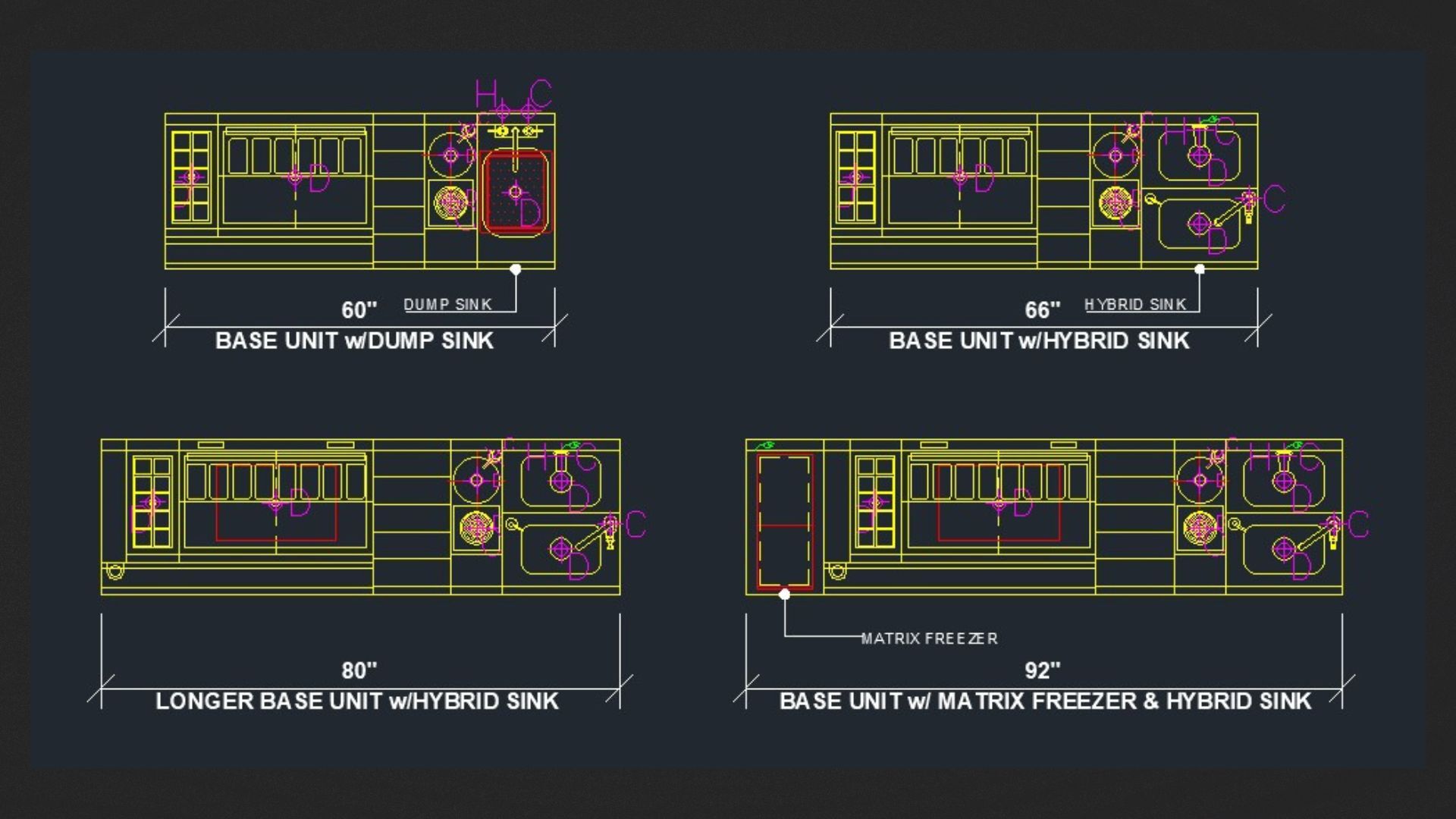
FIGURE 5. EXAMPLES OF TAFFER'S BAR STATIONS WITH COMMON OPTIONS.
_x000D_
_x000D_
_x000D_
_x000D_
_x000D_
_x000D_
_x000D_

How Many Taffer Stations do I Need?

_x000D_ You need one Taffer cocktail station for each bartender station! However, there are two types of Taffer Command Stations. Most bars only require one hand sink. For bars with multiple cocktail stations, the first station should be the base unit with hybrid sink (which contains a hand sink and a dump sink). Subsequent work stations should utilize the base unit with dump sink (refer to Figure 5, above). Always check with your local health department to see how many hand sinks they require._x000D_ _x000D_
_x000D_
_x000D_
_x000D_
_x000D_
_x000D_
_x000D_
_x000D_
_x000D_
_x000D_
_x000D_

Does this Work With the Krowne Modular Bar Die?

_x000D_ Yes. The Taffer bartender station is available with the Krowne KMB modular bar die system or with legs. To learn more about the Krowne modular bar die, please read my article below:_x000D_ _x000D_ RELATED ARTICLE: _x000D_ _x000D_ WHY THE KROWNE MODULAR BAR DIE IS THE BEST! _x000D_ _x000D_
_x000D_
_x000D_
_x000D_
_x000D_
_x000D_
_x000D_

Does This Save Space?

_x000D_ Absolutely! In fact, you decide which configurations are best for you.  As shown in Figure 5 (above), these stations are available in lengths ranging from 66″ to 92″. And it has a ton of features that maximize efficiency and save space in the smallest possible footprint. The Taffer station incorporates an 8” mixology station (traditionally 12” wide), an 8” wide x 5 tier liquor display (traditionally 4 tiers x 12” wide), and our 18″ wide Hybrid combination hand sink/dump sink (traditionally 24” wide). If you need further assistance, call the Krowne sales team at (800) 631-0442._x000D_ _x000D_ DOWNLOADABLE: _x000D_ _x000D_ TAFFER COMMAND STATION CUT SHEET _x000D_ _x000D_
_x000D_
_x000D_
_x000D_
_x000D_ _x000D_
_x000D_
_x000D_
_x000D_
_x000D_

Is There a “Cockpit” Cocktail Station?

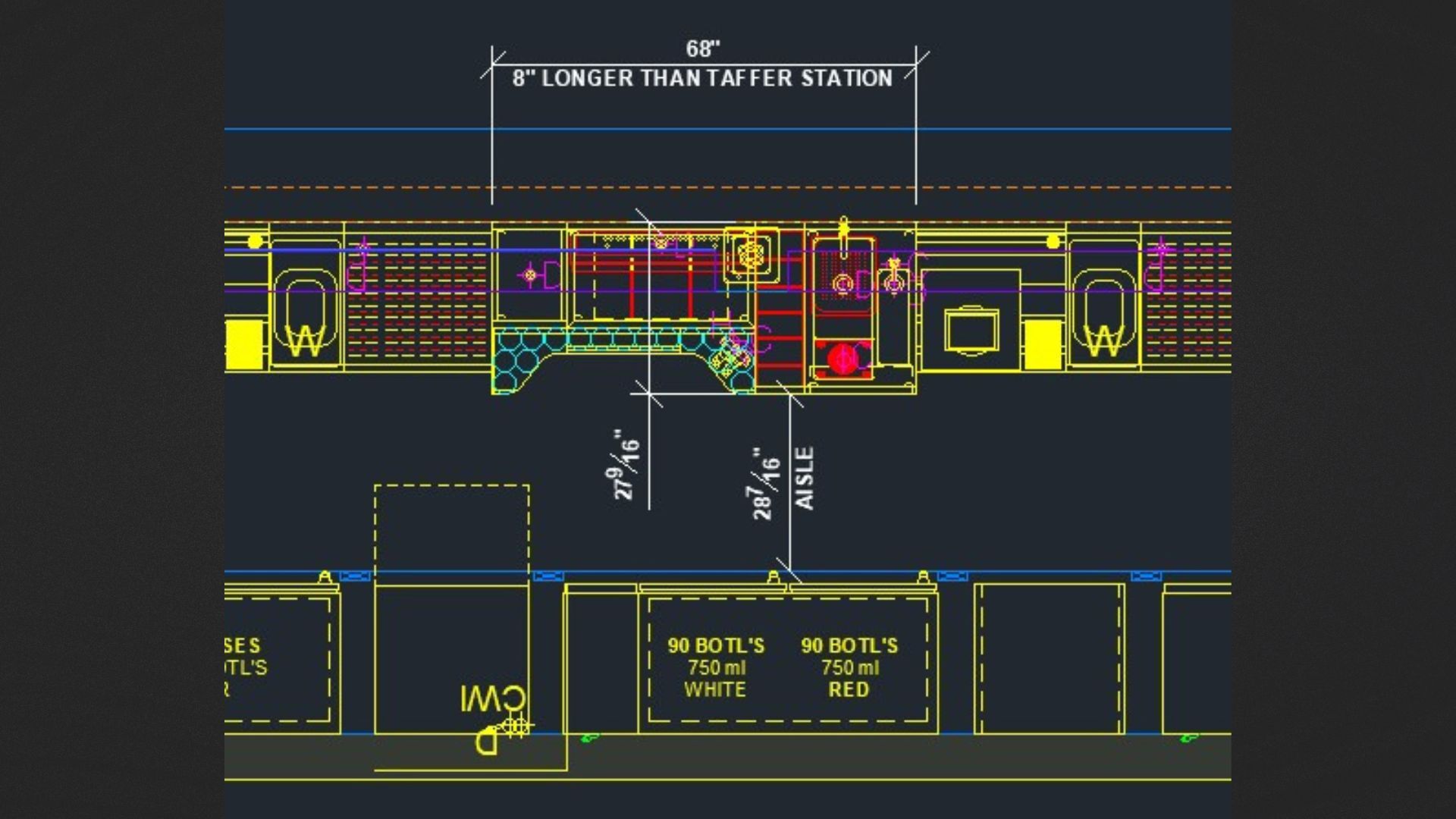
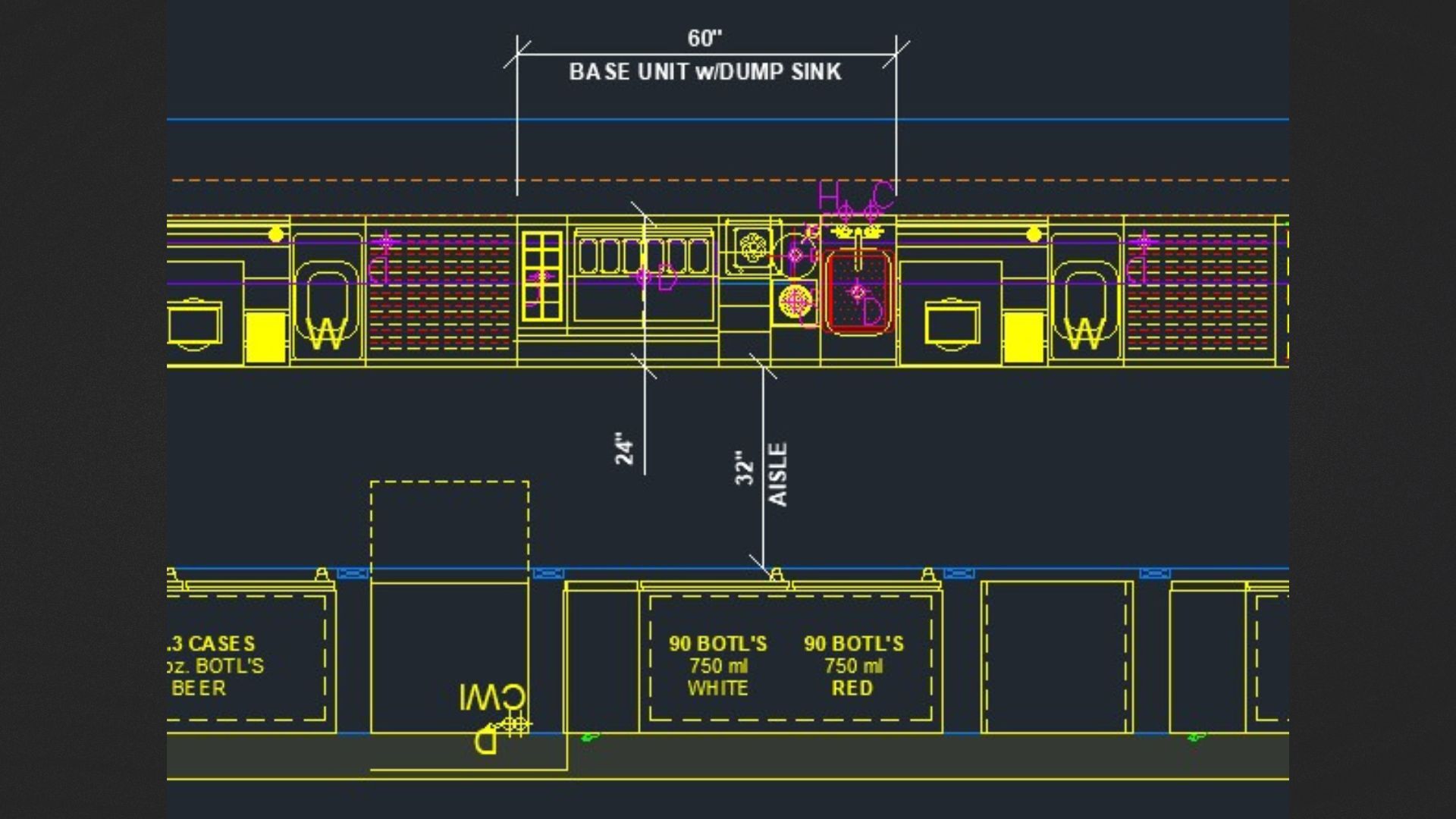
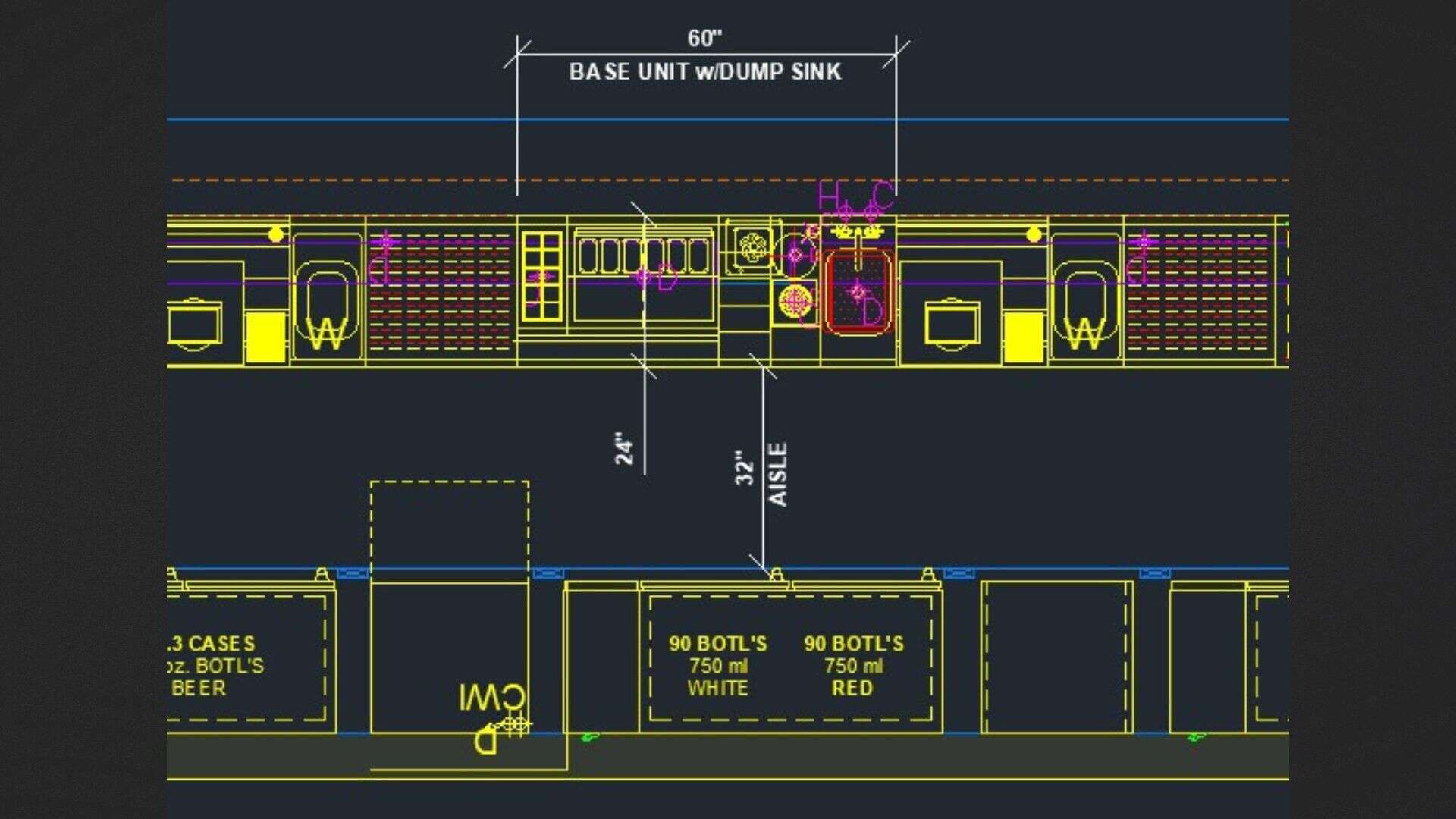
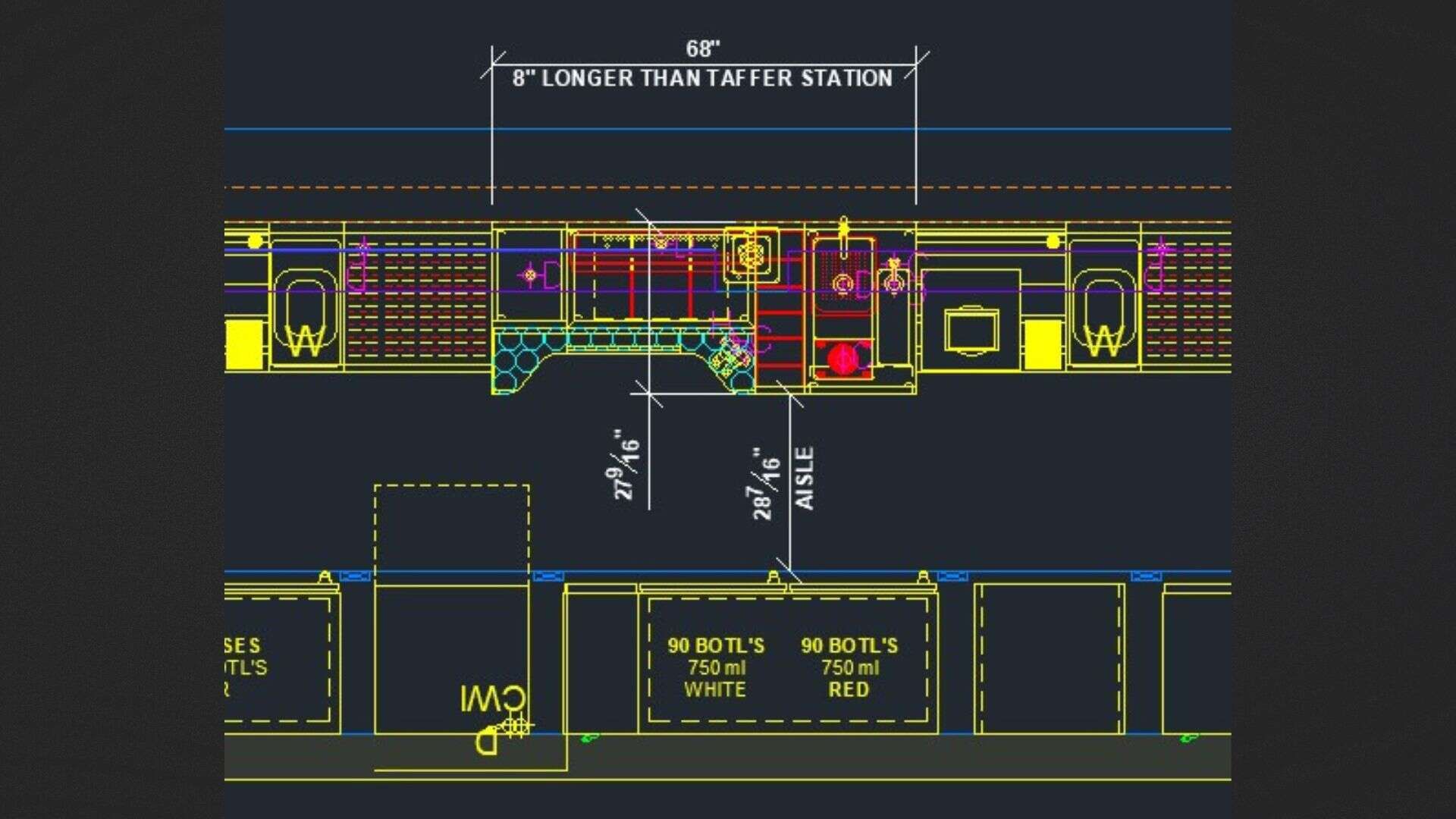
_x000D_ Yes – the “cockpit cocktail station” is the “Tobin Ellis Station”, made by Perlick. There’s a big difference between this and the Taffer Command Station. Krowne utilizes the industry-standard 24” front-to-back flush finish, as shown in Figure 6 (above), for maximum side-to-side bartender efficiency. Referring to Figure 7 (above), the Tobin Ellis “Cockpit station” isn’t as efficient because it’s 27 9/16″ deep. Therefore, the bartender is required to step outside the cockpit zone to access other equipment. In other words, the bartender must step outside the cocktail station, instead of simply moving side-to-side._x000D_ _x000D_
_x000D_
_x000D_
_x000D_
_x000D_
_x000D_
_x000D_
_x000D_
_x000D_
_x000D_

Soda Gun or no Soda Gun?

_x000D_ From the corner bar to the airport bar, soda guns are in nearly every bar – no matter where one travels. Soda has been the prevalent traditional mixer because of its low operating cost. While pouring from canned soda is very costly, dispensing soda from a handheld gun costs pennies per serving. After all, reduced pour cost results in greater profits. To sweeten the deal, the cost to implement a post mix soda system is virtually free, because syrups vendors such as Coca-Cola and Pepsi-Cola provide free equipment and installation in exchange for an ongoing commitment to sell their respective products._x000D_ _x000D_
_x000D_
_x000D_
_x000D_
_x000D_
_x000D_
_x000D_
_x000D_
_x000D_
_x000D_
_x000D_

Emerging Trends with Soda Among Bar Owners

_x000D_ When choosing the Taffer Command Station that’s right for you, the first thing you need to decide is whether you desire a soda gun. Lately, I’ve noticed that the soda gun’s popularity among bar owners has begun to wane. More startup bar owners are using soda from a can. Many fine dining restaurants are using elixirs to mix drinks for their bars. While soda systems offer ongoing saving advantages, they can cost upwards of $2,500 to implement if concrete floors need to be cut and patched (costs not covered by syrups vendors). On the other hand, implementing a soda system underbar requires 4-5 lineal feet of extra space, and most small bars don’t it. Besides, storing syrups underbar leads to housekeeping problems and pests. And let’s face it, they’re noisy. Dispensing soda from cans isn’t the end of the world, because you can offset the cost by raising prices._x000D_ _x000D_
_x000D_
_x000D_
_x000D_
_x000D_
_x000D_
_x000D_
PHOTO OF TAFFER BARTENDER UNIT WITH SPEED SINK
FIGURE 8. PHOTO OF TAFFER COMMAND STATION WITH KR24-MS14 SPEED SINK OPTION.
_x000D_
_x000D_
_x000D_
_x000D_
_x000D_
_x000D_
_x000D_

Which Taffer Command Station Should I Order First?

_x000D_ I personally love all the Taffer Command Stations, and most are shown with a hybrid speed sink or dump sink. By code, every bar is required to have a minimum of one dump sink and one hand sink. Depending on the size of the bar, some are required to have two hand sinks. The Taffer Command Station is available in six standard lengths (three that feature soda and three that don’t). All six feature the Krowne hybrid speed sink. Hence, when it’s time to selecting the first cocktail station, I recommend the length that best fits your application._x000D_ _x000D_
_x000D_
_x000D_
_x000D_
_x000D_
_x000D_ _x000D_
_x000D_
_x000D_
_x000D_
_x000D_
_x000D_ _x000D_ DOWNLOADABLE: _x000D_ _x000D_ KROWNE HYBRID SPEED SINK _x000D_ _x000D_
_x000D_
_x000D_
_x000D_
_x000D_
_x000D_
_x000D_

How to Order Additional Taffer Units

_x000D_
_x000D_
_x000D_
_x000D_
_x000D_ _x000D_
_x000D_
_x000D_
_x000D_
_x000D_
_x000D_ _x000D_ Of course, you can mix, match and reorient the components of every Taffer Command Station._x000D_ _x000D_
_x000D_
_x000D_
_x000D_
RICK UZUBELL GIVES THE TAFFER STATION A 5-STAR RATING
_x000D_
_x000D_
_x000D_
_x000D_
_x000D_
_x000D_

My Takeaway On the Taffer Command Station

_x000D_ The Taffer Command Station is the finest bar station on the market. It was developed as a joint effort between Jon Taffer and Krowne – two of the biggest, most respected names in the bar industry. The product offers nearly-infinite customization and maintains the “Zero-Step” ergonomic operation. I highly recommend the Taffer Command Station for all your cocktail stations._x000D_ _x000D_
_x000D_
_x000D_
_x000D_
_x000D_
_x000D_
_x000D_
_x000D_
_x000D_
February 26, 2026
The construction industry is changing — and fast. Owners want buildings delivered sooner, with fewer surprises and tighter budgets. Contractors are under pressure to accelerate schedules without compromising quality. In response, precast concrete, prefabrication, and modular construction have moved from niche solutions to mainstream strategy. But there’s a quiet truth behind every successful off-site project: Speed on site is only possible when precision exists off site. Before a single precast panel is lifted into place, an enormous amount of technical coordination must already be resolved. Connections, tolerances, reinforcement, interfaces with other systems — everything must be known, documented, and fabrication-ready. That responsibility falls on one of the most critical yet often underappreciated disciplines in construction: Structural detailing and shop drawings. This article explores why precision detailing is the backbone of modern precast construction — and how the right technical support can transform project outcomes. The Shift Toward Precast and Modular Construction Off-site construction has rapidly gained traction across industrial and commercial sectors. Warehouses, manufacturing plants, data centers, and large commercial facilities increasingly rely on precast systems and modular assemblies. The advantages are compelling: Parallel workflows: Site work and fabrication occur simultaneously Schedule compression: Reduced exposure to weather delays Factory-controlled quality: Greater consistency and repeatability Material efficiency: Lower waste and improved sustainability Cost predictability: Reduced uncertainty compared to traditional builds However, these benefits only materialize when design intent is translated into fabrication-ready information with absolute clarity. Precast elements must arrive on site ready to install — with all tolerances accounted for and all interfaces coordinated. There is no opportunity for improvisation once components are manufactured. Why Structural Shop Drawings Are the Foundation of Success In conventional construction, drawings often guide field decisions. In precast construction, they define the product itself. Structural shop drawings function as executable instructions for fabrication, assembly, and installation. Their accuracy directly determines whether off-site construction delivers on its promises. High-quality shop drawings address several critical areas: Dimensional Coordination Every beam, panel, column, and connection must align perfectly with adjacent systems. Detailed drawings resolve spatial conflicts before manufacturing begins. Connection Detailing Precast structures depend on complex assemblies of embeds, plates, anchors, and weldments. Precision documentation ensures structural integrity and constructability. Fabrication Clarity Manufacturing teams rely on unambiguous geometry, tolerances, and sequencing information. Clear drawings reduce interpretation errors and production delays. Installation Efficiency Well-coordinated drawings enable rapid, safe erection on site — minimizing downtime and reducing labor risk. For projects tied to strict operational deadlines, such as industrial facilities or logistics hubs, shop drawing reliability directly affects business readiness. The Critical Role of Advanced Rebar Detailing Reinforcement detailing is a specialized discipline that profoundly influences both structural performance and manufacturability. In precast systems, rebar layouts must satisfy engineering requirements while remaining practical for fabrication. Poor coordination can lead to congestion, clashes, or inefficient production. Advanced rebar detailing supports: Structural performance: Proper load capacity and durability Fabrication efficiency: Optimized bending schedules and placement Clash prevention: Avoiding conflicts with embeds and conduits Compliance: Documentation for inspections and regulations Traceability: Quality assurance throughout production When integrated with precast modeling, reinforcement detailing creates a unified information environment that aligns engineering intent with manufacturing reality. Precast Detailing as a Coordination Hub Precast detailing sits at the intersection of architecture, structural engineering, fabrication, transportation, and site operations. It requires both technical expertise and practical construction knowledge. Effective detailing includes: Element Breakdown and Sequencing Large structural systems must be divided into transportable components while maintaining structural continuity. Tolerance Management Manufacturing and erection tolerances must be anticipated to ensure components fit correctly on site. Interface Coordination Precast elements must align with steel framing, mechanical systems, façade components, and architectural finishes. Erection Planning Clear documentation supports safe lifting, positioning, and assembly procedures. On complex industrial projects — where structural systems integrate with heavy equipment or process infrastructure — detailing becomes a central driver of success rather than a supporting task. How Precision Detailing Accelerates Industrial Construction Industrial facilities often operate on aggressive commissioning timelines. Delays in structural completion can cascade into equipment installation setbacks and operational losses. Precision detailing contributes to faster delivery by enabling: Reduced rework: Problems resolved before fabrication Streamlined procurement: Accurate material quantities Improved collaboration: Clear communication across teams Consistent quality control: Standardized documentation Predictable assembly: Minimal field improvisation Treating detailing as a strategic function — rather than an administrative task — unlocks the full efficiency of off-site methods. The Strategic Advantage of Offshore Structural Detailing Support As projects grow more complex, many contractors are augmenting their internal teams with offshore technical support. Access to specialized expertise provides several advantages: Scalable resources without long-term overhead Faster turnaround times Continuous production cycles across time zones Ability to handle multiple projects simultaneously Internal teams freed to focus on core project management ADDMORE Services LLC provides professional offshore technical services tailored specifically for the AEC industry. Their structural detailing, precast modeling, and rebar drafting teams function as an extension of the contractor’s technical staff — integrating with existing standards, workflows, and collaboration platforms. The objective isn’t simply workload relief. It’s building a resilient backend production ecosystem where accurate information flows seamlessly from design to fabrication. Digital Integration: BIM as the Backbone of Modern Precast Projects Today’s detailing workflows are increasingly powered by Building Information Modeling (BIM) and advanced digital tools. BIM-enabled coordination supports: Clash detection: Identifying conflicts early Automated quantity extraction: Improved cost control 3D visualization: Better stakeholder understanding Lifecycle data: Supporting future operations and maintenance When offshore teams are proficient in industry-standard BIM platforms, they can actively contribute to collaborative project environments — strengthening alignment between design intent and manufacturing execution. Building a Reliable Backend for Off-Site Construction Off-site construction is fundamentally information-driven. The physical structure is only as reliable as the data guiding its production. Structural shop drawings, rebar detailing, and precast modeling form the technical backbone supporting: Engineering accuracy Fabrication efficiency Installation reliability Risk reduction Schedule predictability Strategic partnerships with specialized providers allow contractors to scale this backend capability without overextending internal resources. The Future of Precision Construction Precast and modular building systems will continue to expand as the industry purses efficiency, sustainability, and schedule certainty. Success in this environment depends on mastering the disciplines that enable precision manufacturing. Structural detailing is no longer a secondary support function. It is a primary driver of project performance. Organizations that prioritize accuracy, coordination, and scalable technical infrastructure will be best positioned to capitalize on the next generation of construction delivery. Ready to Strengthen Your Precast Project Delivery? If your organization is looking to scale structural detailing capacity, improve coordination reliability, or accelerate off-site construction workflows, expert support can make a measurable difference. ADDMORE Services LLC offers specialized offshore structural detailing, precast modeling, and shop drawing services tailored for industrial and commercial projects worldwide. 👉 Contact us for a free consultation to discuss your upcoming project and explore how precision detailing support can enhance speed, quality, and cost efficiency. You can also estimate potential savings from offshore support using our interactive tool: 👉 ADDMORE Cost Savings Calculator With the right technical foundation in place, every precast component becomes a dependable building block in a faster, smarter, and more predictable construction process. 
February 19, 2026
Discover how technical documentation, BIM, and VDC form the data foundation that enables artificial intelligence in the AEC industry. Learn why AI success depends on structured project information.
architecture before CAD and BIM
February 12, 2026
Discover how architects designed before CAD and BIM using sketches, drafting boards, and physical models — and what today’s AEC firms can learn from the analog era.
February 5, 2026
A New Kind of Partner in Modern AEC Projects If you still picture offshore AEC support as a back-office drafting function, you’re not alone — but that picture is rapidly becoming outdated. Across architecture, engineering, and construction, firms are discovering that offshore professionals are no longer just production resources. They are strategic collaborators embedded in project delivery. From BIM coordination to high-level design leadership, today’s offshore AEC professionals contribute directly to decision-making, risk management, and performance optimization. As project complexity increases and timelines tighten, firms are turning to globally integrated teams not just to scale capacity, but to strengthen expertise. This evolution is redefining how projects are delivered — and it is creating new opportunities for firms that are ready to think beyond traditional outsourcing models. The Industry Evolution: From Support Function to Strategic Integration The most important shift in offshore AEC services is the move from isolated task execution to integrated collaboration. Advances in BIM ecosystems, cloud-based platforms, and real-time communication tools allow distributed teams to function as a unified studio. Modern offshore professionals now play active roles in: Design development and technical detailing Regulatory and code compliance reviews BIM coordination and clash management Workflow optimization and process improvement Strategic problem-solving across disciplines This transformation is driven by access to highly specialized global talent and a partnership model built around integration rather than delegation. Offshore teams are increasingly embedded throughout the full project lifecycle, contributing expertise that influences schedules, budgets, and design outcomes. Profile 1: The BIM Coordinator — Core Technical Leadership In complex AEC projects, coordination is the backbone of successful delivery. Offshore BIM Coordinators serve as digital integrators who ensure that multidisciplinary models align technically and procedurally. Their responsibilities extend well beyond clash detection. A modern BIM Coordinator: Develops and manages BIM execution plans Enforces modeling standards across teams Facilitates coordination workshops Identifies constructability and sequencing risks Verifies compliance with clearance and accessibility requirements Through proactive model analysis and workflow refinement, BIM Coordinators help eliminate recurring conflicts before they reach construction. Standardized detailing strategies and improved phasing protocols within collaborative environments such as BIM 360 can significantly reduce rework and maintain project momentum. Their value lies in preventing problems before they materialize — a critical advantage in fast-moving projects. Profile 2: The Senior Architect — Strategic Design Expertise At the advanced tier of offshore collaboration are licensed architects and senior technical leaders who actively shape project direction. These professionals function as extensions of in-house studios, contributing at a strategic level. A senior architect may lead: Schematic design and massing exploration Zoning and entitlement analysis Building code and compliance reviews Daylight and spatial efficiency studies Client-facing design presentations On challenging sites, senior architects can reconfigure façades and building massing to satisfy regulatory constraints while preserving design intent and program requirements. By presenting alternatives directly to decision-makers, they participate as full partners in the design process. This represents a shift from remote support to integrated leadership. From Task Execution to Thought Partnership Across all roles, a common theme emerges: offshore AEC professionals are increasingly engaged as intellectual contributors to project success. Key characteristics define this modern model: Strategic problem-solving: Professionals are expected to analyze, recommend, and optimize solutions. Proactive compliance management: Expertise in international codes and standards reduces regulatory risk. Advanced technology fluency: Mastery of BIM platforms and performance tools enables seamless collaboration. Integrated communication: Participation in design sprints and coordination meetings positions offshore teams as core contributors. ADDMORE Services LLC operates on this principle of integration. As a professional technical services company providing offshore outsourcing for the AEC industry, ADDMORE builds dedicated teams that align with each client’s workflows and culture. Its tiered structure allows firms to scale from production support to senior leadership expertise, balancing cost efficiency with expanded capability. Building a Collaborative Advantage For AEC firm leaders, the central question is no longer whether drafting can be outsourced. The real question is how global expertise can be integrated to amplify in-house strengths. Firms that adopt collaborative offshore partnerships gain measurable advantages: Expanded capacity without proportional overhead growth Access to specialized expertise on demand Faster and more predictable project delivery Improved technical coordination and compliance Greater focus on innovation and client relationships Modern offshore professionals contribute to constructability solutions, sustainability analysis, and regulatory navigation. Organizations that continue to view offshore services through a narrow production lens risk overlooking a significant strategic opportunity. Conclusion: Strategic Partnership as a Competitive Edge The rise of the modern offshore AEC professional reflects a broader industry movement toward hybrid, globally connected studios. Strategic partnerships allow firms to extend their technical reach, improve resilience, and deliver higher-value results. Ready to explore how a strategic offshore partnership can strengthen your project delivery? Contact ADDMORE Services LLC for a free consultation to discuss your firm’s goals and challenges. Discover how integrated offshore AEC professionals can operate as true partners in your success.
January 30, 2026
Budget certainty doesn’t start at tender; it starts before design. Learn how early cost planning and precision estimating reduce risk and protect AEC projects.
January 22, 2026
Learn how AEC firms are moving from traditional estimates to assured cost control using precision estimating and proactive cost management strategies.
January 8, 2026
Discover how intelligent resourcing helps AEC firms scale efficiently, reduce delivery pressure, and integrate offshore talent without disrupting core teams.
December 4, 2025
When BIM Stops Being a Buzzword If you’ve spent any time in the AEC industry over the past decade, you’ve heard the promise of BIM more times than you can count. Better coordination. Fewer clashes. Smarter decisions. Lower risk. And yet, many firms quietly admit that despite using BIM tools, they’re still managing problems reactively, dealing with late-stage coordination issues, or treating models as little more than sophisticated drawings. The difference between using BIM and leveraging BIM is no longer subtle—it’s strategic. Today’s most competitive AEC firms are not just modeling buildings. They are managing information, orchestrating data, and using BIM as the backbone of decision-making from early design through long-term operations. This article explores what that shift looks like in practice—and how technology-enabled teams are redefining project delivery. BIM Beyond 3D: The Intelligence Inside the Model A common misconception is that BIM’s primary value lies in visualization. While 3D modeling is important, it is only the surface layer of what BIM can deliver. At its core, BIM is a data-rich environment—a single, coordinated source of truth where geometry, quantities, specifications, and asset information coexist. When structured properly, the model becomes a live database that supports collaboration, forecasting, and long-term planning. High-performing AEC firms focus on how this data is created, validated, and used. That’s where real transformation begins. Pillar 1: Proactive Clash Detection That Prevents Problems Clash detection is often described as BIM’s “killer feature,” but running automated checks alone is not enough. Advanced BIM workflows shift coordination from reaction to prevention. Instead of overwhelming teams with thousands of low-priority clashes, disciplined coordination processes focus on: Rule-based clash matrices aligned to constructability priorities Early identification of high-impact MEP, structural, and architectural conflicts Actionable, clearly documented resolutions—not just reports By resolving coordination issues virtually, teams reduce RFIs, avoid costly site rework, and protect construction schedules. BIM coordination becomes a planning tool, not a clean-up exercise. Pillar 2: Model-Based Quantity Take-Offs and Cost Intelligence In an industry where margins are tight, precision in quantities and cost forecasting is non-negotiable. Model-based quantity take-offs replace manual measurement with data-driven accuracy. When models are built with consistent parameters and appropriate Levels of Development (LOD), they enable: Reliable material schedules and component counts Faster iterations during design changes Stronger alignment between design intent and cost planning This approach supports true 5D BIM integration—connecting geometry to cost—so estimators and project managers can make informed decisions earlier and with greater confidence. Pillar 3: BIM as a Foundation for Lifecycle and Asset Management The most forward-thinking firms recognize that a building’s value doesn’t stop at handover. Well-structured BIM deliverables lay the groundwork for operations, maintenance, and future renovations. By embedding asset data, warranties, maintenance schedules, and manufacturer information—often aligned with COBie or FM standards—the model evolves into a usable digital twin. Owners benefit from better space management, proactive maintenance planning, and long-term visibility into asset performance. For project teams, this elevates BIM from a delivery requirement to a lasting value proposition. The Offshore Advantage: Scaling Expertise Without Losing Control Executing BIM at this level requires more than software licenses—it requires focus, specialization, and consistency. Many technology-enabled firms extend their capabilities through dedicated offshore technical teams that function as a seamless extension of their in-house staff. When structured correctly, this model offers several advantages: Continuous training on leading BIM and CAD platforms Standardized, process-driven workflows aligned with global standards Deep specialization in modeling, detailing, and coordination tasks This approach allows onshore teams to concentrate on design leadership, client engagement, and strategic decision-making—while technical execution is handled by skilled, process-oriented specialists. Where ADDMORE Services Fits In—Naturally This is where firms like ADDMORE Services quietly add value. Rather than positioning BIM as a one-size-fits-all solution, ADDMORE operates as a technology and delivery partner, supporting AEC firms with dedicated offshore teams that specialize in BIM modeling, coordination, drafting, and data-driven deliverables. The emphasis is not on selling software or forcing new workflows, but on integrating seamlessly with existing standards—enhancing consistency, scalability, and output quality while reducing operational strain. For many firms, this partnership becomes less about outsourcing and more about extending internal capability with confidence. Positioning Your Firm for the Future The AEC industry is moving decisively toward information-led delivery. Firms that continue to treat BIM as a visualization tool risk falling behind those who use it as a strategic engine. By embracing data-rich modeling, proactive coordination, and lifecycle-focused deliverables, AEC firms can: Improve predictability across projects Strengthen their competitive positioning in bids and proposals Deliver long-term value to owners, not just completed drawings The firms that thrive will be those that stop managing drawings—and start orchestrating information. Final Thought Advanced BIM does not require radical reinvention. It requires the right mindset, the right processes, and the right partners. When technology, people, and workflows align, BIM becomes more than a requirement—it becomes a competitive advantage.
November 24, 2025
The Architecture, Engineering, and Construction (AEC) industry is experiencing a period of unprecedented transformation. Digital platforms, advanced modelling, data-rich environments, and increasingly sophisticated buildings are redefining how firms operate and deliver. At the same time, project owners expect greater precision, faster timelines, and higher levels of coordination across disciplines. In this shifting environment, traditional staffing approaches—whether purely in-house or reliant on basic outsourcing—can no longer keep up. Firms need access to specialized skills, adaptable capacity, and integrated support structures that allow them to operate with agility and confidence. As a result, the future of talent management is prioritizing smarter, scalable, and hybrid team models built around Intelligent Resourcing. This expanded guide explores why Intelligent Resourcing is emerging as the dominant workforce strategy for 2026 and beyond, how it solves the challenges AEC firms face today, and what leaders must consider when designing the next evolution of their team structure. Why Legacy Outsourcing Models Fall Short in the Modern AEC Environment Before firms can embrace Intelligent Resourcing, it’s important to understand why older outsourcing models no longer align with the realities of modern project execution. Historically, outsourcing was designed for simple delegation—sending drafting, modelling, or documentation tasks to low-cost vendors to reduce overhead. While this achieved short-term financial benefits, the approach lacked strategic integration. Many firms encountered repeated issues: inconsistent quality, limited oversight, communication delays, slow turnaround times, or providers that could not scale with project requirements. But the most significant issue is that AEC work has fundamentally changed. Buildings are more complex, documentation is more detailed, and digital models are used throughout an entire project lifecycle. Firms now operate in ecosystems where precision, collaboration, and speed are essential. Traditional outsourcing simply wasn’t built for that. This is why the shift toward Intelligent Resourcing is not just logical—it is necessary. Understanding Intelligent Resourcing: The Modern Workforce Advantage Intelligent Resourcing moves away from treating external support as a task-based vendor and instead positions global talent as part of a seamless, structured, and fully coordinated team. It represents a disciplined approach to workforce design, ensuring that firms can match the right skills to the right tasks at the right time. 1. Workforce Integration at Every Level Rather than operating in isolation, external teams join your existing workflows. They follow your BIM standards, documentation guidelines, coordination protocols, communication rhythms, and project management structure—becoming an extension of your in-house staff. 2. Purpose-Built Talent Architecture A core advantage of Intelligent Resourcing is access to a carefully layered talent pool. Instead of relying on a single outsourced drafter or modeler, firms gain multi-tiered teams: senior-level specialists to guide technical accuracy, dependable mid-career professionals for production and consistency, junior resources for volume support and time-intensive tasks. This structure mirrors the natural hierarchy of an internal AEC team—making coordination clean and predictable. 3. Advanced QC/QA Mechanisms Embedded in Delivery Quality control is no longer an afterthought. Intelligent Resourcing partners invest heavily in structured review processes, coordination checks, naming conventions, file audits, and multi-stage validation that ensure every deliverable meets required standards before it reaches your desk. 4. Built for Flexibility and Continuous Scaling Instead of dealing with staffing volatility, firms can scale in real time. Whether responding to a new project award, an accelerated deadline, or a sudden internal gap, Intelligent Resourcing supports rapid mobilization without compromising standards. 5. A Global Talent Framework Designed for AEC Requirements The demand for BIM talent, architectural technicians, interior detailers, and skilled modelers continues to outpace local supply in many regions. Intelligent Resourcing establishes access to trained, experienced, globally distributed AEC professionals—allowing firms to maintain delivery quality even during talent shortages. Why Intelligent Resourcing Is Becoming an AEC Imperative in 2026 The need for strategic workforce models is amplified by several key industry pressures. Below is a closer, expanded look at the challenges that Intelligent Resourcing directly addresses. 1. Increasing Workload Surges and Unpredictable Market Cycles AEC firms often experience significant fluctuations in workload due to project delays, market conditions, funding cycles, or seasonal shifts. Internal teams are pressed to absorb sudden surges, resulting in long hours, rushed documentation, and burnout. Intelligent Resourcing provides a scalable safety net. Instead of over-hiring or overworking teams, leaders can maintain a balanced workforce with the ability to ramp up or down as project demand changes. This creates long-term stability and significantly reduces operational stress. 2. The Growing Need for Specialized AEC Skill Sets Today's projects require more than general drafting capabilities. From complex BIM coordination to multidisciplinary modelling, healthcare detailing, and parametric workflows, AEC roles have grown more diverse and technical. Hiring locally for each specialty is costly and often impractical. Intelligent Resourcing gives firms immediate access to specialists across architecture, engineering, interiors, and 3D visualization—without the delays associated with lengthy recruitment cycles or talent shortages in local markets. 3. Protecting Internal Expertise for High-Value Activities When talented professionals spend the majority of their day on drafting or repetitive documentation, firms lose strategic value. High-level team members should be focused on client relations, technical leadership, design refinement, QA management, and complex problem-solving—not buried in production workloads. Intelligent Resourcing redistributes responsibilities so that internal leaders can operate at their highest potential. 4. Talent Scarcity Is Now a Global Challenge AEC firms across the US, UK, Australia, and the Middle East consistently cite hiring challenges. Competition for skilled architects, engineers, and BIM specialists is increasing, and salary expectations continue to rise. Intelligent Resourcing counteracts those limitations by expanding your recruitment horizon to global talent pools without compromising quality. The Role of ADDMORE Services in Supporting Intelligent Resourcing A shift to Intelligent Resourcing requires dependable systems, rigorous quality management, and specialized AEC knowledge—areas where ADDMORE Services has built strong capability. ADDMORE offers integrated drafting, BIM, modelling, and documentation support tailored to the needs of global firms. Their ADDMORE Collective, a hybrid model combining onshore freelancers with coordinated offshore teams, enables firms to achieve consistent output, maintain flexibility, and strengthen delivery capacity—while keeping the experience seamless for internal staff. ADDMORE does not simply add headcount—they improve operational flow, provide structure, and offer talent that fits naturally into your existing framework. It is a quiet but strategic enhancement to your team. Implementing Intelligent Resourcing: A Practical Roadmap for AEC Firms Transitioning to a smarter, more resilient workforce model doesn’t need to be overwhelming. Most firms start small and expand gradually as they see the benefits. 1. Map Your Operational Workflow in Detail Identify bottlenecks, repetitive tasks, skill gaps, and time-consuming documentation responsibilities. Understanding your internal pressure points reveals where resourcing will have the greatest impact. 2. Define Success Metrics Beyond Cost Leaders should evaluate how Intelligent Resourcing improves speed, reduces coordination bottlenecks, enhances quality, and elevates team wellbeing—not just hourly savings. 3. Choose a Partner With Proven AEC Expertise Your partner should demonstrate experience across AEC disciplines, standardized QC practices, project management capability, and seamless integration with your toolset. 4. Pilot Before Full Implementation Start with one project or one package—BIM, CDs, interior detailing, as-builts, or modelling. This controlled environment establishes communication rhythms and workflow consistency before long-term scaling. Smarter Teams Deliver Stronger Outcomes The AEC firms that will lead in 2026 are those that adopt flexible, scalable, and intelligently designed workforce models that allow them to deliver high-quality output without sacrificing internal stability. Intelligent Resourcing gives firms the capacity and agility to perform at their best, backed by teams that can adapt quickly, collaborate seamlessly, and meet rising client expectations. As the industry continues to evolve, your ability to stay competitive will depend not on how many people you employ—but on how intelligently you build, integrate, and manage your global talent ecosystem.
November 10, 2025
Why “Just Outsourcing” Isn’t Enough Anymore Let’s be honest—the word “outsourcing” has been tossed around so much in the AEC industry that it often gets reduced to a cost-saving tactic. For many firms, it still conjures the image of passing off workloads or repetitive tasks to an external team somewhere offshore. But in today’s world—where project complexity is rising, timelines are shrinking, and clients expect more value than ever before—this mindset just doesn’t cut it anymore. Forward-thinking AEC firms have begun to look beyond outsourcing. They’re not just filling gaps; they’re building intelligent ecosystems that scale efficiently, adapt quickly, and perform consistently. This is where the concept of intelligent resourcing comes in—a modern, more strategic approach that elevates outsourcing from a transactional relationship to a transformational partnership. What Is Intelligent Resourcing? Intelligent resourcing is outsourcing—redefined for a new era. It’s not about who can do the job cheaper, but who can do the job smarter. It means bringing together the right blend of talent, tools, and timing—carefully aligned to your project’s unique goals and challenges. It’s about creating partnerships that are proactive, not reactive; collaborative, not directive. Here’s how it works in practice: Strategic Alignment: Resources are selected not just for availability but for fit—with your systems, standards, and workflows. Collaborative Integration: Offshore teams become true extensions of your in-house staff, communicating in real-time and sharing ownership of outcomes. Adaptive Scalability: Whether you need two extra modelers or an entire remote production team, capacity can flex with your project load—without compromising quality. In essence, intelligent resourcing creates continuity and capability—a system that strengthens your operations and helps you scale efficiently without overextending your internal resources. The Shift from Outsourcing to Intelligent Resourcing In the AEC industry, every project has its unique rhythm—and every misalignment can ripple into costly delays or rework. Traditional outsourcing often operates on a “send and receive” model: tasks go out, deliverables come back, and communication happens in between. Intelligent resourcing, on the other hand, is integrated and intentional. It transforms outsourcing into a partnership built on shared goals, transparent processes, and continuous improvement. Traditional Outsourcing Intelligent Resourcing Task delegation Strategic collaboration Cost-driven decisions Value-driven partnerships Limited project visibility Transparent communication and control Fixed scope Flexible, scalable engagement Vendor relationship Long-term team extension This shift allows project leaders to maintain full visibility while gaining access to global expertise. It bridges geographical gaps and enables in-house teams to stay focused on what they do best — design innovation, client relationships, and strategic growth — while offshore partners handle execution with precision. ________________________________________ Why Intelligent Resourcing Delivers More Value The real beauty of intelligent resourcing lies in how it elevates every aspect of project delivery — from planning and coordination to execution and documentation. Here’s why this approach drives stronger outcomes: • Enhanced Efficiency: Offshore experts manage technical production tasks so your local teams can focus on innovation and client engagement. • Seamless Collaboration: Real-time communication and integrated workflows ensure smooth coordination between in-house and offshore teams. • Scalable Flexibility: Need to expand for a new project? Ramp up quickly. Done with a major milestone? Scale down easily. • Technology Integration: From BIM coordination to ERP-linked project tracking, technology bridges the distance and drives performance. • Knowledge Sharing: Diverse teams bring fresh perspectives, innovative problem-solving, and best practices gathered from global projects. The result is a structure where productivity rises, quality improves, and operational pressure drops — creating a sustainable rhythm of performance. ________________________________________ How ADDMORE Services Embodies Intelligent Resourcing At ADDMORE Services, intelligent resourcing isn’t just a buzzword — it’s our core philosophy. We work hand-in-hand with AEC firms around the world to provide customized, high-value outsourcing solutions that operate as genuine team extensions. Our services span across: • Architectural and Interior Design Documentation (DD, CD, As-Built) • BIM Services and Coordination • Scheduling for Doors, Hardware, Finishes, and Sanitaryware • CAD Drafting and Detailing • Production House Drafting and Offshore Design Support By combining deep AEC expertise with advanced process management, ADDMORE ensures every deliverable aligns seamlessly with your standards, your tools, and your timelines. The value goes beyond efficiency — it’s about creating a trusted global partnership that supports your firm’s growth, capability, and competitiveness. Smarter support. Stronger outcomes. Lots more value — that’s the ADDMORE difference. ________________________________________ The Future of AEC Resourcing The AEC industry is evolving rapidly. Firms that once relied on conventional outsourcing are now embracing intelligent resourcing to remain agile in a global, tech-driven environment. As projects become more complex and integrated, intelligent resourcing will continue to shape the industry — providing strategic flexibility, cost control, and access to world-class expertise without geographical limits. The firms that thrive will be those that don’t see outsourcing as an external fix, but as an internal strength — a deliberate strategy to add more to every project, every process, and every partnership. ________________________________________ Key Takeaways • Intelligent resourcing is the evolution of outsourcing — shifting from task execution to strategic collaboration. • The approach delivers higher value, scalability, and consistent quality through technology, integration, and partnership. • ADDMORE Services helps firms unlock efficiency and innovation by combining offshore expertise with in-house synergy. • The outcome: smarter teams, stronger results, and a sustainable competitive edge. ________________________________________ Final Thoughts “It’s not just outsourcing — it’s intelligent resourcing that elevates every project.” The difference lies in mindset: one sees outsourcing as a cost-saving measure; the other sees it as a growth strategy. In a field where precision, timelines, and collaboration define success, intelligent resourcing helps you deliver more — with less friction, less risk, and more confidence. Because when your support is intelligent, your outcomes are unstoppable. ________________________________________ Discover how ADDMORE Services can help your firm build smarter. Visit addmoreservices.com to explore our full suite of AEC outsourcing and resourcing solutions.